



DRESS by Issey Miyake
The Handmade Artistry of Analuisa Corrigan
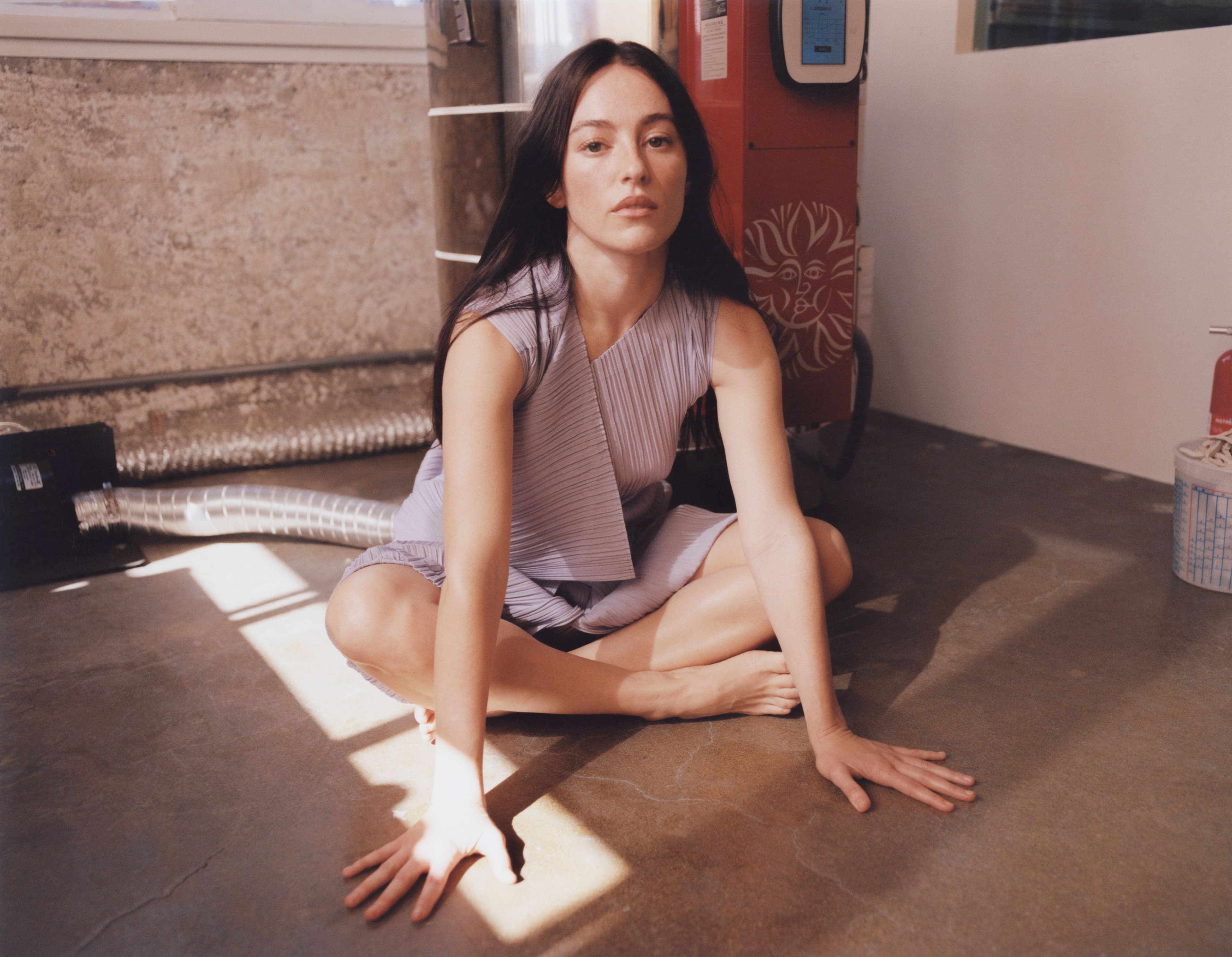
It’s an unseasonably hot spring day when I meet Analuisa Corrigan at the door to her Los Angeles studio. She’s in a tee, vintage Levi’s, and sneakers, her clean hair worn down and straight. Her demeanor is warm and welcoming, with dark eyes and freckles, and an intense gaze that strikes me as genuinely curious. I take in the room: the shades over the windows are halfway drawn to the sun; a large illustration of a lamp is pinned to the wall over the desk. Colorful dupioni silk samples and tassels are pinned to a board, and various ceramic lamps, adorned with whimsical shades, like little skirts or parlor curtains, line the shelves on the wall in the next room. She shows me a series of tiles stacked on a shelf, painted with floral motifs in muted colors. “I just started doing tile work,” she says. “You’re the first to know. I painted these with glaze—there is something really exciting about it because it goes on almost colorless, so it’s like a big reveal when you open the kiln. You don’t know how they’re going to come out.” She explains her final vision for these tiles, as a wall mount fixed with draped silk, lit from behind.
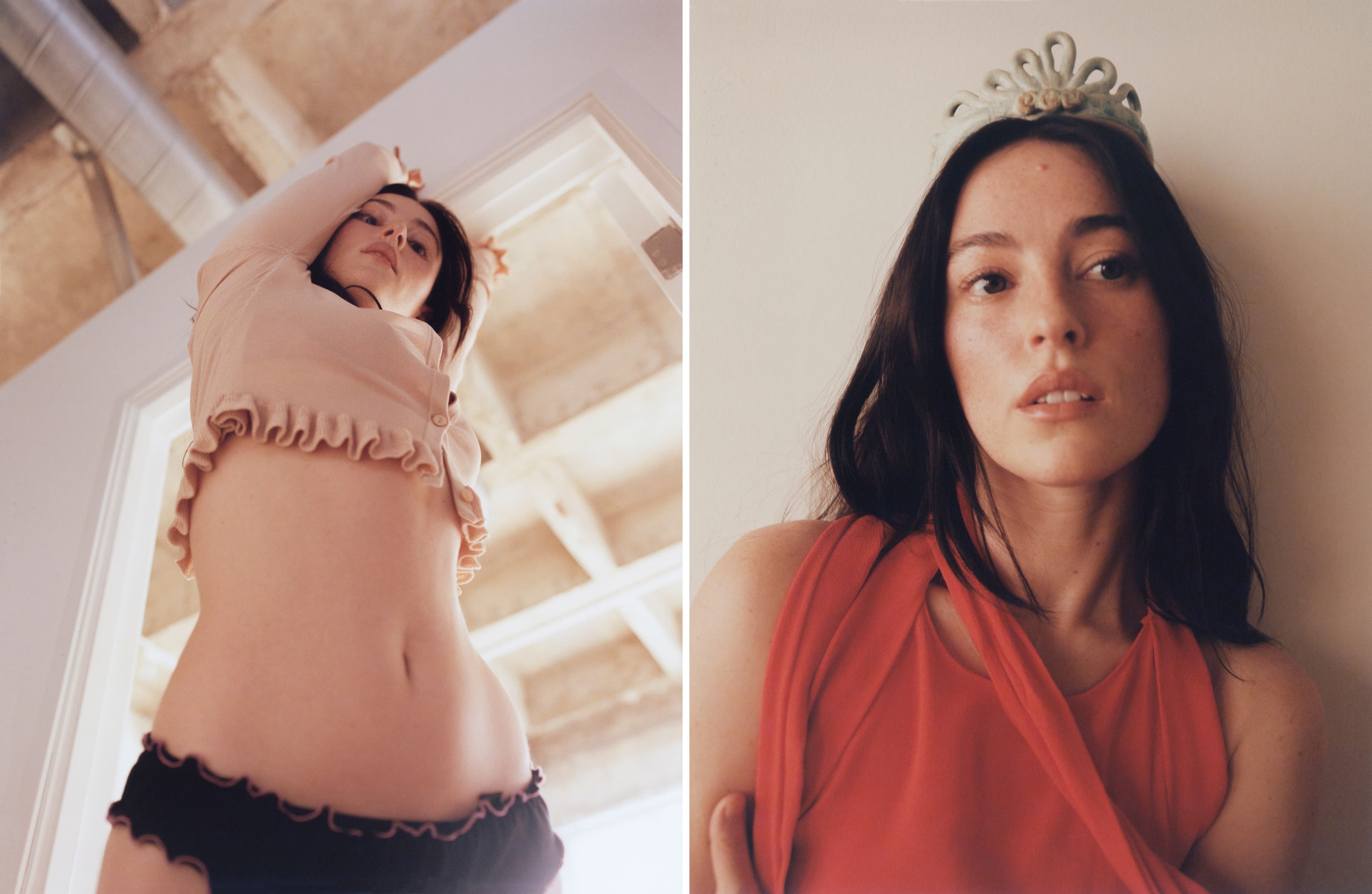
LEFT: All CLOTHING by Blumarine. RIGHT: DRESS by Blumarine.
The ceramicist—Ana to her friends—is known for her elegantly quirky, feminine lighting fixtures and spatial design. After studying fine art and graphic design during her university years in New York, she fell into ceramics and quickly honed in on decorative arts and lighting. “Decorative arts really excited me because it wasn’t work that was just hung on the wall,“ she says. “These are objects that are really embedded into the human experience and our lives in such important ways.” Corrigan pulls a box of silks from under the desk. “Look at this one,” she says, handing me a heavy dupioni swatch with a uniquely high texture in a dark green pattern—I’ve never seen silk like it, but it makes me feel kind of nostalgic, almost reminds me of something. “I didn’t go into lighting for the fabrics,” she explains. “But it’s become kind of everything to me. Getting to know the different silks, the way light is going to be diffused differently. That’s so exciting to me.”

DRESS by Blumarine
Corrigan was born in New York City but grew up in San Diego with her mom in what she describes as a craft-heavy household: the foundation of her love of hand building. All her ceramic work is done by hand, using coils or slabs. “Clay feels more masculine to me in the sense that it’s very robust and a lot of the shapes I end up making for the bases are stripped down. So doing something a little more feminine or playful with fabric creates a nice contrast.” She continues: “Sometimes I feel like I’m cheating on clay by making pieces that are exclusively fabric, but it’s also really fun.” Ceramics, she recalls, was also the one thing she remembers her dad, a stagehand on Broadway, ever collecting. “He lived in the same studio apartment in Sunset Park my whole life,” she tells me. “Ceramics was the only thing I remember him spending money on or even commissioning from a friend.” Her dad passed away when she was nineteen. Now, some of his most treasured collected ceramic pieces live in her house, here in LA. “It feels like a full circle seed that was planted,” she tells me.
This tension between the delicate, changeable nature of fabric and the sturdy foundation of ceramics feels, to me, key to Corrigan’s work. Growing up around theater, she explains, along with a very supportive mom, heavily influenced her decision to pursue a creative career: “I think when you’re a kid, if you just even know those jobs exist, that alone is enough to dream big.”
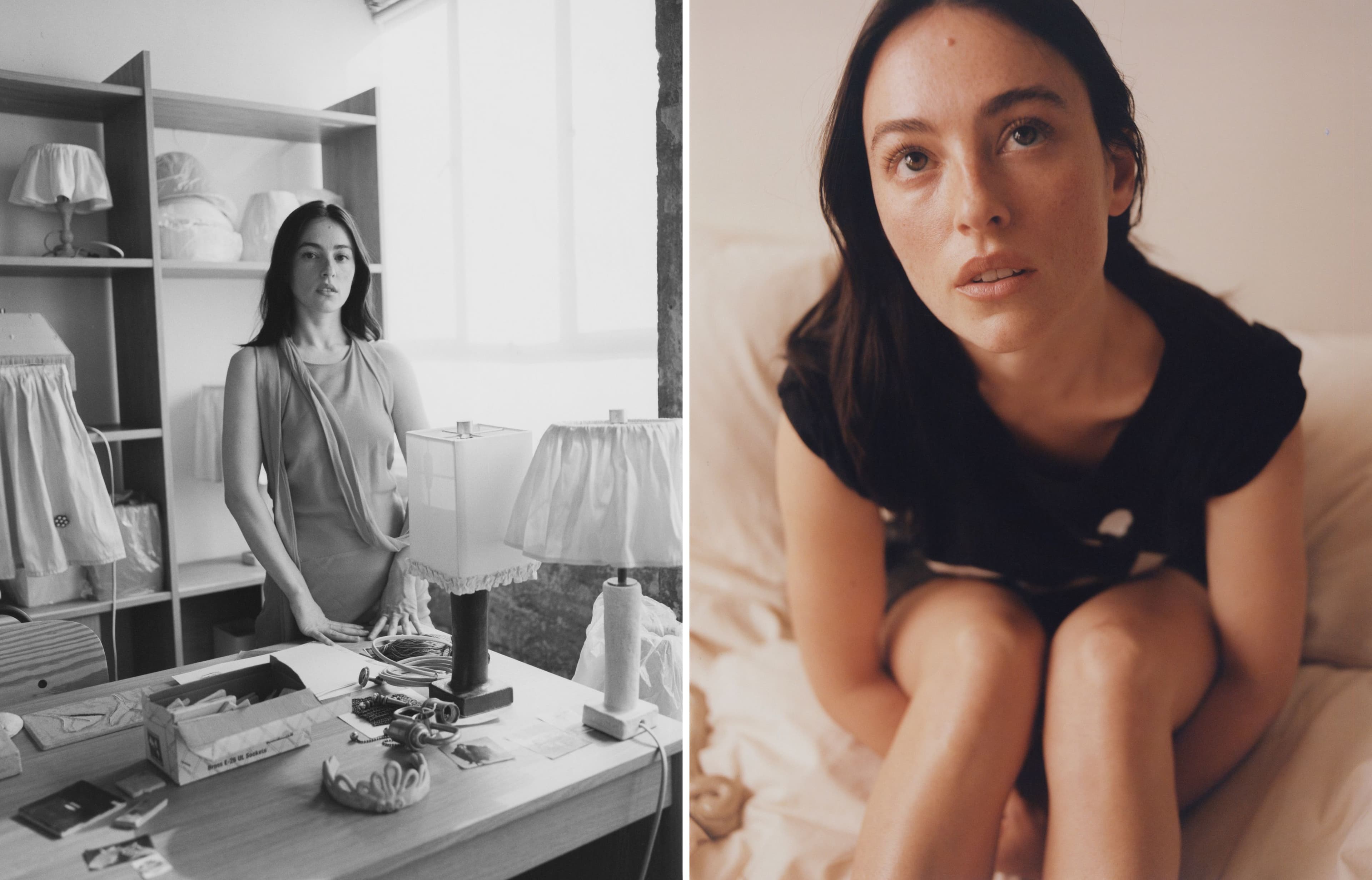
LEFT: DRESS by Blumarine. RIGHT: T-SHIRT, Corrigan’s own; SKIRT by Gimaguas.
I can see the theater influence æsthetically too; there’s a kind of drama, even magic to the pieces, whether it’s conscious to her process or not. And it meets with the practical nature of something like home crafts, which feels like an excessively humble way to describe creative work that participates in, and elevates, a space. This might be what makes her pieces feel so effortless. “I definitely want my work to feel a certain way and fit within a certain world that I fantasize about. I really like to have elements of whimsy—I like when design feels playful,” says Corrigan. “Things don’t need to be self-serious.”
Corrigan, who says she’s been doing work as an artist full time for just a few years now, has partnered with restaurants, like Cero Magazine food and drink editor Flynn McGarry’s Gem Wine on New York’s Lower East Side, designing lamps for their tables. Her work appears occasionally in films, most recently in The Housemaid, and her two-years-in-the-making partnership with the clothing brand Geels launched at the end of June. She regularly does commissioned work for clients across the country. The challenge now, she says, has become keeping the spark alive in her own practice. “It sounds so cliché, but when your hobby becomes your job it’s not a hobby anymore.” As an antidote, every weekend she “goes full craft mom mode at home,” she laughs. And she says she’ll make time to “design new pieces that I’m not making with the intention to sell. I’m just trying new things.”
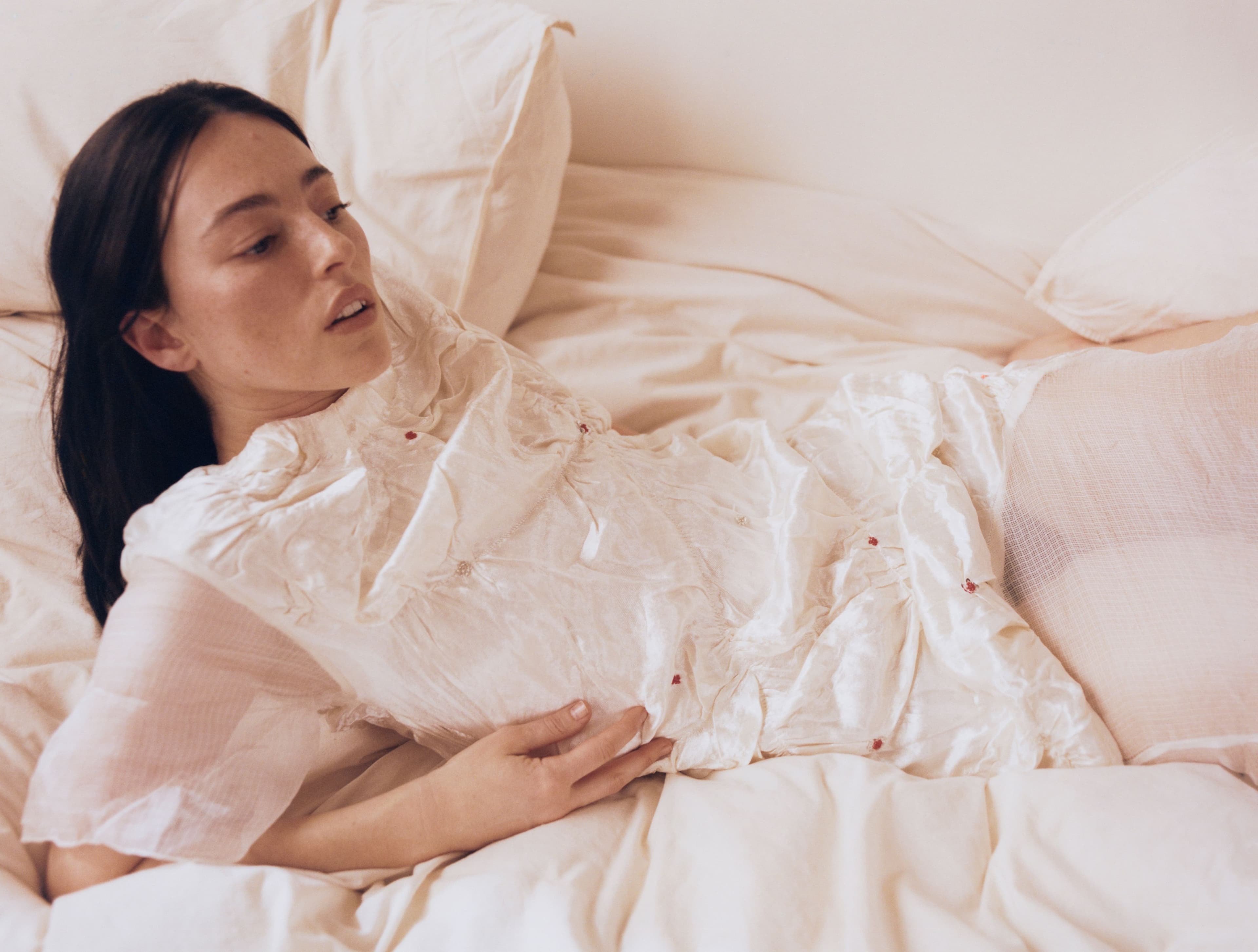
DRESS by Tigra Tigra
Near the end of June this year, Corrigan also married her longtime partner, the actor Logan Lerman, at their home in Los Angeles. She says her husband’s artistic perspective has helped add layers of depth to her work, as well as to her knowledge about film. “He has an almost encyclopedic knowledge about film and he’s super passionate about it. It’s nice when your partner can teach you things—that’s such an attractive quality. I think being able to bounce off each other creatively but also being able to share worlds that the other person knows nothing about is something I really value.”
For more information, please visit analuisacorrigan.com.
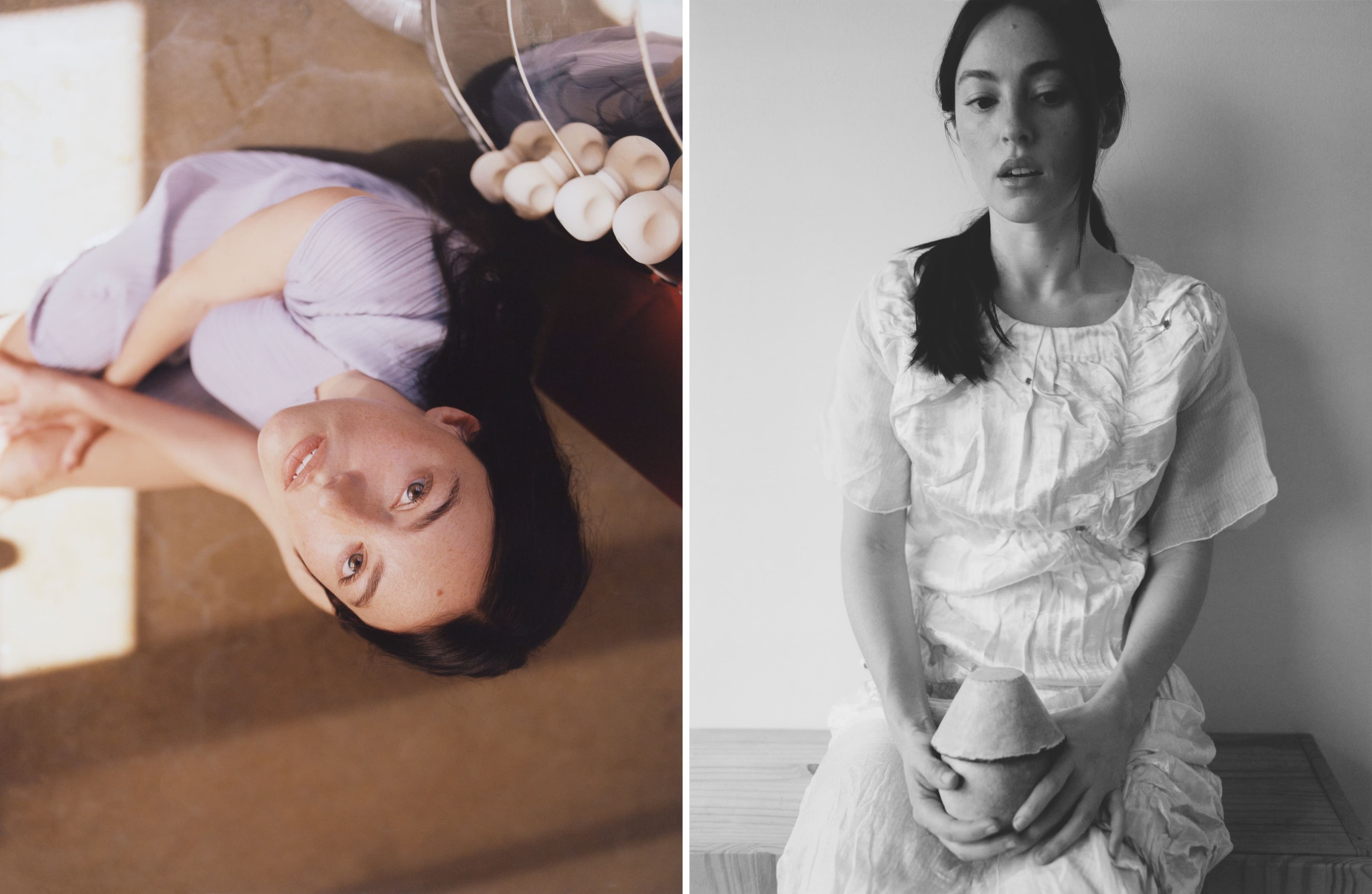
LEFT: DRESS by Issey Miyake. RIGHT: DRESS by Tigra Tigra.
As a nonprofit arts and culture publication dedicated to educating, inspiring, and uplifting creatives, Cero Magazine depends on your donations to create stories like these. Please support our work here.