







Constance Debré Opens a New Chapter
In her first three novels, the Parisian lawyer-turned-writer Constance Debré gives the reader a version of herself. Like Debré, the first-person protagonist is a public criminal defense attorney and the scion of a famous aristocratic political family in France, something akin to a French Kennedy. Playboy (published in France in 2018, and for the English-speaking market in 2024) sees this character leaving her husband, career, and home after fourteen years of self-described achingly dry bourgeois monotony. The character comes out as a lesbian. She begins a life with no income, no permanent home, and limited possessions beyond the clothes on her back and the books she can carry. To fill her new world, she swims at the public pool every day, fucks strangers and acquaintances with bravado, sleeps, smokes, and writes methodically. A new identity is formed. Debré’s second novel, Love Me Tender (published in France in 2020, the US in 2022), explores this woman’s losing battle for custody of her eight-year-old son, speaking bluntly about the sometimes ugly emotions that society often turns away from as the protagonist considers the love between a mother and a child with a depth and frankness that is rarely portrayed. Name (published in France in 2022, the US in 2025) sees this same character, closely tied to Debré, reckoning with ideas of family, inheritance, and identity.
The work packs a punch. The writing style is brutally direct, stripped down, and unafraid. So are the ideas Debré interrogates. The role of sexual intimacy in how we define interiority, the nature of familiar love, the boundaries of lineage, what we owe each other, what we owe ourselves—Debré looks you in the eye as she philosophizes on the core questions with blunt, unmediated passion. So many people use language to cushion their thoughts, obscuring intention in the hopes of being liked, protecting the recipient, or navigating some unowned fear; Debré cuts through with minimal embellishments. Her prose is sharp, yes, but it is also elegant in its form. There are moments of delicate, human softness within this cold-on-the-surface approach.
Debré’s autofiction has made her a literary sensation in France and beyond. Since Playboy hit stands, she’s drawn comparisons to Annie Ernaux, Eileen Myles and other prominent commanders of sparse, convention-questioning prose. Earlier this summer, Debré released her first novel outside her personal story in the English language. Her latest work, Offenses (published by Semiotext(e), the imprint that brought the writing of Jean Baudrillard and Guy Debord to American readers), follows the court case of a young man who kills his elderly neighbor over a €450 drug debt. In less than a hundred pages, Debré digs into her country’s justice system and what it illuminates about our collective morality. She describes it as her Crime and Punishment.
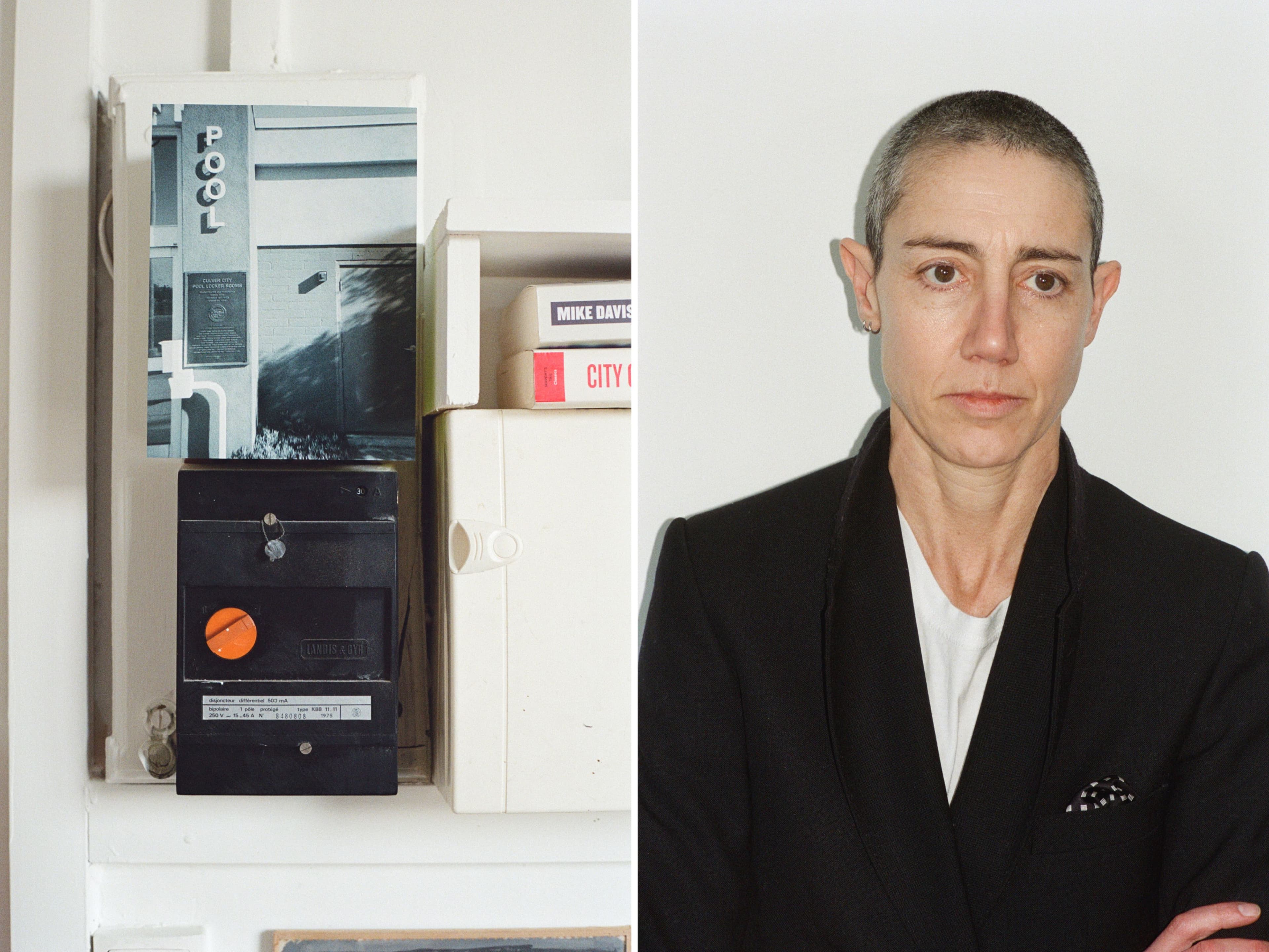
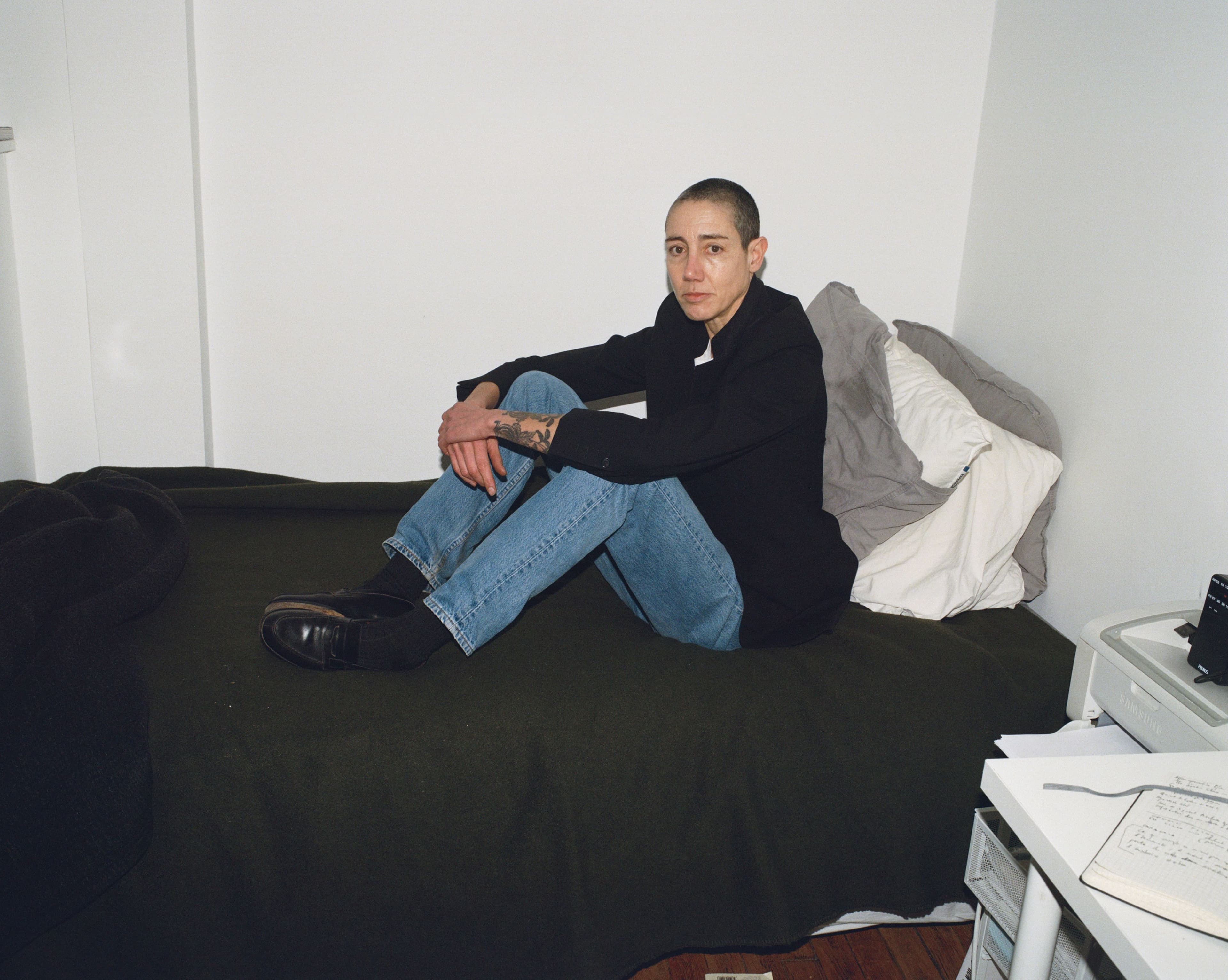
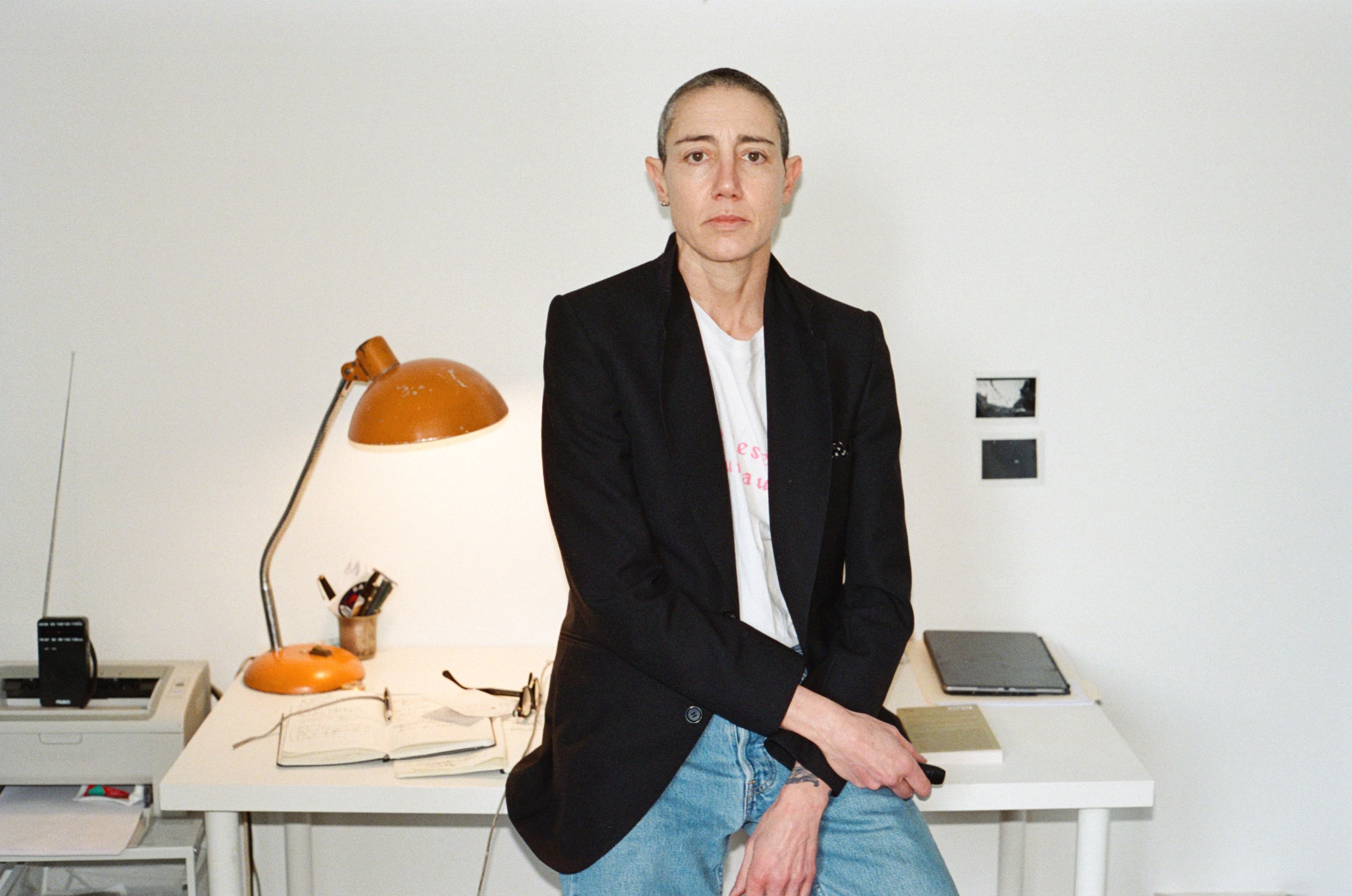
I called Debré following Cero Magazine’s shoot in her Paris flat. She got into how she developed her distinctive style, why a character sharing her likeness says little about her, and why Offenses may be her most transgressive work to date.
Did you always want to be a writer?
Constance Debré: I was not thinking about any kind of specific work as I was growing up. But obviously, books became extremely important. I don’t think being a lawyer or being a writer are very, very different. You’re building narratives and finding a way to grab people’s attention, to move them from a certain position, from what they think they know about a situation or the world to another place.
You’re making arguments in your work.
And using words. You’re working with language.
It’s the same toolkit.
Some people have seen my work as something about me or my life, which it’s not at all. Obviously, I’m using my stuff in the first three books, but that’s not the point. I’m using language and using anything I have to make an effect on people. The stories are more excuses than anything else. I appear in those first three books as a character. It has nothing to do with me.
How did you establish this character? What did you decide to include and exclude as you worked from your own life?
Well, when I started writing the first one, which was Playboy, I was thinking about form. Nobody knew me, and there’s so many books. The first book has to be seen. I thought that using the first person was a good tool because we immediately identify with another ‘I’. As a reader, the ‘I’ is extremely powerful.
It’s totally me and totally not me. I’m not the character, but I’m the author, which means that I am in my intentions, in the way I choose to show a certain vision of the world or of literature in this book, and about what I decided to tell and not tell. I used everything that I thought could be useful and powerful in every book. The only criteria for me, actually, is how something is going to be useful in the book.
I don’t care that much about what certain people around me think. I’m not using my book to have an effect on people around me, positive or negative. It’s not the point, really. The only thing that matters to me is the book when I’m writing it.
How did you decide what case you wanted to write about in Offenses?
I always wanted to use what I saw of the world, the way I saw it as a lawyer. If it had been my first book, it would have been seen as a lawyer’s book. I needed to establish a writer’s very specific voice.
After Playboy, I wrote Love Me Tender, because of all those things that have happened to me [struggling to regain custody of her son after coming out]. I needed not to be totally swallowed by the reality and the pain. To react. The reaction was working, doing something out of it. Suddenly, my reality became work. And when it’s work, you’re in control and it’s just a material. It’s not only something happening to you.
Then, I had this other book I wanted to write, which was about the question of origins, let’s say, and using, of course, my experience of it, but more generally about the origin in a world where you are your childhood, you are your social media, you are all those things you didn’t choose. I wanted to oppose something. It’s like, yes, those things exist, but our responsibility as thinking beings is to make decisions. This was Name.
Finally, I was done with those things. I used the first person three times. I was a bit tired of having this feeling that people were confusing this character of the books and myself. I wanted to suddenly find a third person and close this door on this stupid attention on me because I’m no one, in a way. I’m just the author.
People were conflating the character with you.
Yes, that was part of it. As I told you, I wanted to talk about what I saw while I was a lawyer—about the way society works, not only in the judicial system.
I handled many cases when I was a lawyer, and some of them were more complex or serious. There were many, many interesting stories. But what I liked about this specific case was its simplicity. It was using this very old figure of the murder, which is all over literature. Every book is about literature or has a lineage in literature. And of course, this young man stepped on an old lady, as we all know, is the story of Crime and Punishment. This was my Crime and Punishment. Crime and Punishment nowadays in a suburb near Paris with people we all know in a way, but also that we don’t really know, because those people are not the ones who usually talk about their own lives.
In French, lawyer is ‘avocat’ and ‘avocat’ comes from Latin, and it means ‘talking for the ones who cannot talk.’ There’s also this idea [in the book].

What has the conversation been in France since it was released? Your work is often seen as transgressive.
This idea that my work is transgressive—sometimes I think, well, it’s because of sex scenes or homosexuality. To some people, this is very transgressive…But in a way, maybe Offenses is more transgressive than the previous work.
Every story I use is very banal. The work is not that much about the story. It’s all about the way I put the words on the pages in order to make the readers feel something, but also for the pure beauty. Of course, books are about beauty, too. And the way I see beauty is not as something sweet, but as something which embraces the violence of the world, as well.
In Offenses, I use very factual sentences: short, direct, simple, but very factual descriptions to put the facts on the table. There are also more lyrical moments, where I use the murderer’s voice, or another voice—we don’t exactly know who—there is suddenly something far hotter. I wanted to grab the readers in a way.
Are there works of literature or philosophy that shaped your approach?
In Cold Blood, of course. I remember when I was writing Offences, I was rereading a lot of Blaise Pascal, the French philosopher. He always meant a lot to me, both by his thinking and his style, which is very, very precise and concise, and the way he embraces the misery of our condition. As well as the French cinematographer Robert Bresson, who was also Blaise Pascal’s reader. There’s some tenderness in the way he sees the world, which of course is not very joyful.
In the first three novels, your character has a routine and rules that shape and structure the day and life. Do you have a specific routine?
Well, I swim every day, and in a way, it’s my only obligation. And then I try to work. It’s like having nothing else on my schedule. Of course, I fail every day because I have more and more stuff to do, but I love being alone and being at home, and that’s it. And just try to work or think about the work. Just be in my head in a way. So I try to have nothing on my schedule. And then the writing itself can come at every moment.
Are you writing anything right now?
So there’s a new book that just came out in France two months ago. And I’m beginning something. I don’t know exactly what it’s going to be, but I’m excited about new ideas or a way to go further in the ideas that were already there. I’m more and more interested in the world.
Has your philosophy of justice changed over the years, like how you approach the ideas in Offenses?
No, it hasn’t changed, but [Offenses does not contain] everything I think about the justice system. It could be worse, and it is worse elsewhere in other countries. [I’m speaking of] the whole system, because judges are not guilty of anything. It’s just a position they’re in, and they’re doing their best, most of them. Not living in the legal system, or not believing in the law, or not trying to build and write the best laws we can, is the beginning, is the end of civilization. We know that. No law is very perfect. [Our justice systems are] also the mirror of what we are and of our flaws, very, very clearly to me. [They’re] also a sign that we, like every society and especially Western societies which have believed in the importance of flaws, are trying to be good. They’re an attempt to escape the evil in us. And again, yes, they fail at least partially, but I believe in this attempt, and I believe in the importance of it.
I mean, look at what’s happening in the US.
Exactly.
Are you mainly in Paris these days?
For maybe four years, I’ve been spending lots of time in LA. And it’s not residencies, just I happen to have a place I can crash. I have lots of friends and my American publishers. So I actually am leaving next week for LA.
Offenses is out now from Semiotext(e).

As a nonprofit arts and culture publication dedicated to educating, inspiring, and uplifting creatives, Cero Magazine depends on your donations to create stories like these. Please support our work here.