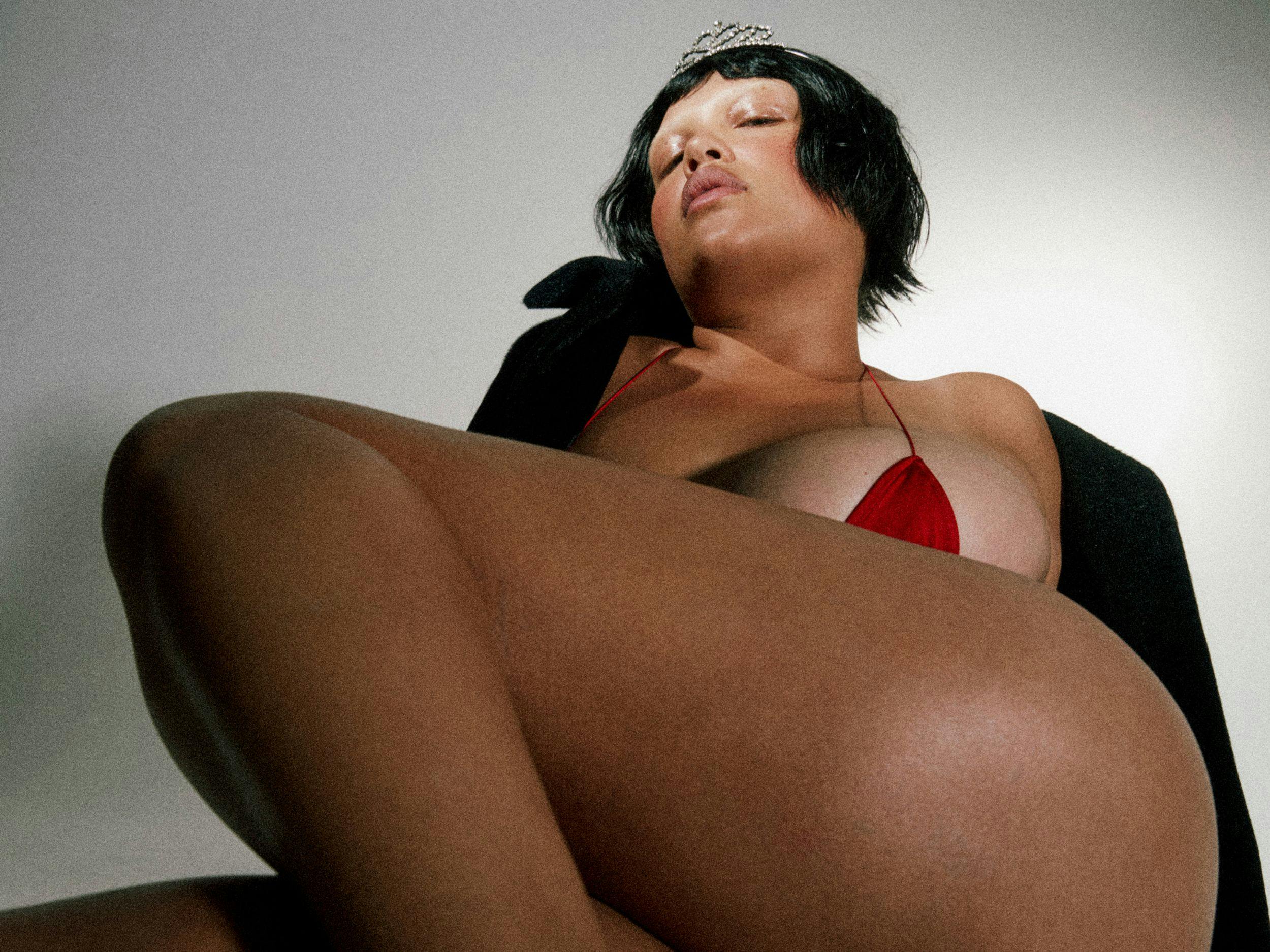
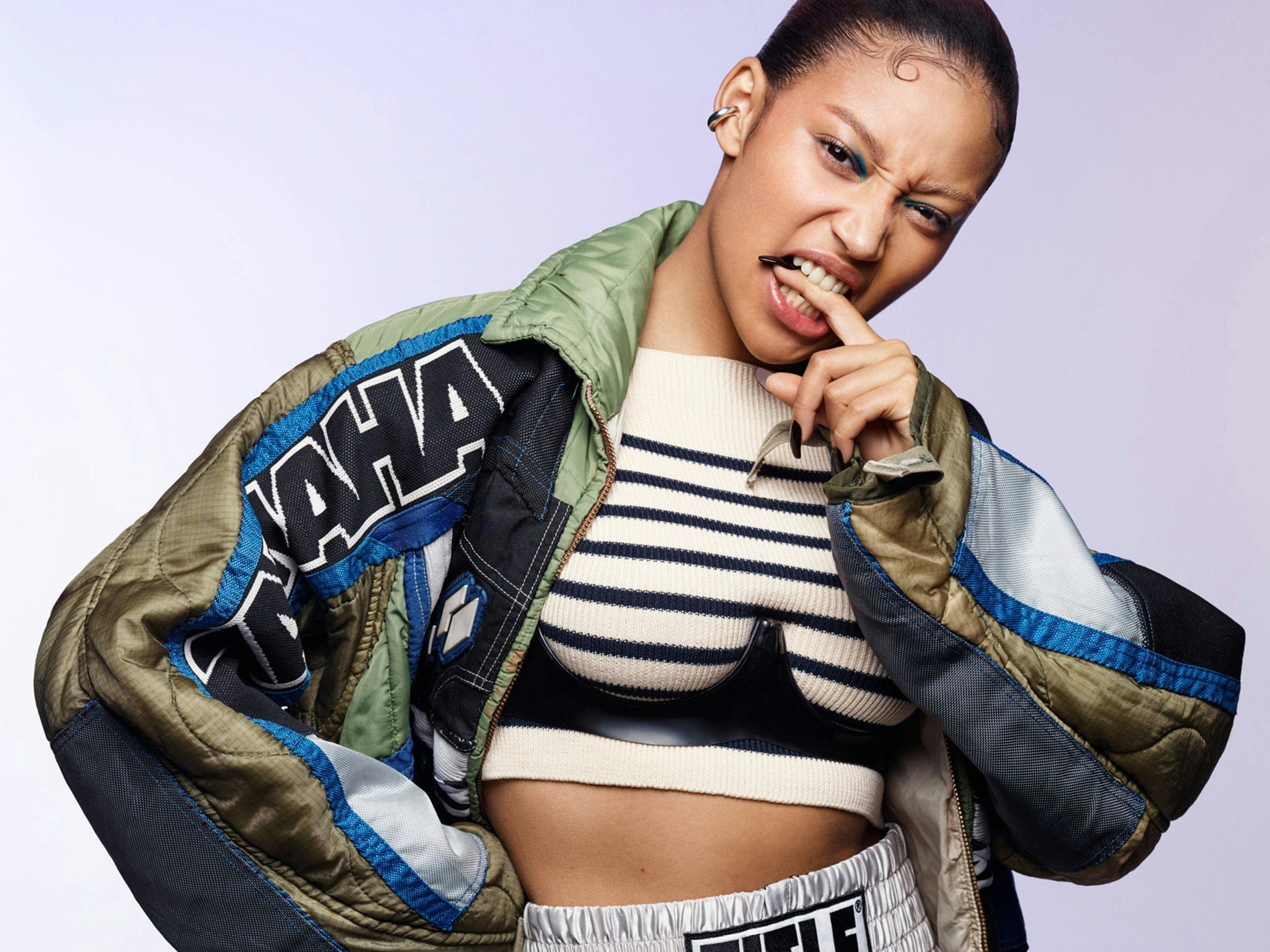
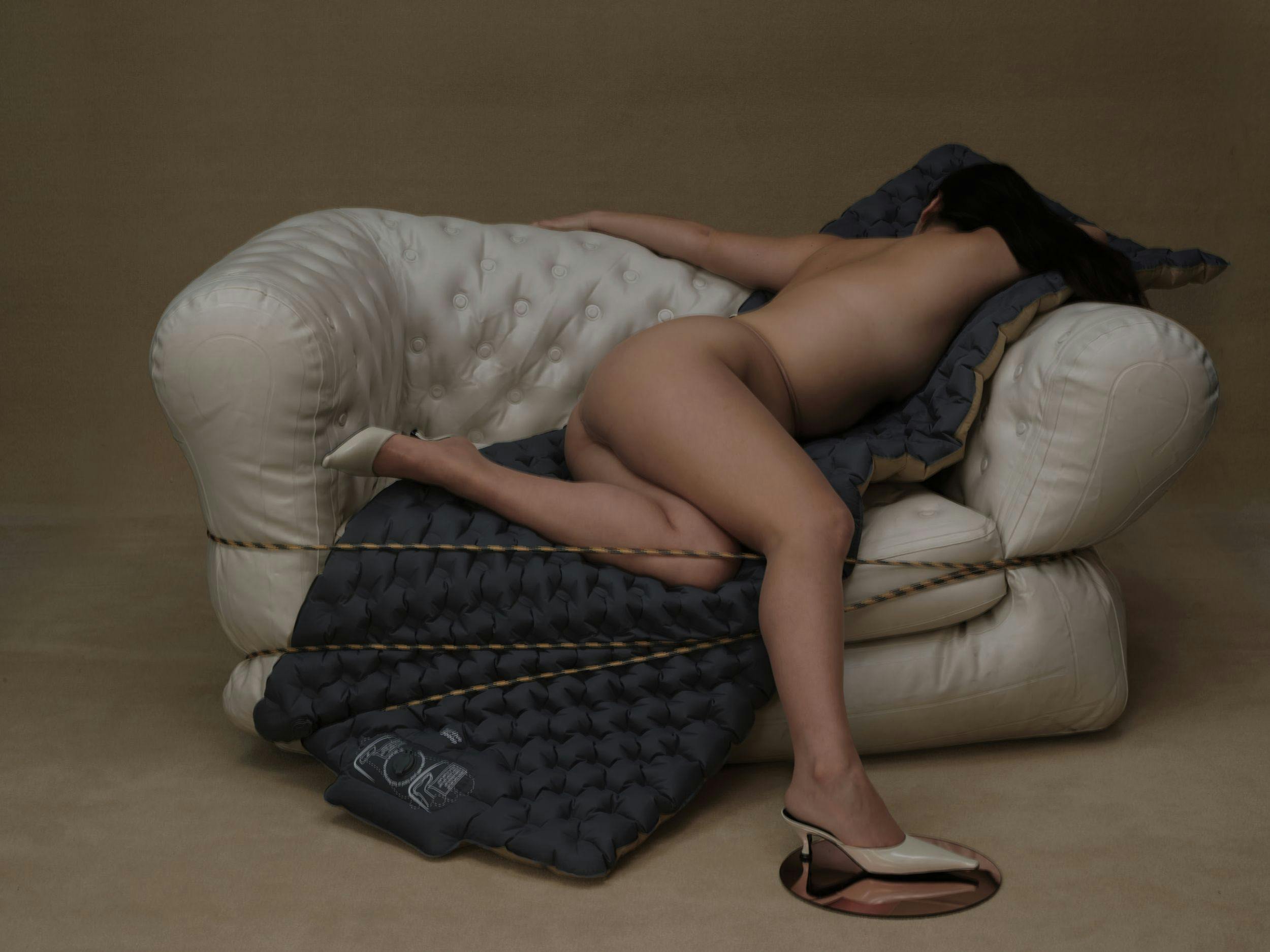
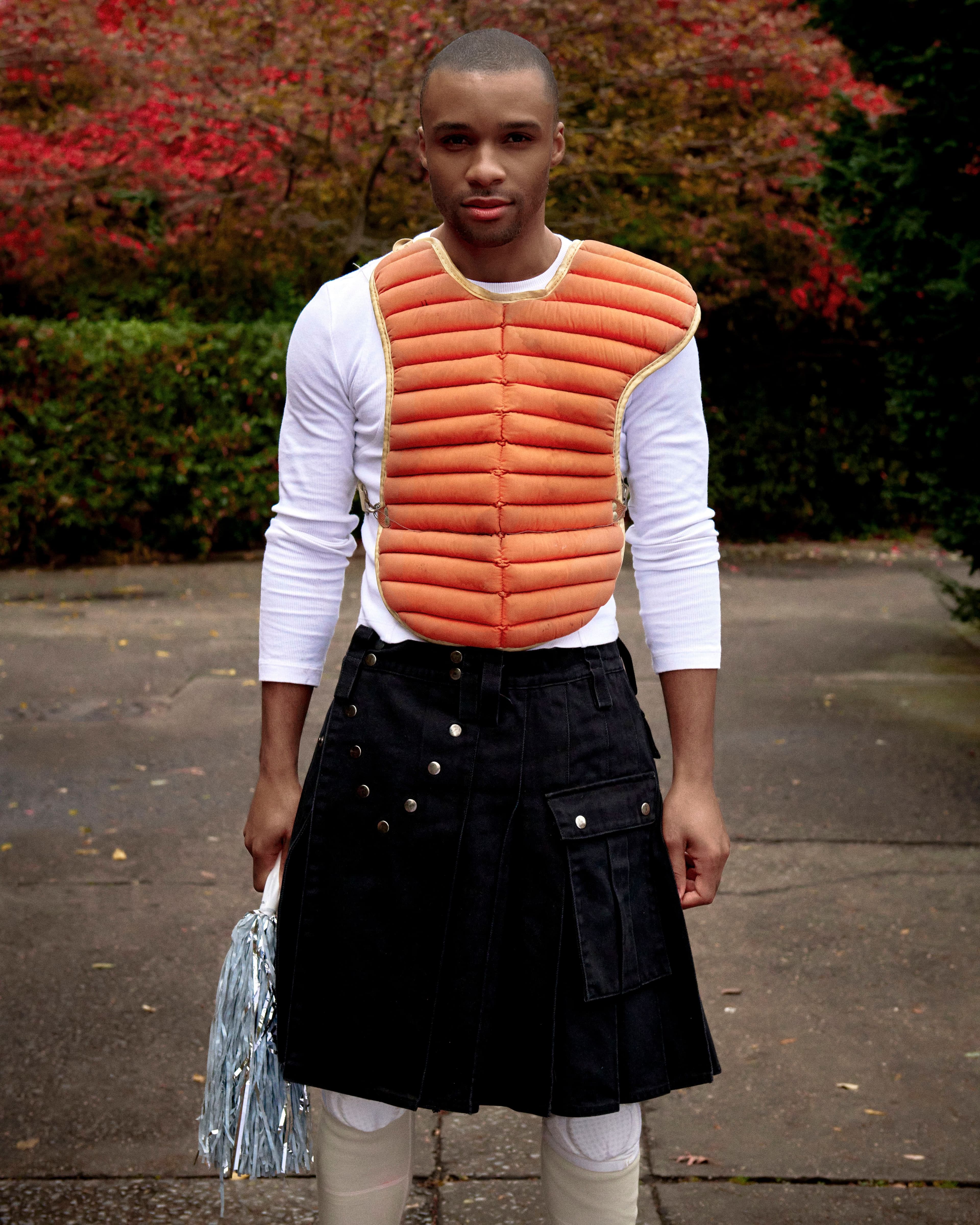
All vintage CLOTHING and ACCCESSORIES throughout. Images originally published in 2022.
Dyllón Burnside’s New Creative Project Spotlights the Black Queer Experience
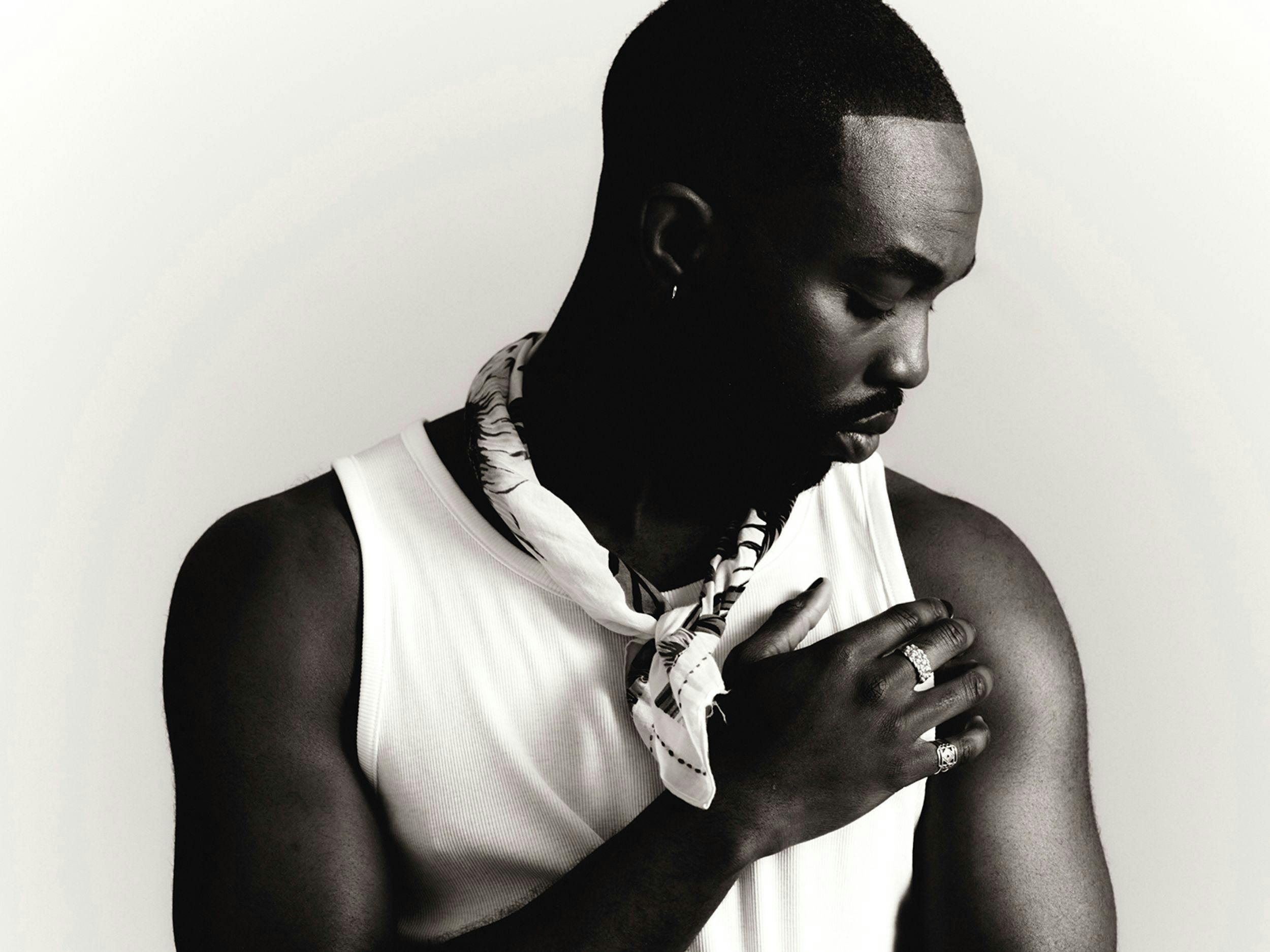
The artist Dyllón Burnside is many things—actor, musician, writer, and activist, to name a few—and with the release of his new album genesis earlier this summer, he is braiding together his various creative pursuits into a full project celebrating the Black queer experience. After coming to attention as the fan favorite Ricky on the groundbreaking series Pose, Burnside has focused on uplifting stories from his Black LGBTQ+ community, using his platform to both honestly discuss his own life and spotlight others whose projects have been underappreciated. As he looks forward to the release of a short film and podcast expanding his project, Burnside speaks with Cero Magazine in depth in this exclusive, wide-ranging interview about his work, his ambitions, and his fully fledged creative vision.
For years, audiences have known you through the characters you’ve brought to life on screen and stage. With your debut album project, genesis, you are standing entirely in your own narrative. Was there a specific moment in the studio or in your personal life that signaled it was time to step into the front seat as a solo artist and tell your own story?
Years ago, I realized that if I wanted to tell stories that could hold and reveal the many dimensions of who I am, I would have to write them myself. A big part of that meant telling my own story. Since I was a teenager, music has been the place where I could find the courage to be vulnerable. It gave me an outlet when I didn’t have a person or community that could relate to what I was experiencing. Music also lets me express what I don’t yet have language for. I can place emotions and ideas into sound in a way that reaches beyond words.
I started writing and recording this project while I was working on Pose. I remember performing a concert at the Cutting Room in New York as a season one wrap party. Billy Porter came and sang with me. Afterward, he told me that what I did was special, that everyone couldn’t get onstage and share themselves so bravely and openly, and that I had to keep doing it. That moment affirmed how important it was for me to keep making music and telling my own story.
It was also around that time that I began to understand the through line connecting everything I do, whether it’s acting, music, film, or my work in community: I’m working to change the stories we inherit, because those stories shape what we believe is possible for our lives.
In your single “Garden,“ you take classic Biblical imagery and completely flip the script, writing from Eve’s perspective to explore intimacy, sensuality, and queer liberation. What drew you to reinterpreting those sacred themes through music, and how did writing that song help you redefine your own relationship with spirituality and identity?
I was born into a Christian family, I attended Christian school, and my first job was working in ministry as a worship leader. I inherited a lot of beliefs that led to self-loathing, fear, and shame. Many of those beliefs can be traced back to the way people interpret and weaponize the Eden mythology against women, queer people, and even the pursuit of higher consciousness. So many religious stories get interpreted in ways that oppress people.
I got really clear that the shame and fear I experienced was not a reflection of what I understood God to be. It was a reflection of humans projecting harmful interpretations onto me. I wanted to explore what it meant for me to interpret this story in a way that was empowering and celebrated all of my humanity, and by doing so also celebrated my intrinsic divinity. I know that may be polarizing and challenging for some, but I needed to do this for me. People have been writing personal encounters with spirit and their understandings of God since the beginning of time. This is my testament. My account of finding my way to God within myself. It’s not meant to declare what’s true for anyone else, but it is about sharing a deeply personal process that other people can engage in for themselves.
From the moody, introspective R&B of “Silence“ to the euphoric energy of “Superpowers“ and the lush arrangements on your new music, your sound bridges R&B, soul, and gospel. How did you arrive at this specific sonic landscape, and what textures or instruments felt essential in building the atmosphere of this project?
I arrived at the sound of this project organically. It was less about imposing a genre on the album and more about capturing the feeling of each chapter in the journey. Much like my personal process, making genesis became an act of discovery and allowing things to emerge.
Each track usually began with a concept, a question I was wrestling with, and often an image or scene. I would describe those images to my collaborators and put visual references up in the studio so that world could guide the sound. The bass and drums became the heartbeat of many of the songs. Once the rhythm section was alive, we could build outward through synths, organs, stacking vocals, harmonies, and textures that move between R&B, house, funk, gospel, and electronic music.
My relationship with gospel is especially present in the vocal arrangements and in the way the songs build toward release. Some tracks are lush and expansive, while others strip everything back and leave the voice and lyric exposed. The sonic world needed to feel sexy, fun, dangerous, and sacred all while maintaining a kind of intimacy and transcendence.
Your new visuals and lyrics place a heavy emphasis on sensuality and the sacred, highlighting Black tenderness, physical connection, and emotional vulnerability. Why was it important for you to center that level of softness and open desire in your songwriting right now?
Audre Lorde, in her essay “Uses of the Erotic,“ talks about how we have been raised to fear the yes within ourselves, and how living separated from what is innately true for us leaves us susceptible to being limited and controlled by external forces and narratives.
It felt important for me to highlight Black queer sensuality as sacred because I recognize that in the erotic, as Lorde defines it, we find the power to author our own lives. Queer people have been robbed of that agency by disempowering narratives for so long. I wanted to show the beauty and power and divinity in Black queer tenderness, sensuality, vulnerability, and connection.
When you’re in the studio building a track, does the song usually start with vocal stacks and harmony concepts, or do you let the lyrics and beats lead the way? How does your deep experience in the world of gospel and performing as part of an ensemble inform your music?
I’m almost always starting with the beat and the lyric and melody. Once we lock in on that, we build out the harmonies. On some of the songs, the harmonies and vocal arrangements get made on the same day. On others, it took me a while to decide which direction I wanted to go harmonically.
I’m a big fan of big lush arrangements and vocal stacking. Growing up with gospel music and hearing the amazing transcendent sounds a choir of voices can make has deeply impacted the way I imagine and create music. Worship music always has a build and a release. There’s a certain kind of drive in it that is designed to get people to feel and to act. To devote their lives to something greater than themselves. To love more deeply. To see clearly. To take the next step toward their higher selves. That is a part of my musical DNA, so whether consciously or subconsciously, I can see how that has found its way into the songs on genesis.
Releasing standalone singles over the past few years allowed you to test different creative waters. When you sat down to assemble a full body of work, how did you synthesize those different emotional chapters, from heartbreak to self-actualization, into one cohesive musical narrative?
I honestly had no idea what this album was going to be. I knew I was making an album when I started working on the project eight years ago, but I didn’t know how it would come together. I actually had a very different concept for the album when I started writing it. I had a few different concepts along the way, honestly.
But somewhere along the way I stopped trying to make songs that would fit a particular album concept and started letting each song be born from what was most urgent for me to explore and express in a given moment. Then I took some time away from the project after recording over two dozen songs. When I came back to listen with fresh ears, I had enough distance from it that I could see the through line of what was emerging track to track.
The album was actually building itself. It was less about me assembling it and more about removing what didn’t fit and figuring out how to sequence it in a way that told the most honest version of my story. There were four other sequence options for the project. They all technically worked, but this one felt the most true.
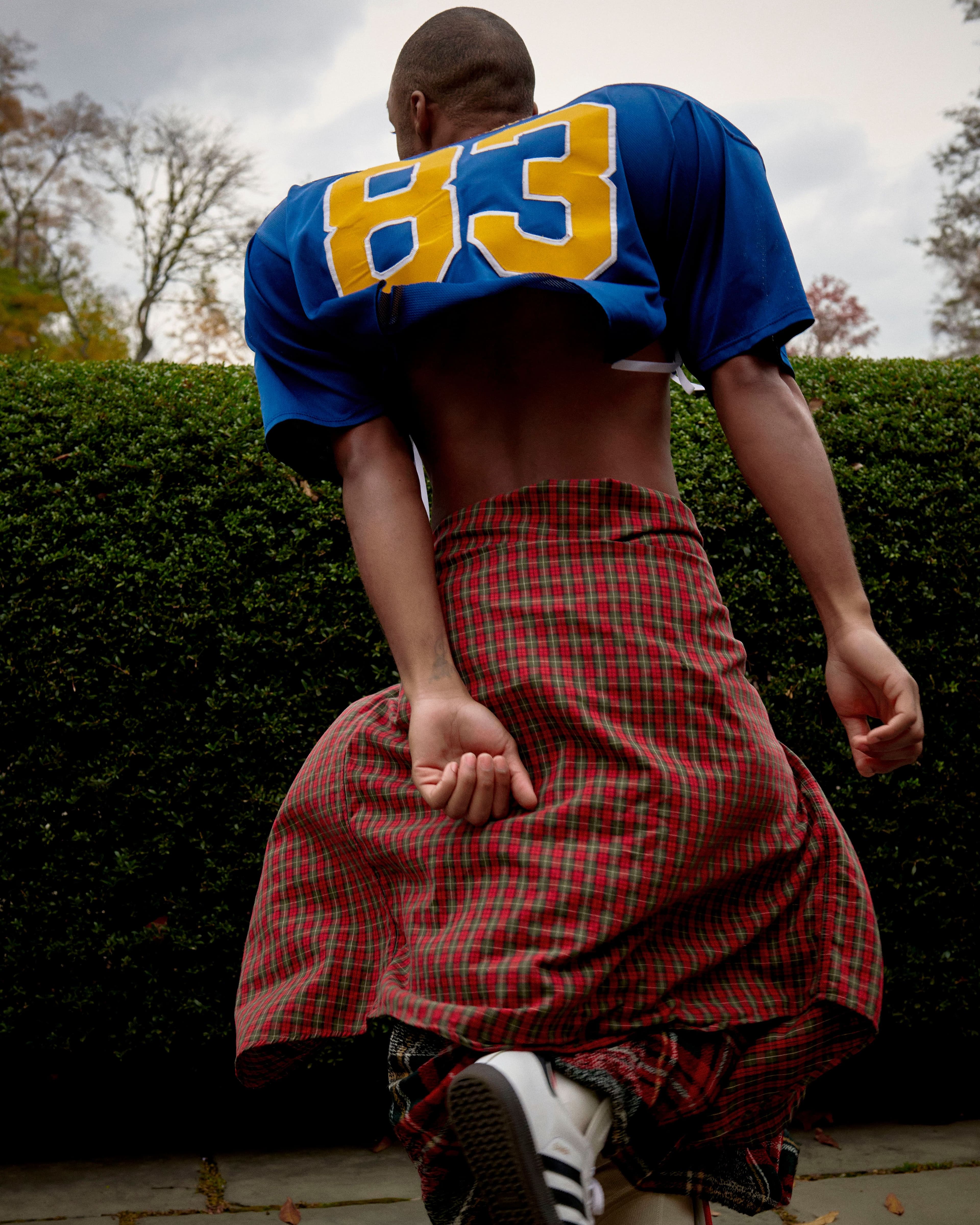
Playing a character gives you a script to exist behind, but songwriting forces you to stand completely bare. Was there a particular song on this project where you had to grapple with or embrace vulnerability most?
“Lost and Found” is probably the most vulnerable song on the album for me. I hesitated to share it for a long time, and it was the last song to be added to the album. The song itself is very exposed vocally. The production is sparse and it’s just about the vocal and the lyric. The lyrics are all about me in what was one of my lowest moments, and what it was like trying to find my way out of that season. I was also in the middle of that season when I wrote it, so it was hard for me to listen to it objectively because I was still in it.
Ironically, I also felt very bare in “bare.” Similarly, it exposed some of my insecurities and didn’t portray the more confident version of myself people have mostly seen. I think the industry sometimes asks us to be superhuman and expects us to turn it on at any moment’s notice. Especially as a Black man, expressing vulnerability is often taken for weakness, and it can be scary to do that.
When you perform your new original music live, how does that experience compare to acting? Does owning your own songs on stage bring a different kind of freedom or nervous energy?
Performing my music has been wildly different from performing on a Broadway stage or in an acting role. It even feels odd to call it performing, because that’s not actually what it feels like. While I always feel like I’m having a conversation with my audience in my acting roles, performing my songs feels like a more direct moment of sharing myself with the people in the room. It’s an act of getting free.
It feels so liberating to be seen fully. There’s a thrill and an excitement about it that is unlike anything else I’ve experienced. I also sense the shift in the audience as they get to witness and be a part of me getting free onstage. They start to get more free in their bodies as the music plays.
Who were the producers and musical collaborators that helped bring the sonic world of this new music to life? What did those studio sessions look like when translating your deeply personal ideas into finished arrangements?
I produced the album with three collaborators: Phinisey, who executive produced with me, Drew “Druski” Scott, and Nobu. The four of us played with a lot of sounds individually before we could land on the sonic world that would become genesis. What was most exciting for me, though, was when I was able to bring the guys together to collaborate on tracks in the same room. I love the creative process, and it’s always so much better when it’s done in collaboration, so I loved facilitating that.
I also co-wrote several of the songs with some amazing songwriters, Chris Jackson and Johnny Gonzalez. Writing sessions usually involved food and drinks. Lots of Palo Santo and storytelling. It felt very cathartic for me. I would come in and the guys would ask me what I wanted to talk about that day, and we would talk for a bit, sometimes for hours, about something I was pondering or navigating. Those conversations would seamlessly find their way into the songs.
Your music is part of a larger project with several components. Can you tell me more about how this ties into your upcoming work with projects in other forms of media?
The album genesis, released June 26, 2026, is the spine of Eden, a five-part cinematic project I directed that will ultimately form a short film. In it, I reimagine the Eden myth, with me as Eve and Keiynan Lonsdale as Adam. That visual world is woven together with archival material and intimate conversations with Black queer artists, scholars, and spiritual leaders about the stories we inherit and how they shape our identities, relationships, health, and wellbeing.
The project extends beyond the screen through the genesis REVIVAL, a cultural renewal gathering I’m hosting on my land in Georgia during Atlanta Black Pride. It will bring Black queer men together through reflection, creative practice, shared meals, healing experiences, and live performance.
That communal dimension grows out of my work on the documentary Prideland, in which I traveled across the American South exploring how LGBTQ+ people create lives rooted in authenticity, safety, faith, family, and belonging. It also builds upon my work with the Burnside Artist Retreat, where I’ve created spaces for Black queer artists and cultural workers to rest, reconnect, and share their stories. Across all of this work, I’ve seen how individual testimony can help people locate their experiences within a larger communal story.
It all comes from one belief: storytelling is one of the most powerful tools we have to preserve history, build legacy, produce knowledge, and imagine lives beyond the limitations of what we’ve inherited.
When we talk about health and wellbeing among Black queer men, HIV treatment and prevention have understandably been central. That work remains essential, particularly because access is still unequal. We have extraordinary biomedical tools: effective treatment can suppress HIV to an undetectable level, which means it cannot be sexually transmitted, and PrEP is highly effective at preventing HIV. But those tools alone cannot answer every question of wellbeing. They cannot, by themselves, address shame, isolation, our relationship to care, and they cannot reach people the system has never reached.
Those are not only medical or structural problems. They are also story problems. Shame and isolation are sustained by stories about whose bodies are sacred, whose lives are valuable, and who deserves care. Biomedical tools can protect our bodies, but stories shape our relationship to those bodies, and to the care that’s meant for them. My contribution to that work is telling stories that move us from shame and isolation toward care, connection, and belonging.
Ultimately, music serves as a sanctuary for both the artist and the listener. As people step into this new era of your sound, what intention or feeling do you hope Black and LGBTQ+ listeners, in particular, walk away with after hearing your work?
This project has been a diary of sorts as I work through my own struggles with inherited shame and find my way to liberation, joy, pleasure, and wholeness. I want this work to invite people into that process so that they might experience it for themselves. Shame is damaging. It teaches us to hide from knowledge, from care, from ourselves, and from one another. Storytelling can help bring us out of hiding, into joy, into pleasure, and into connection.
If this project helps even one person feel more at home in their body, more worthy of care, or more connected to themselves and others, then it has done what I made it to do.
genesis is out now.
As a nonprofit arts and culture publication dedicated to educating, inspiring, and uplifting creatives, Cero Magazine depends on your donations to create stories like these. Please support our work here.