

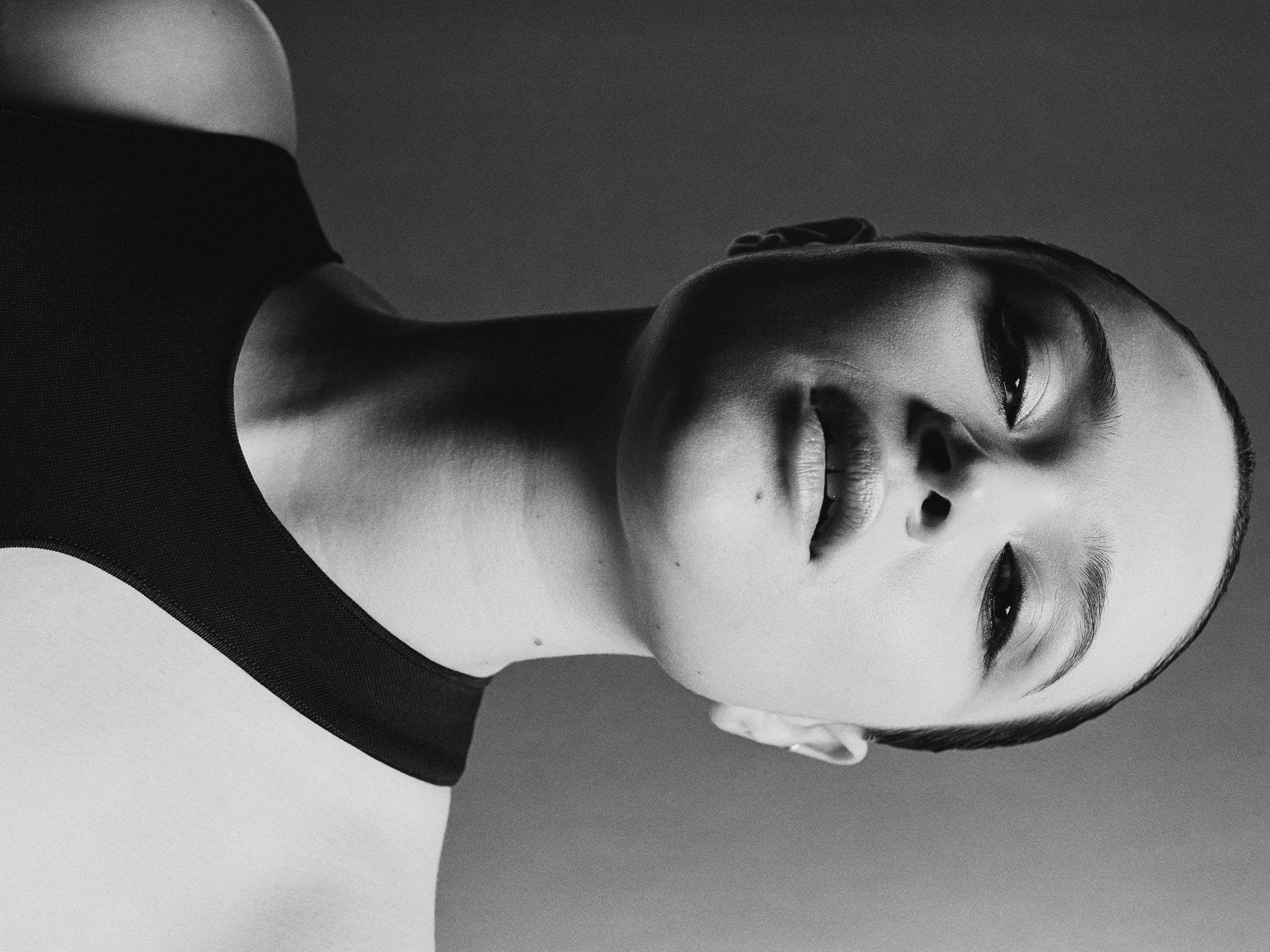

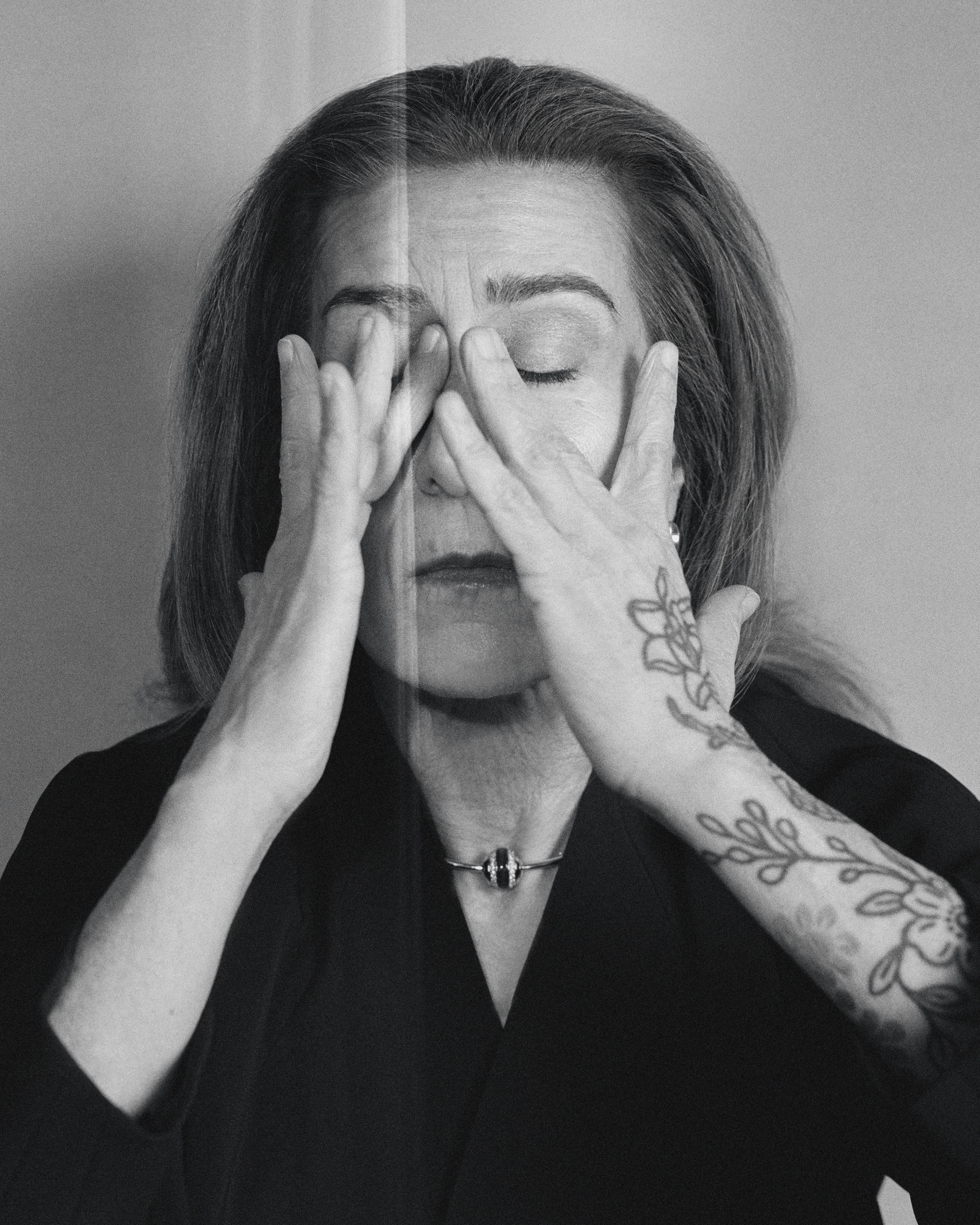
TOP by Ashlyn; all EARRINGS throughout and NECKLACE by Eddie Borgo
Jeanine Tesori Is Just Getting Started
This past academic year (or theater season, depending on whom you ask) was the first time in Jeanine Tesori’s life that she’s received a salary. “I’m sixty-four, and it’s the first year ever I’ve gotten benefits,” says the Tony-winning composer of Kimberly Akimbo and Thoroughly Modern Millie, who was last summer appointed professor in Music and Theater, Dance, and Performance Studies at Yale. “I’ll go on Medicare next November, so the irony is not lost on me,” she quips. “I think it’s fantastic. I get this thing in the mail every month and it’s a check and it’s the same amount. I know it sounds very silly, but for me, that’s the first time that I know what’s coming in. I don’t know many people who get paid to write; I get paid to have written.”
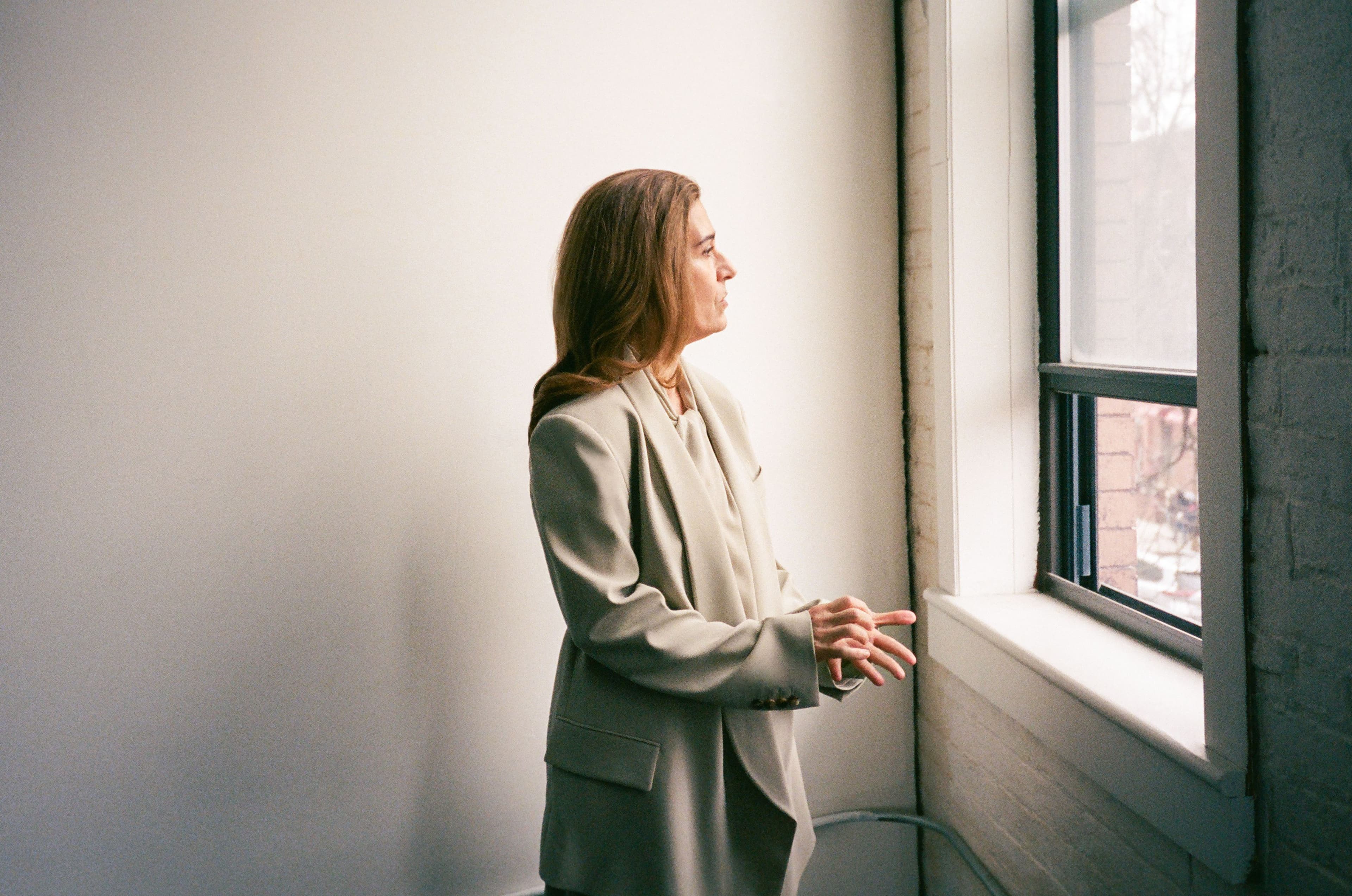
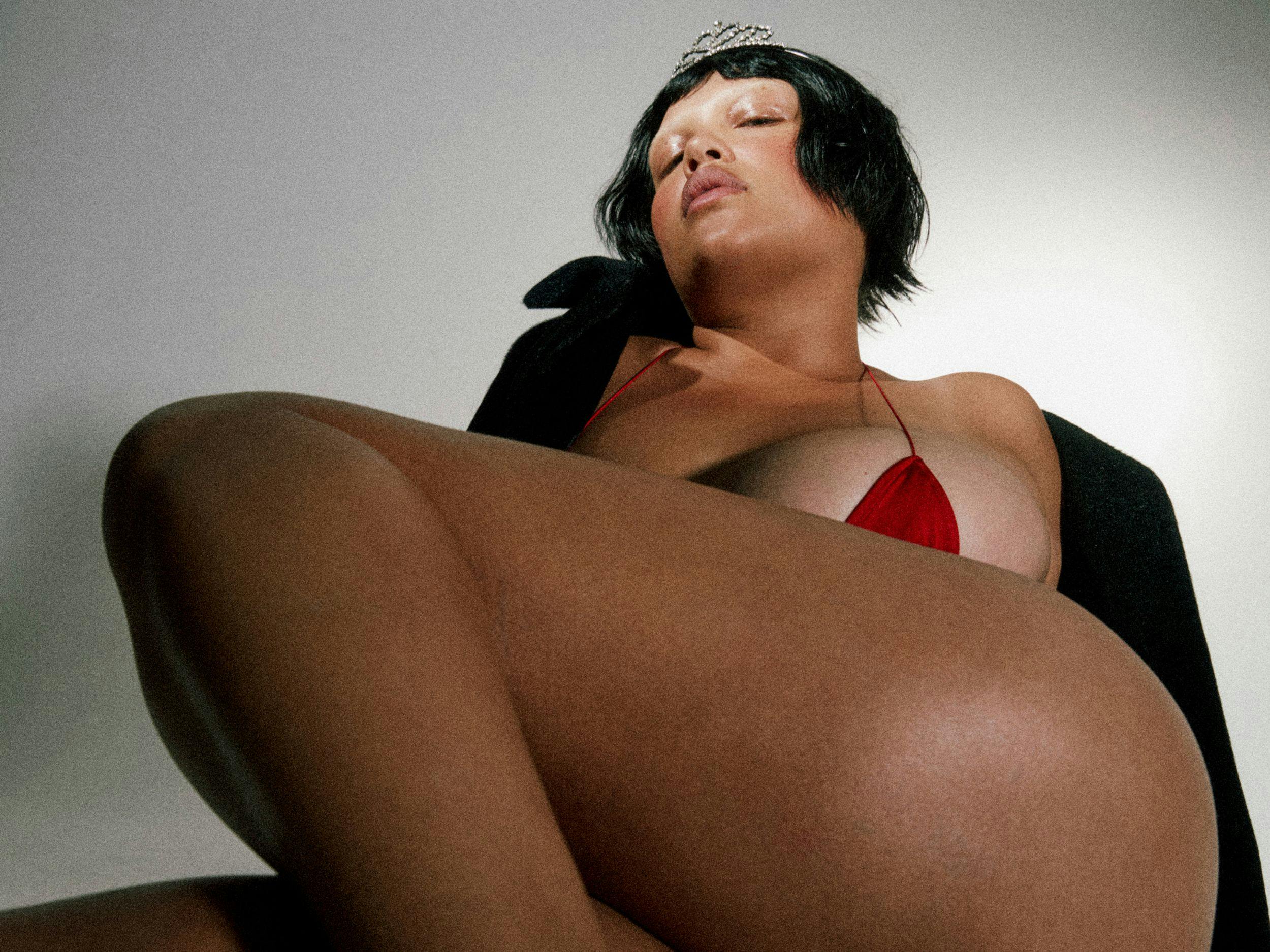
All CLOTHING by Michael Kors Collection
Sitting in a corner boardroom overlooking Lincoln Center, a multidisciplinary campus she’s spent the last several months activating through a yearlong programming series as the season’s Visionary Artist, Tesori is the first to admit her career has been one of incredible opportunities. Two years ago, one of the buildings below her opened its season with Grounded, making her the first woman to premiere a Metropolitan Opera commission in its 143-year history. In 2015, she and Lisa Kron were the first all-female writing team to win a Best Original Score Tony for Fun Home. But while Tesori’s œuvre is also filled with lesser-known treasures, it doesn’t take much deep diving to understand that her success is deeply earned.
TOP by Issey Miyake; NECKLACE by AGMES
Tesori’s two Tonys (for Kimberly Akimbo and Fun Home, both of which also won Best Musical) are for shows about women faced with the reality of death and feel like two sides of the same coin. One follows an optimistic teen the year that most people with her rare genetic condition, which makes her age four times faster than normal, find their lives cut short; another sketches the author Alison Bechdel’s psychic ties to her enigmatic father, a closeted funeral director who took his life while she was off exploring hers. Both barrel towards tragic ends, but are filled with humanistic impulses and quirks alternately heartbreaking and euphoric. Often uncomfortable, they capture something of life’s frail beauty. In the vein of Stephen Sondheim’s greatest work—Tesori is, undoubtedly, the heir to his throne—they expand on what musicals can be, narratively and musically: each character, each situation and viewpoint is explored compassionately, making each work something of a prayer in the face of existence.
Her characters’ fates are unclear to them, though that’s not the case for Tesori, whose mightiest compositions wrestle with palpable inevitability. Think of her Tony-winning creations’ race against time, or of the weary protagonist of Caroline, or Change accelerating her spiritual ablution in asking God to strike her down. When approaching a text, Tesori asks herself: “What can you bring? If you can’t bring anything, don’t set it. Music should feel inevitable, as opposed to a kind of betrayal or lessening.” A bigger challenge, she explains, is how to begin. A “visual writer,” she sketches out scenes on a large dry-erase board where the characters’ arcs are always in view, “a beacon of lightning you’re aiming for.” The audience, as she puts it, is the final scene partner, who must remain “just behind, never ahead.” As Kimberly Akimbo opens, a woman who looks about seventy asks a much younger man, “Are you okay to drive, Dad?” That sly bit of exposition, courtesy of playwright David Lindsay-Abaire, Tesori says, “is all I need to know something is off.”
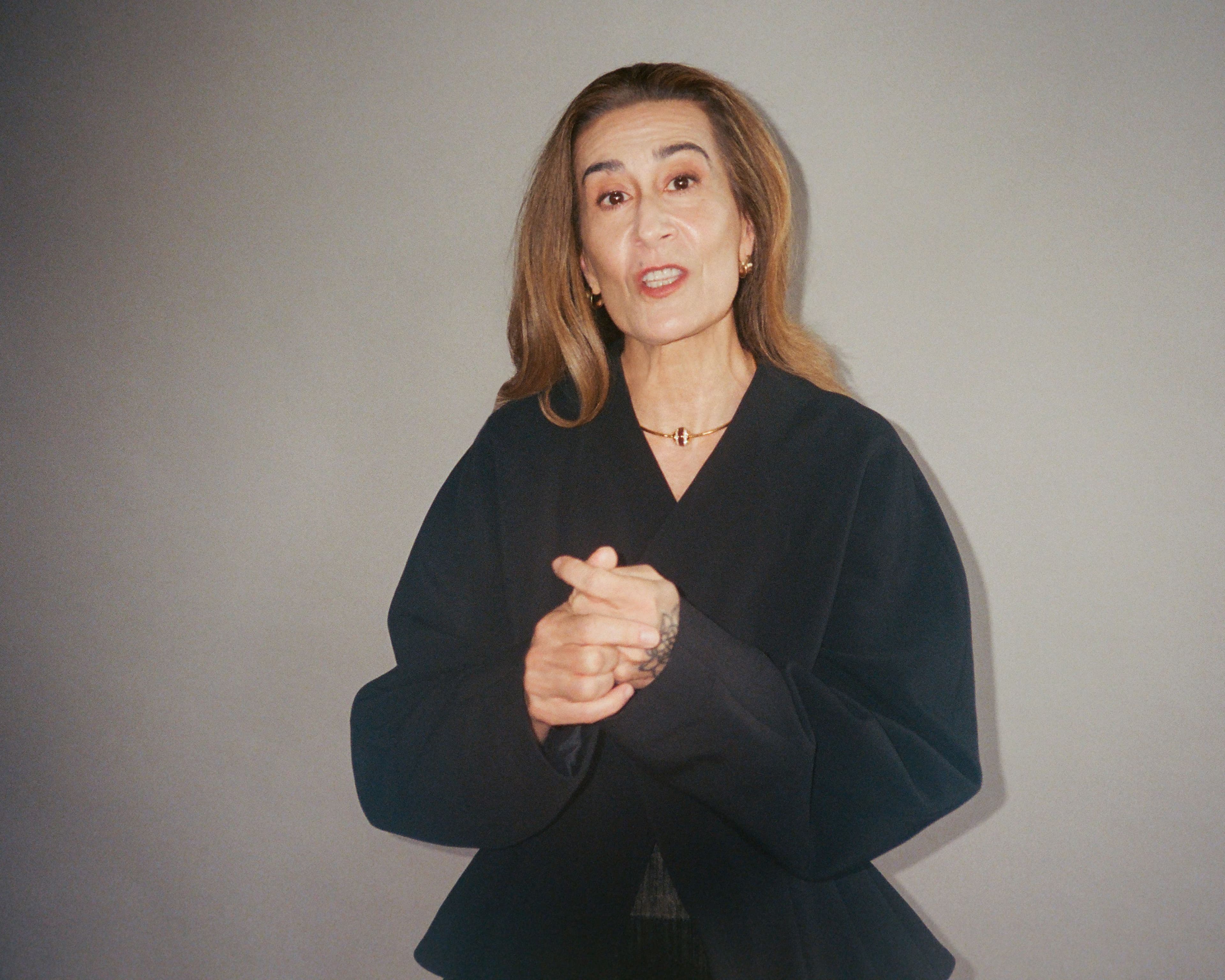
All CLOTHING by Ashlyn; NECKLACE by Eddie Borgo
As with many of her compositions, the score of Kimberly traffics in withholding—of expectations, of information, of gratification. “Yeah, I’m that way in my life,” Tesori quips. “It drives my friends crazy, because I tell them nothing. They’ll be like, ‘I just read that you got this, why don’t you tell us?’” She says it’s how she was raised, Roman Catholic on Long Island, “that you just don’t talk about stuff, never about yourself.” Her family back home, not the theatrical audience, is who Tesori imagines when writing a number like “My Disease,” Kimberly’s classroom presentation on herself that turns exquisitely combative. “It was really important to me that she make it a very athletic cabaret act: You want me to be a sideshow? I’ll give it to you,” she explains. “I think that kind of rage, especially teenage rage, flows like lava. There’s nothing like teenage love or rage that’s so energetic, and I remember having it. And of course, in our household, one did not express that.”
But Tesori is not, at least at this meeting, an abrasive person. (She’s got the authoritative warmth of a favorite professor down, for one thing.) The way she discusses her artistry, to bring that other Great back in, is reminiscent of Sondheim’s clear-eyed assessments of his creations, and why and how they work. There’s a score she once wrote, early in her career—a Sondheim derivative she chalks up to “how we all start, totally mimicking someone else,” in this case “the king of un-gah, un-gah, un-gah, pling, and all that use of dissonance.” It will never see the light of day, Tesori says, but when she told her inspiration about it, he replied: “Yes, you and everybody else.”
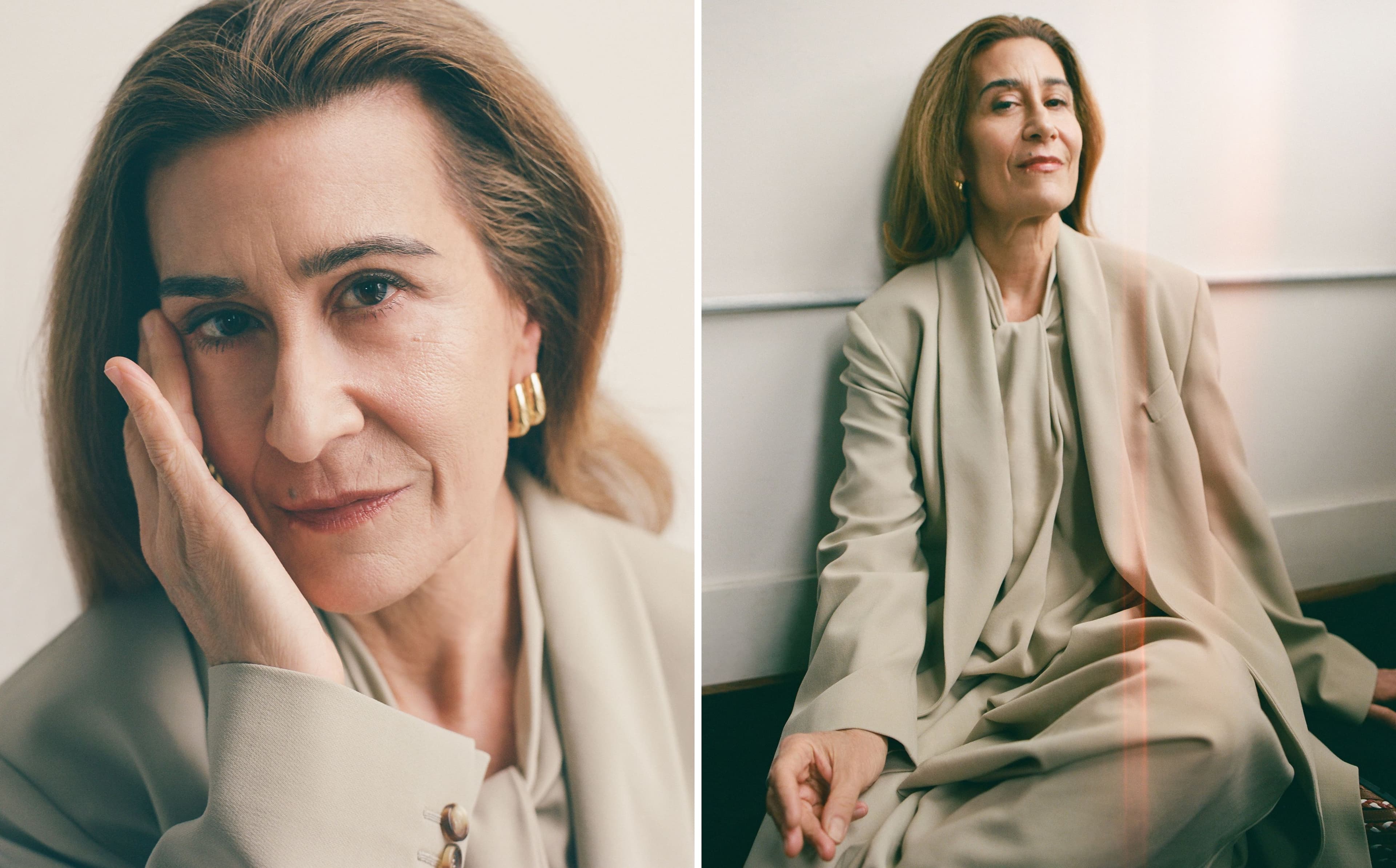
All CLOTHING by Michael Kors Collection
“I think of everything about composition as tension and release,” she notes, “so that often involves rage and containment and stifling, but it’s also the idea that tension creates in someone to go forward.” Though born to a musically inclined family, what caused Tesori to go forward, from pre-med to music, at Barnard was catching Linda Twine’s music direction for the Broadway revue Lena Horne: The Lady and Her Music in 1981. “She was onstage and she was so steady,” Tesori recalls. “Very little movement, she was so economical, this statuesque Black woman with another elegant Black woman, and they left it all on the stage. I thought, I don’t know what you do, I don’t know if I can do that or what that even is, but I want to do this.”
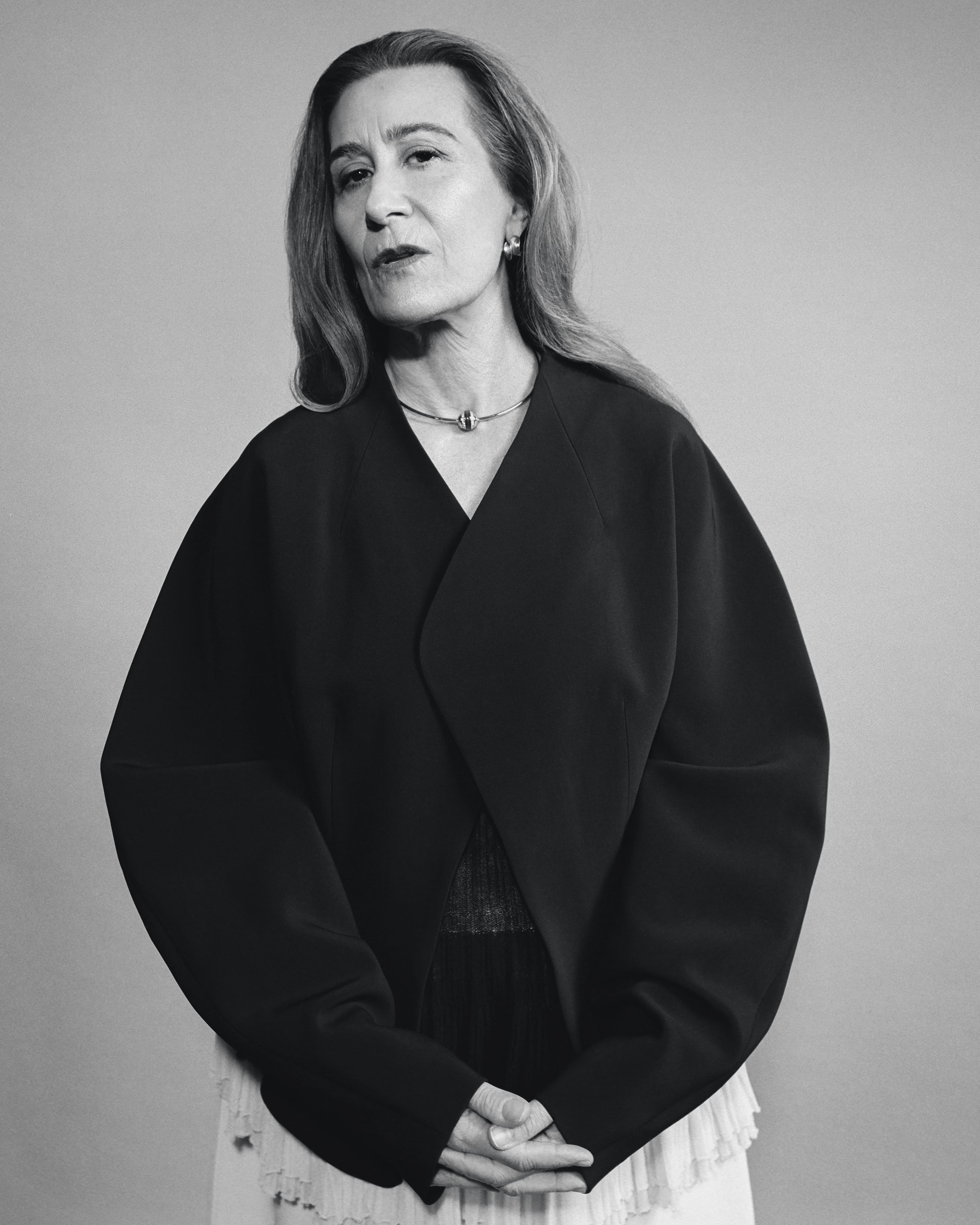
All CLOTHING by Ashlyn; NECKLACE by Eddie Borgo
Twine became her mentor on the Big River national tour shortly thereafter, and soon Tesori landed her first Broadway job, as a substitute assistant conductor for Gypsy, starring Tyne Daly at the St. James Theatre, the same house as her next two gigs, associate conducting The Secret Garden and The Who’s Tommy. (On how that last credit influenced her work, Tesori notes the one thing the maximalist rock opera withholds is applause, and the three-way splitting of its protagonist paved the way for Fun Home’s time-hopping Alison.) Tired of conducting others’ work, she secured the rights to Doris Betts’s short story “The Ugliest Pilgrim,” moved into an empty lighthouse on Lake Champlain, and composed her first score, Violet.
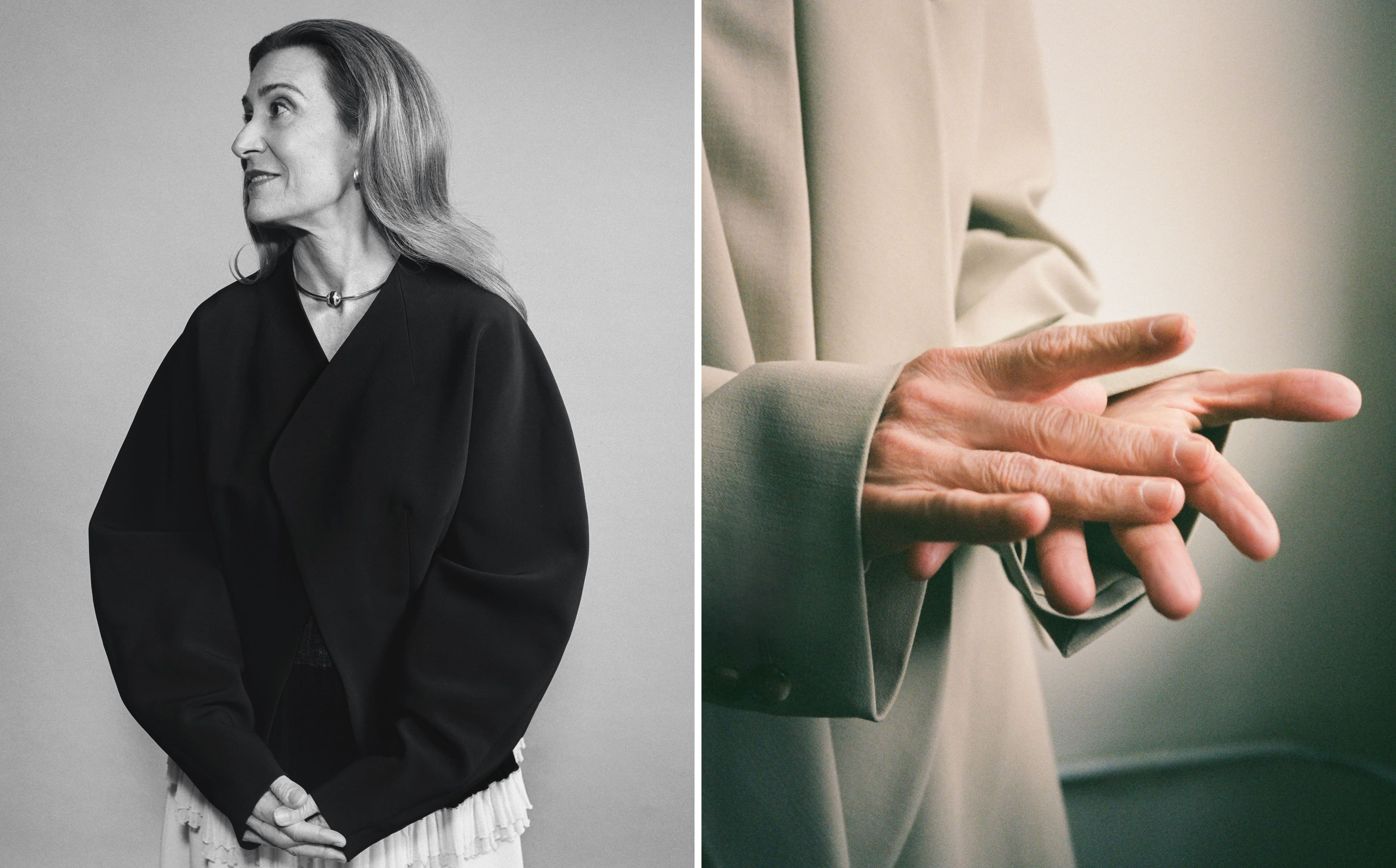
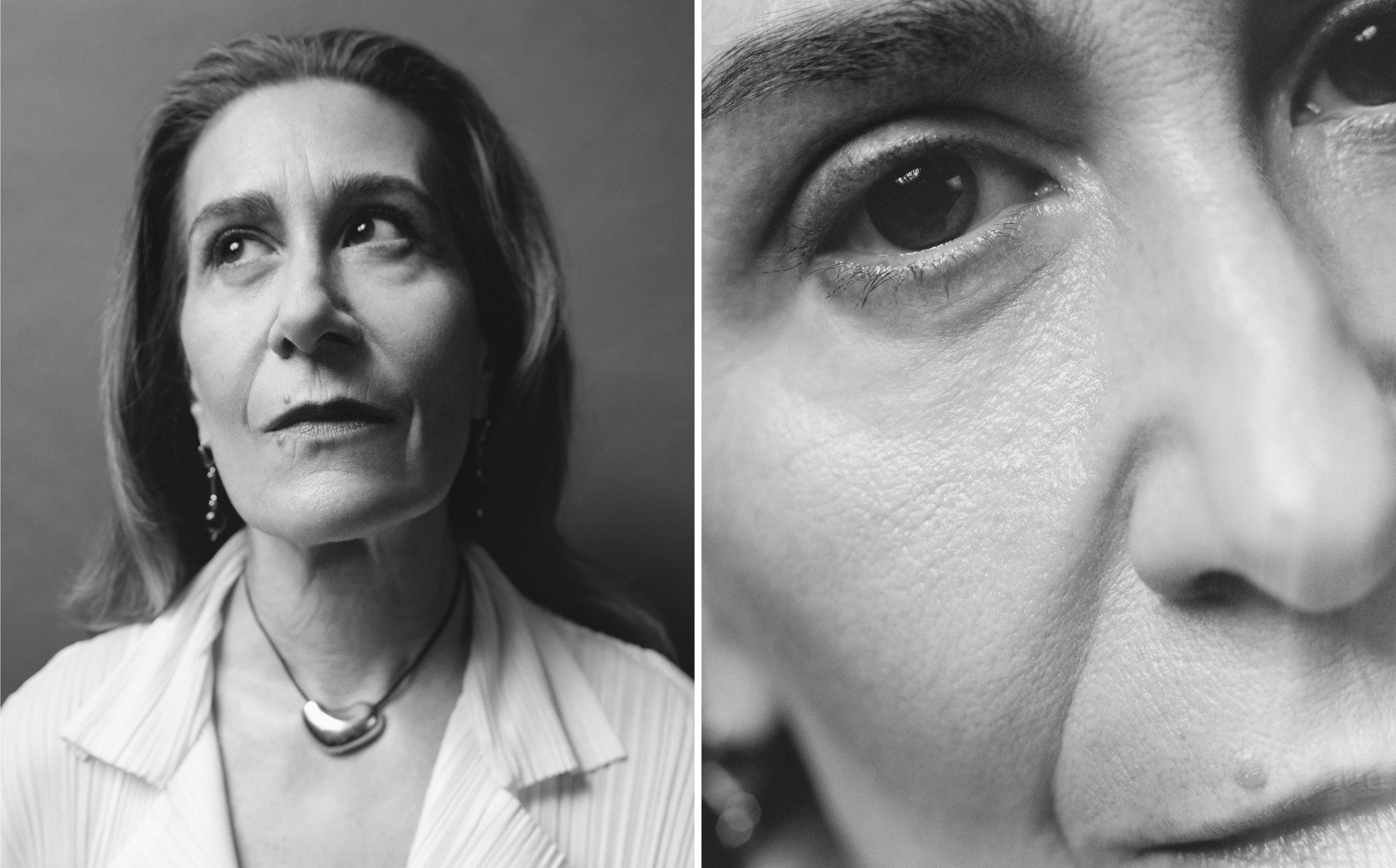
LEFT: All CLOTHING by Ashlyn; NECKLACE by Eddie Borgo. RIGHT: All CLOTHING by Michael Kors Collection.
That 1997 original is one of the works Tesori revisited during her Lincoln Center season, this time performed in American Sign Language by the company Deaf Broadway. Along with book writer Dick Scanlan, she is also focused on updating their collaboration on Thoroughly Modern Millie, for somewhat unexpected reasons. Their adaptation of the 1967 film won six of its eleven Tony nominations, along with righteous condemnation for its stereotyping of Asian characters. Tesori acknowledges that “the racial aspects didn’t age and caused a lot of harm,” and have since been updated, but it’s the 2000 musical’s structure she’s keen to repair: “As practitioners, we just didn’t know. Now, Dick and I have so much more skill, so that when I look back at it, I go, That shouldn’t be there, this has to go after that, that’s why that’s clunky.”
A recent workshop showed promise, and Tesori praised its cast’s ability to fix things on the fly. An adaptation of the Loretta Lynn biopic The Coal Miner’s Daughter, starring Tesori’s frequent collaborator Sutton Foster, is also a challenge on an approaching horizon, and a way for Tesori to honor the iconic singer in a manner similar to how her mentor recognized Lena Horne. That project’s tension and release, between past and future, begins to echo further. “She’s a fascinating person, because she did a lot of work with not a lot of chords, and most of them are major,” she says of Lynn. “I think that her story is deeply American, the story of that region, and…” A thoughtful pause. “You know, I’ve always wanted to do, and really I’m going to do, King Lear, but it’s going to be set on Long Island, and they’re going to be Italian.”
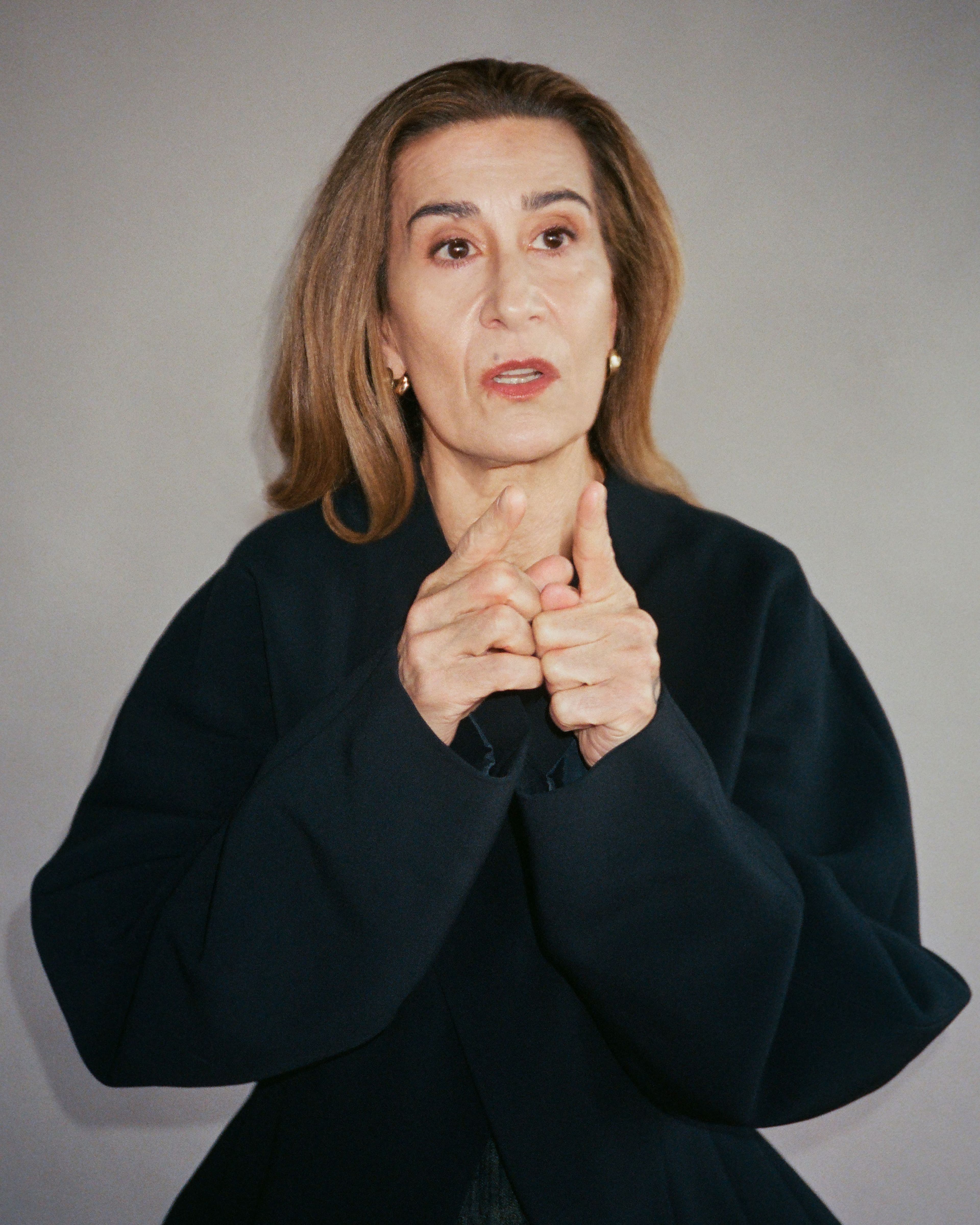
JACKET by Ashlyn; NECKLACE by Eddie Borgo
If Fun Home was personal due to a “shared awareness of the house” between Bechdel’s family and her own, a Sicilian Lear might be the closest project yet to Tesori’s home. “It would be super operatic, very Italian in that way,” referencing Nino Rota’s score for The Leopard as well as seventies folk music, and Tesori cites an interest in representing “that kind of character as an Italian male struggling with power and legacy and surrounded by daughters.” Currently, the piece is somewhere between “very clear to me” and “filled with blanks,” but Tesori remains committed, as she does to every entry in her monumental, still-growing opus.

DRESS by Louis Vuitton; BRACELET by AGMES
“I’m proud of all the work because, as George C. Wolfe always says about his own, I’ve gone to the mat for every single piece,” she reflects. “I’ve really done it the best, even things that have been big flop-a-roos. I can’t control that. I did everything. I left it all there. It was the way I was trained, it was the way that I was raised. You just went for it. You just go. There’s nothing I look back on and think,” she pauses. “I mean, that’s who I was when I wrote that.”
Lincoln Center’s Visionary Artist celebration of Tesori concludes on Sunday with Come & Sing, a participatory public community choir curated and led by Tesori, at Lincoln Center Theater. Be the first to read this story and many more in print by preordering your copy of our eleventh issue here.
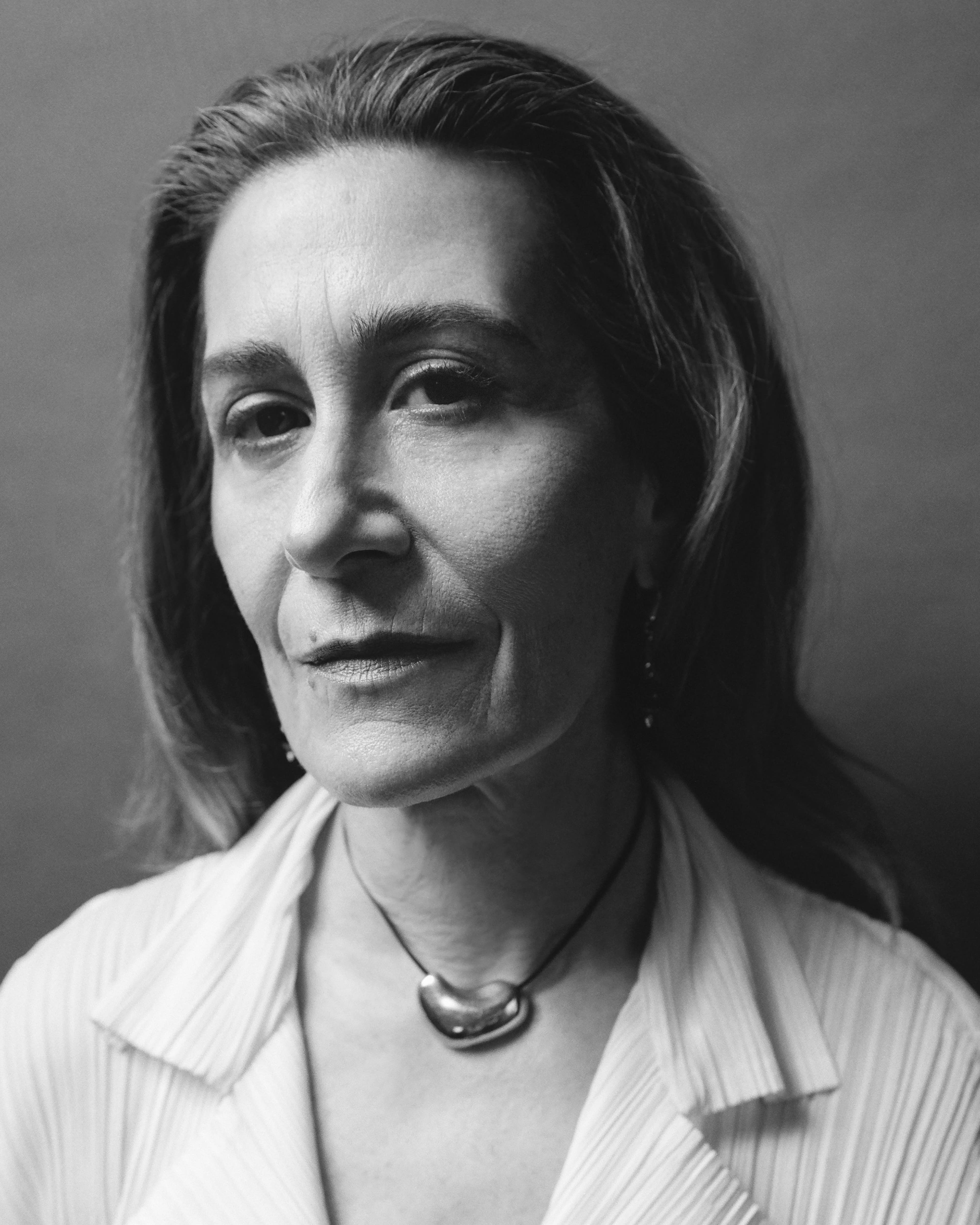
TOP by Issey Miyake; NECKLACE by AGMES
As a nonprofit arts and culture publication dedicated to educating, inspiring, and uplifting creatives, Cero Magazine depends on your donations to create stories like these. Please support our work here.