

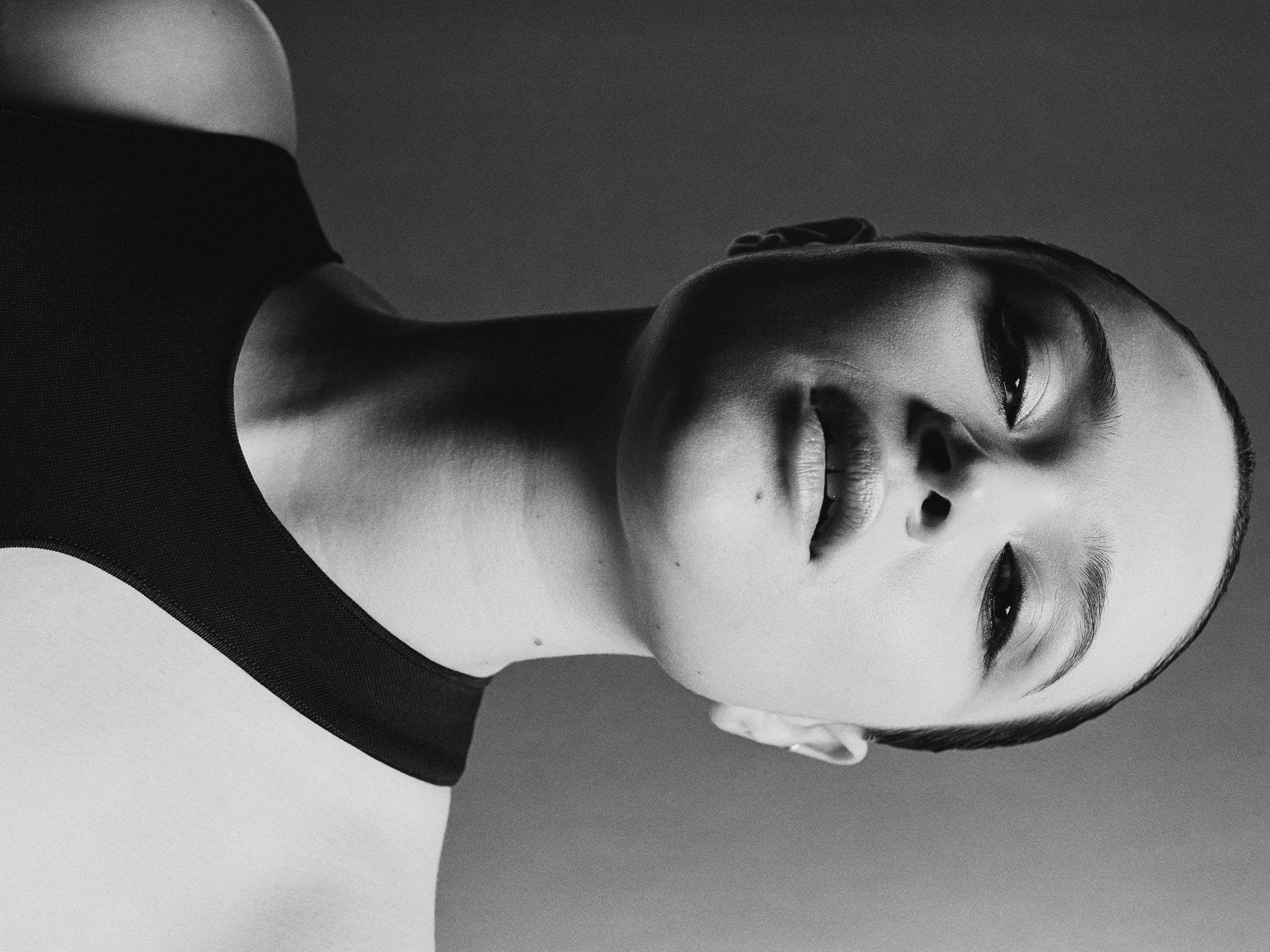
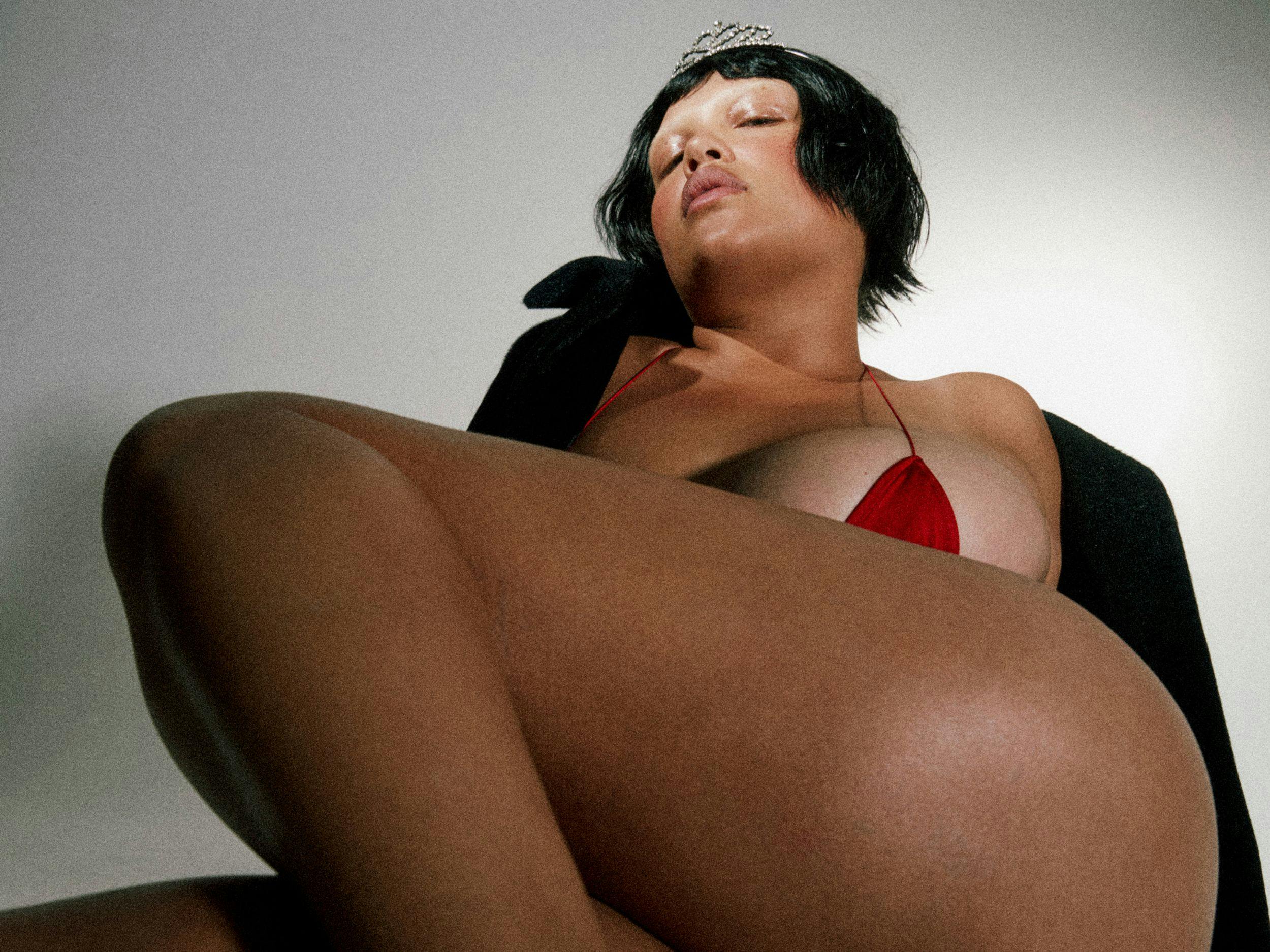
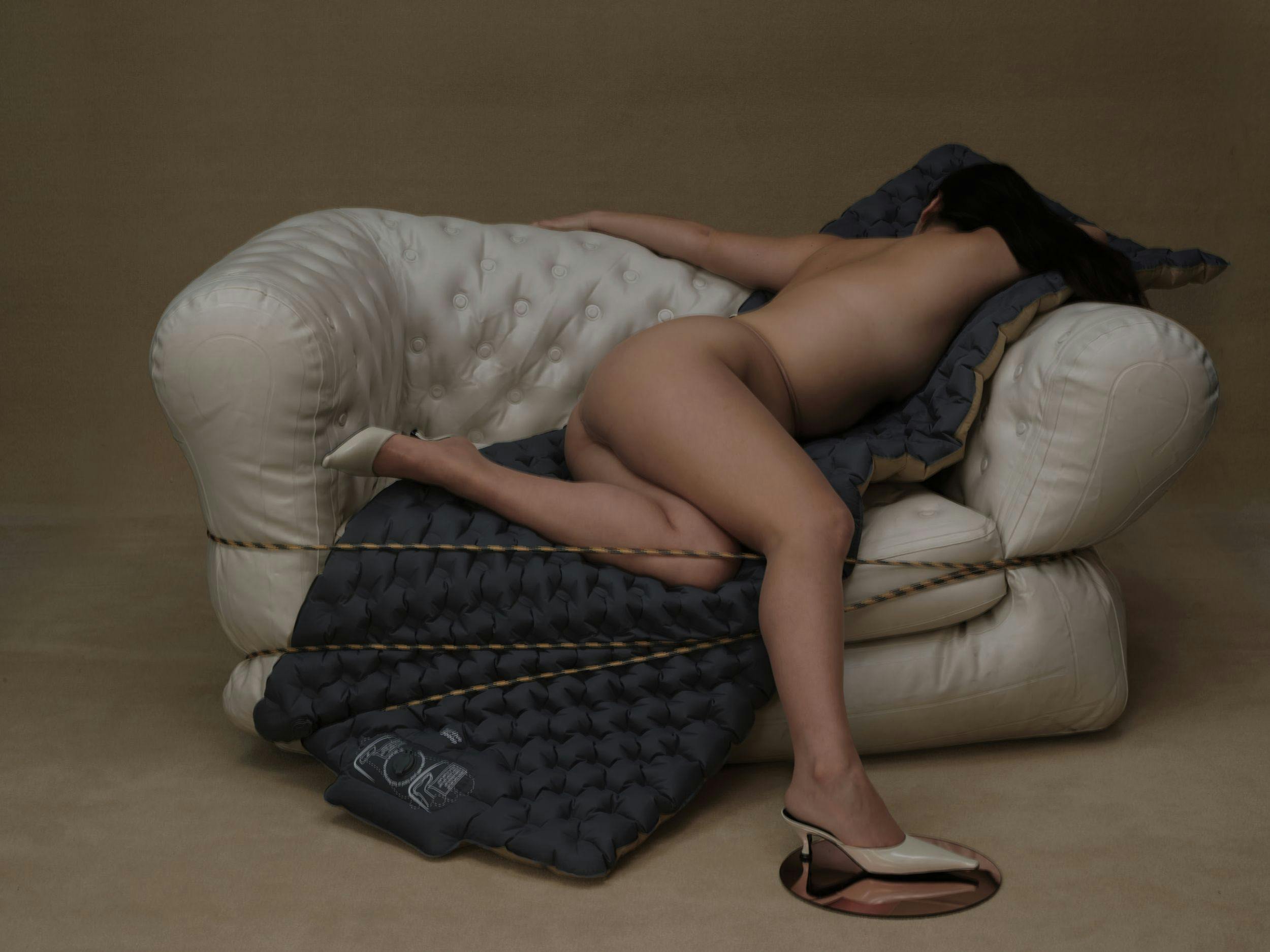
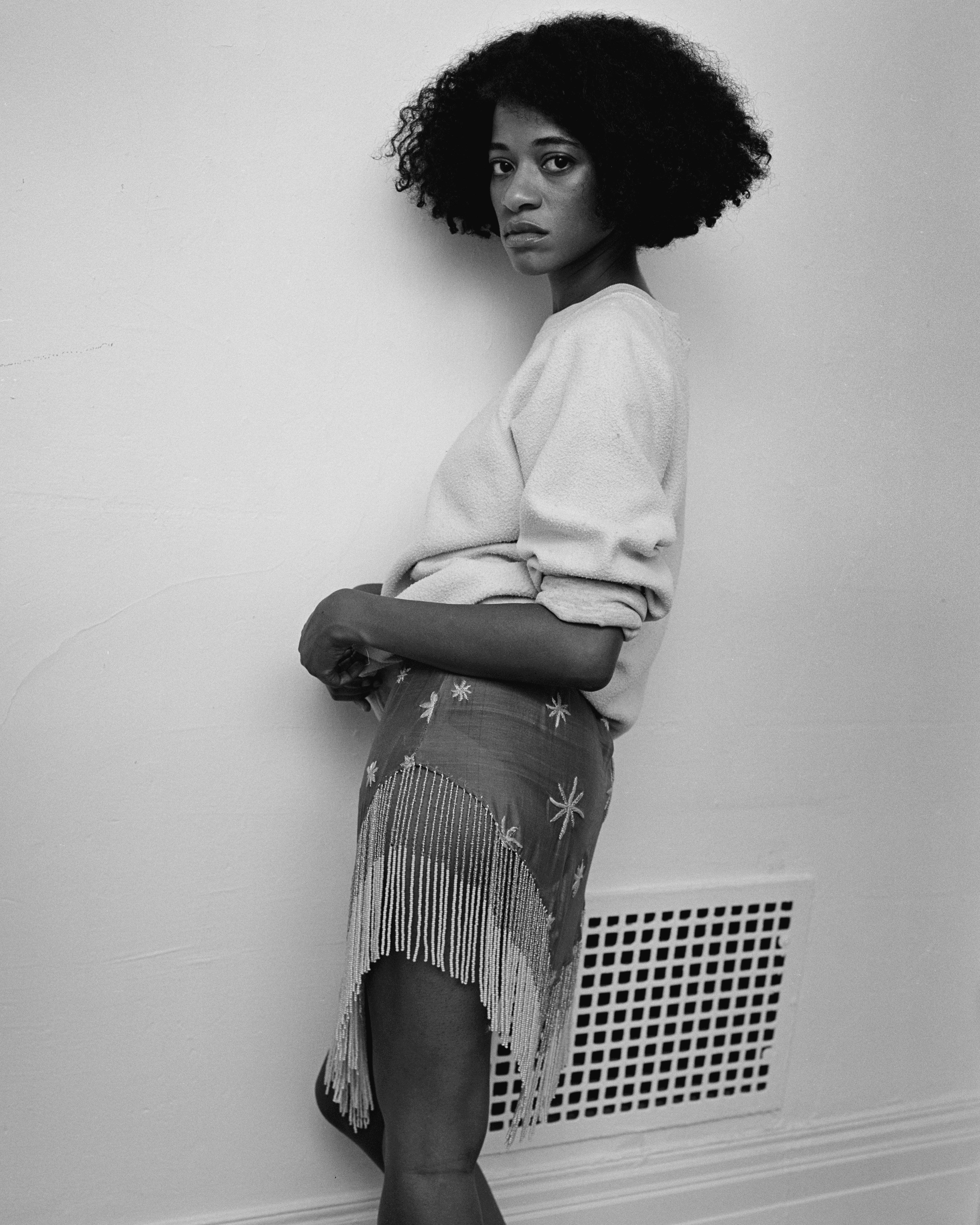
Vintage TOP; DRESS by Tigra Tigra
Kilo Kish Is Finding Herself
The September afternoon she hosted a burger pop-up in Williamsburg, Kilo Kish found herself tackling a level of unpredictability most chefs take years to acclimate to. “It was more difficult than I expected to do something in food. [There were] a lot of variables,” the multidisciplinary artist professes, quickly identifying a commonality between cooking and a skill which is a bit more familiar to a twenty-first-century musician. “Food feels more like DJing—every minute you have to make a decision! You continually make snap decisions, which I don’t love.” The pop-up, hosted at Oh Boy Brooklyn, had simmered in her mind for years—a tactile, sense-engaging extension of her 2022 album American Gurl, which was conceptualized as glossy and mass-produced, an artifact of pop Americana. Almost inevitably, her creative energies lasered in on the ever-present cathedral of American consumerism: fast food. “When I made American Gurl, I always knew I wanted to do burger pop-ups with it,“ she explains. “I felt that album was the McDonald’s version of a Kilo Kish record.” But the opportunity only coalesced when the necessary components aligned. “Ideas come to fruition when they’re ready, instead of forcing them. When the right opportunity arises, it clicks.”
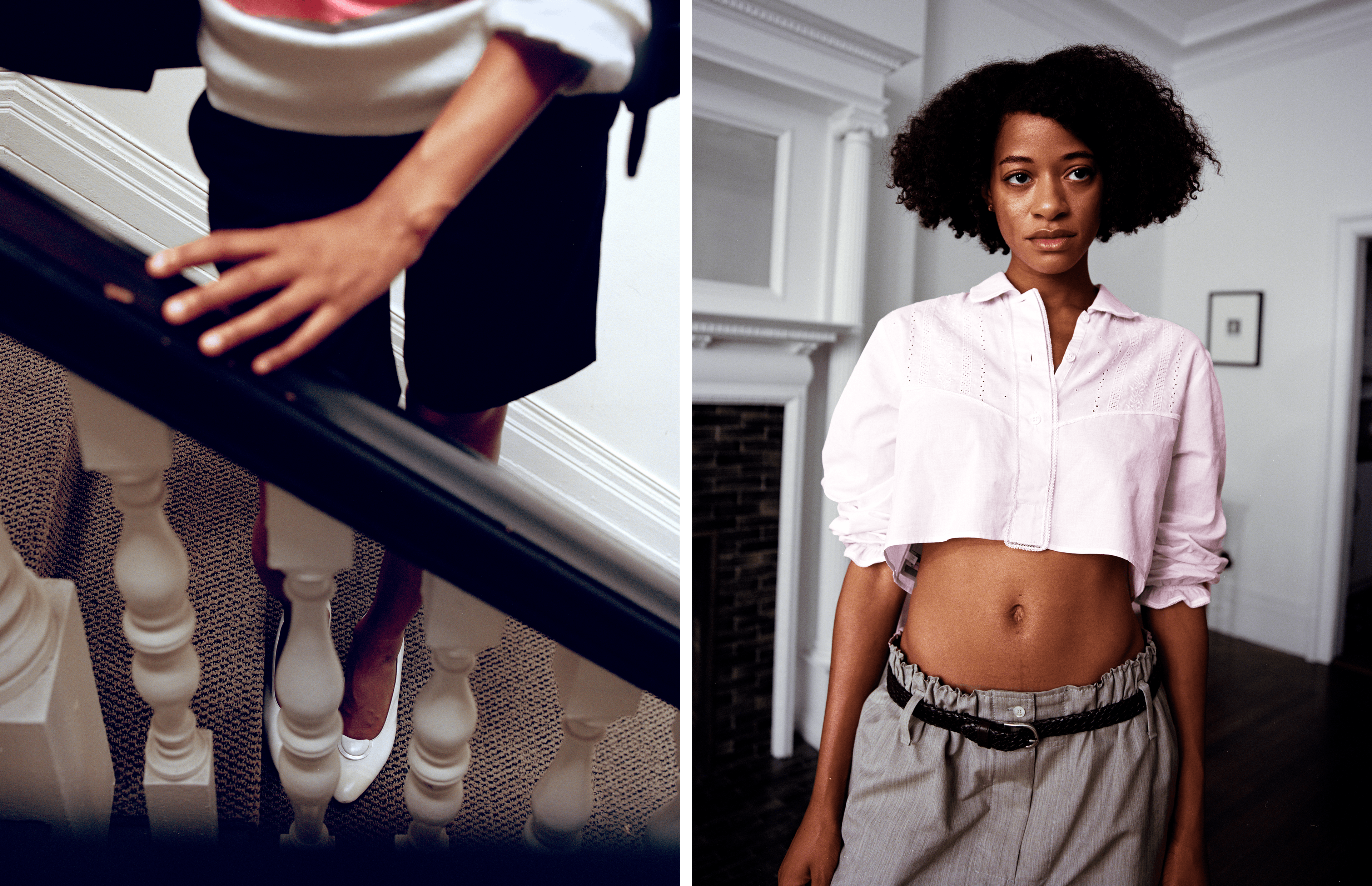
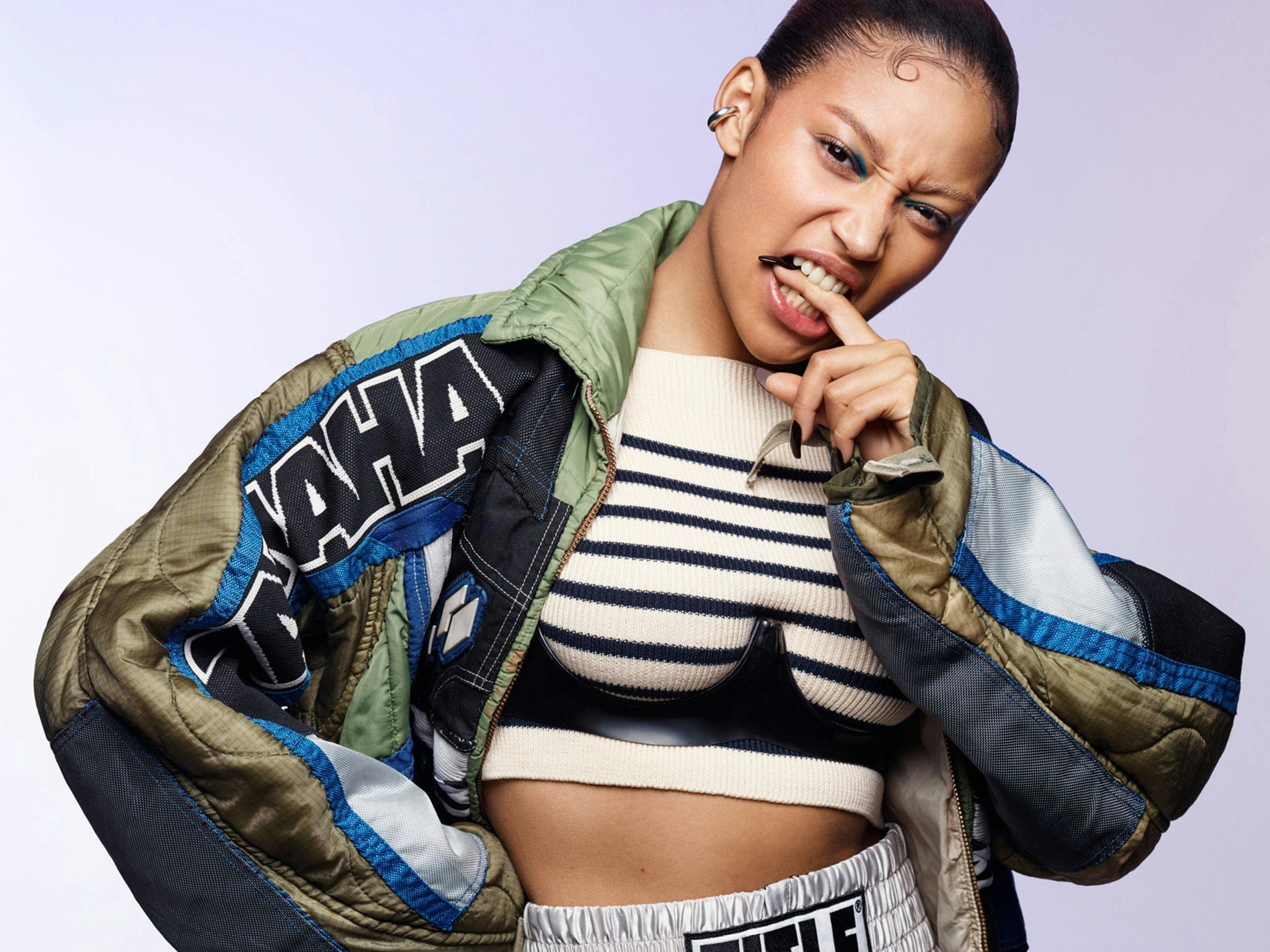
LEFT: JACKET by Hermès; TOP, stylist’s own; Vintage SHIRT, SHORTS, and SHOES. RIGHT: All CLOTHING and BELT by Prada.
Kish’s inclination to let concepts marinate enables her to branch beyond traditional album cycles, constructing multi-sensory, multimedia universes laced with social commentary—occasionally circling back months or years later to push an existing project into uncharted territory. She first emerged a decade ago out of the New York art-school diaspora (she studied textile design at FIT)—an interdisciplinary current of musicians, designers, and multi-hyphenates who move between genres with an ease that baffled the industry’s older guard. Her early EPs, released in her twenties, imbued restraint with the cool experimentalism of visual art students experimenting with sound installations. Since then, through a burgeoning mosaic of albums, collaborations, art direction, stage work, and film experiments, her practice has taken on the shape of a constellation more than a catalog.
“They’re permanent,” she proclaims of her projects. “They’re concept universes that can spark new points of view at different times in life, and you can revisit them.” In a way, her approach takes on an architectural lens. Rather than serving as a timestamp for an era in her creative practice, a song can behave as a chamber she can re-enter. “What I love about live performance is the way songs change through the years. What a song used to be about may not be what it’s about now.” The recording industry’s insistence on novelty no longer interests her; each successive project can breathe on its own and morph with the times and in the context of her broader creative output. “Once I got over that limitation, I realized: why wipe the slate clean? They’re meant to live forever.” And audiences, she insists, can follow the evolution. “People are smart. If you build a world clearly, they can handle revisiting it from different angles or contexts.”
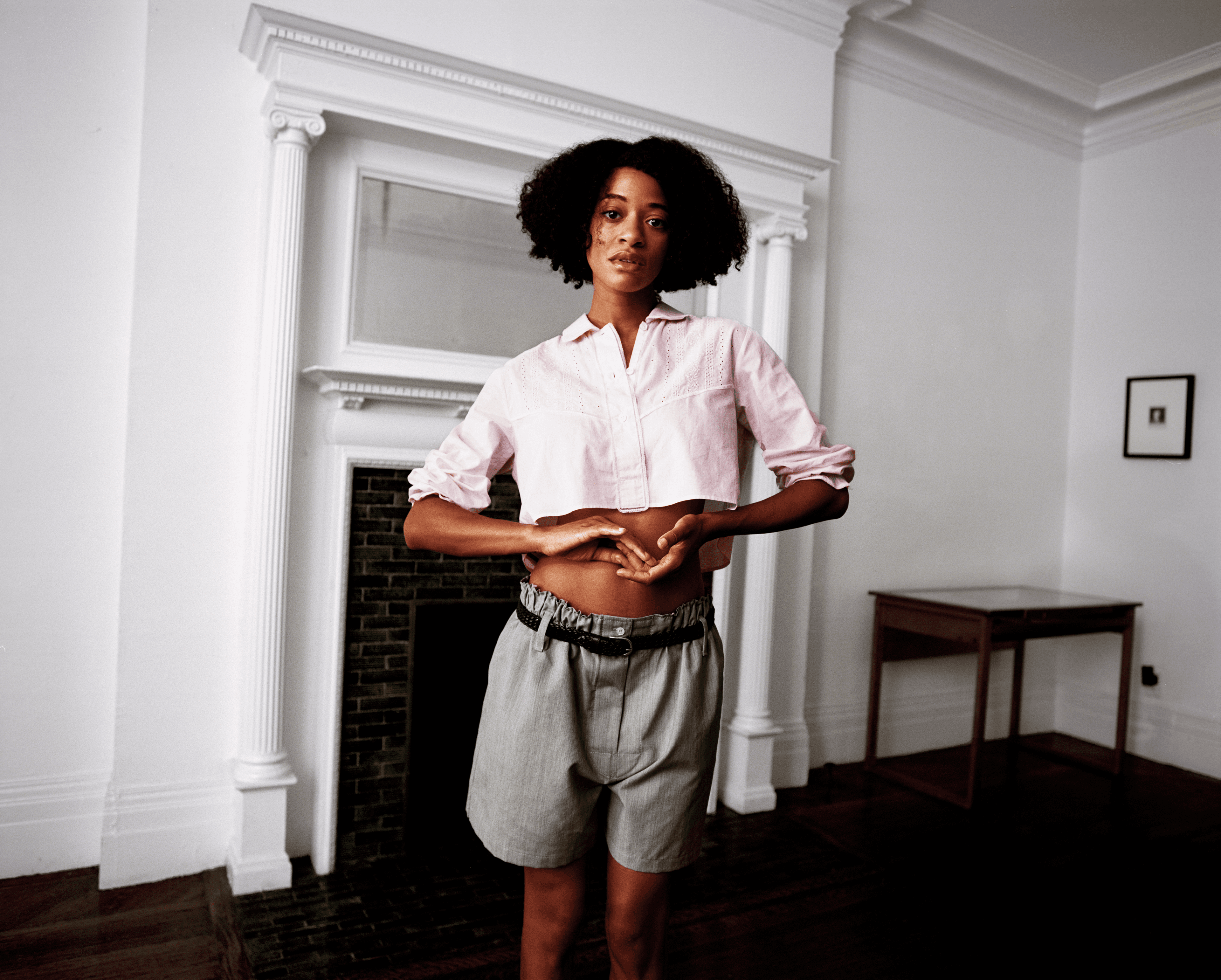
All CLOTHING and BELT by Prada
The past few years have reoriented her relationship to work, and to her own boundaries. “I make what I live,” she says. “I create from my own limitations and the limitations of those who work with me. My work reflects my process.” Her latest album, Negotiations, emerged from a period in which she found her pace colliding with her body. “Negotiations is about asking: how do we keep up with this? We’re not. That came from my body—physically not being able to do things.” She began asking questions that many artists are all too familiar with but rarely articulate publicly. “Maybe this status quo isn’t possible for humans going forward, especially in the AI era and the pressure to speed up. We can’t work all day and all night.” And then, the more elemental ones: “What does it mean to live today? What is a good life? What is good work?”

LEFT: JACKET by Hermès; TOP and BELT, stylist’s own; Vintage SHIRT, SHORTS, and EARRINGS; BROOCH by Alice Waese. RIGHT: Vintage TOP.
Her independence as a musician (and artist as a whole) intensifies these questions. She has been releasing her work through her own imprint, assembling teams that shift with the needs of each project: “The biggest challenge is from within. All artists have high standards. We want to do the best we can.” But the practicalities remain stark. “You have to weigh the difference between an independent artist and someone with a team of thirty people,” she says. And the external noise can feel corrosive. “So much of where we get lost is in outside feedback.” The marketplace’s compulsive reinvention doesn’t help: “The mediums and expectations are constantly changing. One minute it’s TikTok, then not TikTok, then short form, then long form, then Substack. You don’t know what the fuck anyone is saying.” At a certain point, she stepped sideways, rather than quickening her pace to match the speed of the industry. “Yes, you can find success that way, but it also equals exhaustion,“ she adds. “You have to find paths that resonate with who you are.”
Her engagement with technology—and perspective on the growing presence of generative tools—is structured from a similarly nuanced vantage point: “I’ve used AI in contexts that explore these themes. For example, I used it to write the script for a short film with a music industry overlord leaving a message.” Although dabbling in emerging technologies, she is abundantly clear on her boundaries—“I would never use AI to make a song.” Still, there exists a natural curiosity born from observation rather than fear or evangelism. “I’m not super versed in [artificial intelligence], but I’m not for or against it. I’m curious—it’s a rich place for philosophy and exploring how we move forward as a world. There are huge implications for our society and the communities it affects.”

JACKET by Our Legacy; SHIRT, TIGHTS, and BROOCH, stylist’s own; SKIRT by Chapman Newnum; vintage BELT; SHOES by Acne Studios
Many of these instincts can be traced back to her time at FIT. Before music became a profession, she was surrounded by studios and looms, sketchpads and dye labs; a training ground which still informs how she organizes her ideas. “Creating collections primes you for building worlds or universes or campaigns,” Kish ruminates, then digs deeper into her nearly accidental foray into music. “I always knew I wanted to be an artist. I didn’t know I wanted to be a musician, and I don’t think I ever wanted to be.” Her comfort with multiplicity may confound some observers, but it is a pure manifestation of her artistic foundations. In an age of multidisciplinaries and multihyphenates, she has embraced the intersections of seemingly divergent practices. “Moving between mediums feels comfortable because of that practice—painting, drawing, weaving, screen printing, design. From the outside, people say I’m doing too much,” she notes with a chuckle.
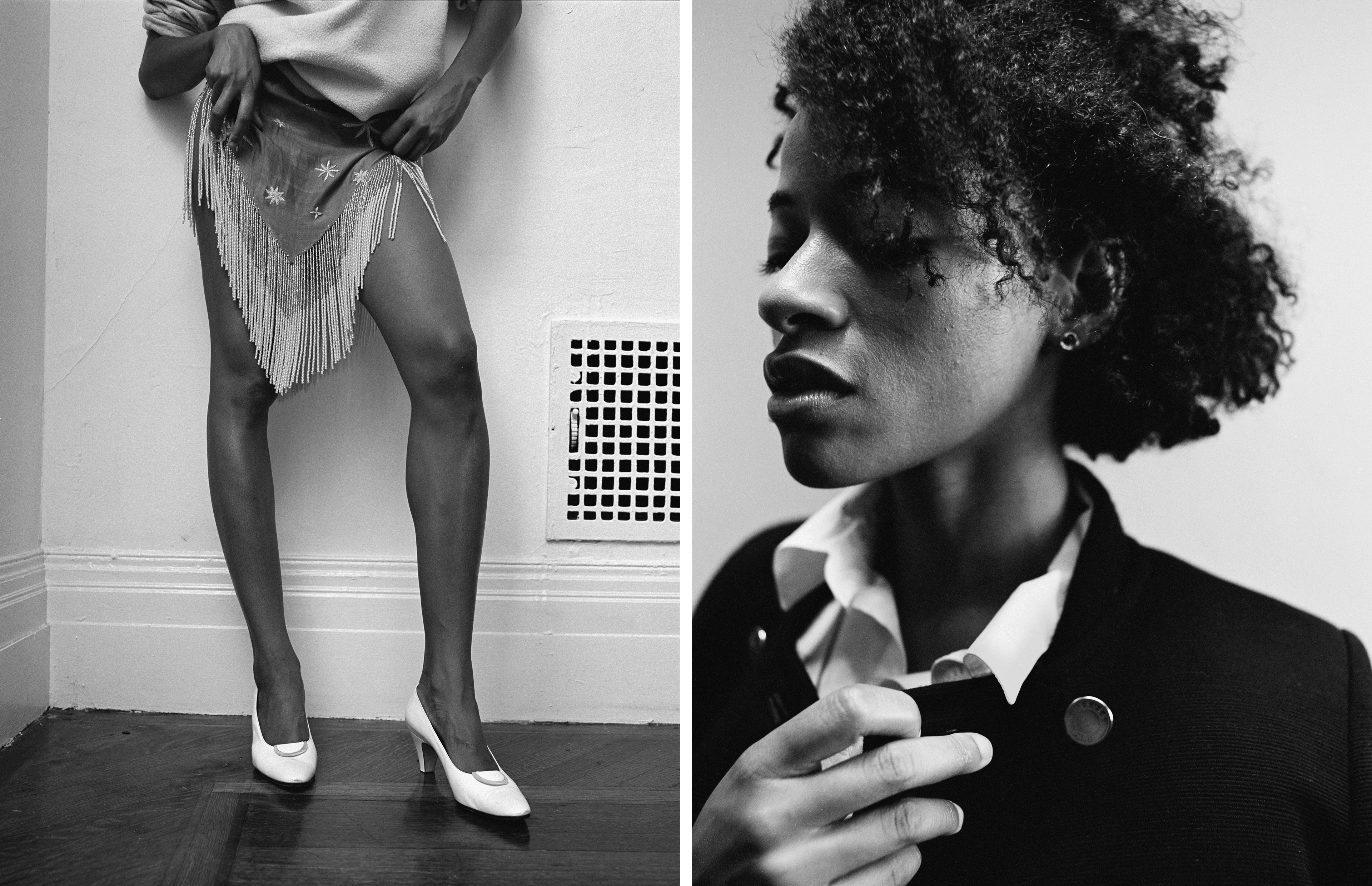
LEFT: Vintage TOP and SHOES; DRESS by Tigra Tigra. RIGHT: JACKET by Hermès; vintage SHIRT and EARRINGS.
Outside of her work, her attention fixates on kinetic experiences and architectural landscapes. “I’m inspired by food, spaces, restaurants, hotels, travel,” Kish identifies, keying into a set of intertwined worlds which simultaneously co-exist and demand their own independent disciplines—in a similar vein, she sees creativity and wellbeing as entwined. “A lot of what I explore in my art is creative wellness and how we achieve that,” she says. “When I’m not working intensely, I’m meditating and trying to achieve some level of self-actualization.” The mind and body themselves have become areas of study, and her exploration of wellness has imbued itself into her own creative practice.
Geography (and the spatial components of architecture and urban design) places its own pressure on her process. Los Angeles provided long, quiet stretches in which she could disappear into a project. “LA is a great place to nerd out and go deep on a project and not see anyone for weeks,” she says. Now in New York, with its density and insistence, she experiences a different pull: “I’m more inspired in New York, but I don’t feel the desire to sit in a room and work there. I want to be outside, in the city, around people.”
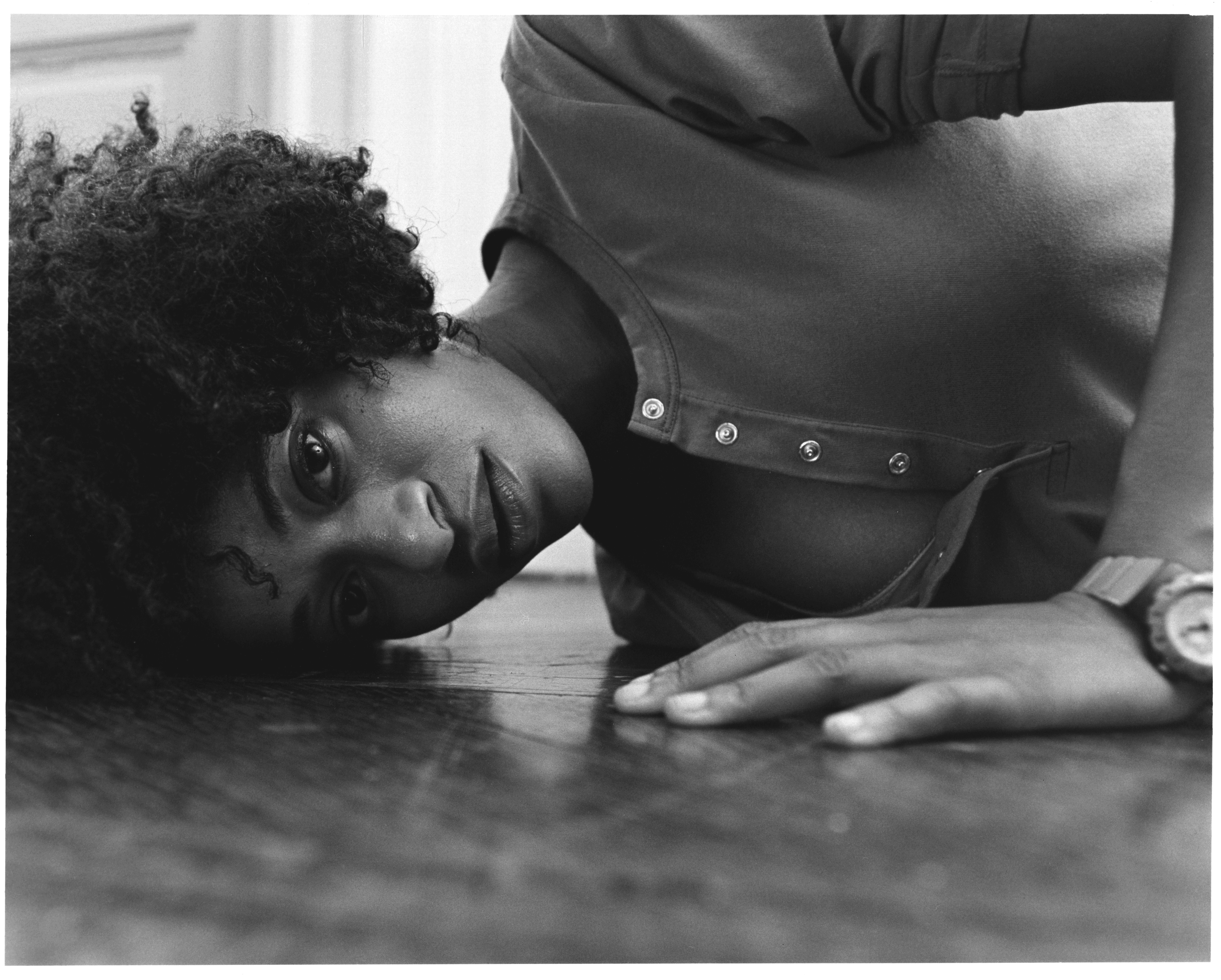
Vintage DRESS
Even her relationship to listening reflects this interplay between immersion and withdrawal. “I don’t often listen to music,“ she offers. When she does, it becomes ritualistic. “I’ll listen to the same song on repeat for seven hours. It puts me in a meditative state.” As a result, her engagement with music could be described more in terms of depth than breadth. Perhaps paradoxically for a musician notable for explorations of genre, she doesn’t pretend to inhabit the archetype of the encyclopedic creative. “I’m a music artist, but I’m not a music head. I don’t know everything about music,” Kish maintains. Instead, she leans on the people around her while staying anchored in her own sense of sound. “I rely on collaborators who are music heads. I’m very intuitive: I sit in sessions and say, ‘Yes, this sound. No, not that sound.’”
The next phase of her career feels newly open. “Negotiations feels like the beginning of an eat-pray-love journey: you exit your old life and find your bliss and happiness,” she points out, now gazing forward to her next musical project, which continues down that thread. “The next record is about finding the spice and beauty of living again.” And beneath that—quieter, but more decisive and reflective of her self-guided studies into philosophy and wellness—is a shift in her own center of gravity. “I’ve been trying to find what actually makes me happy, because I don’t think I thought about that before now,” Kish emphasizes. “I’m finding the spice and beauty of living again.”
Negotiations is out now.
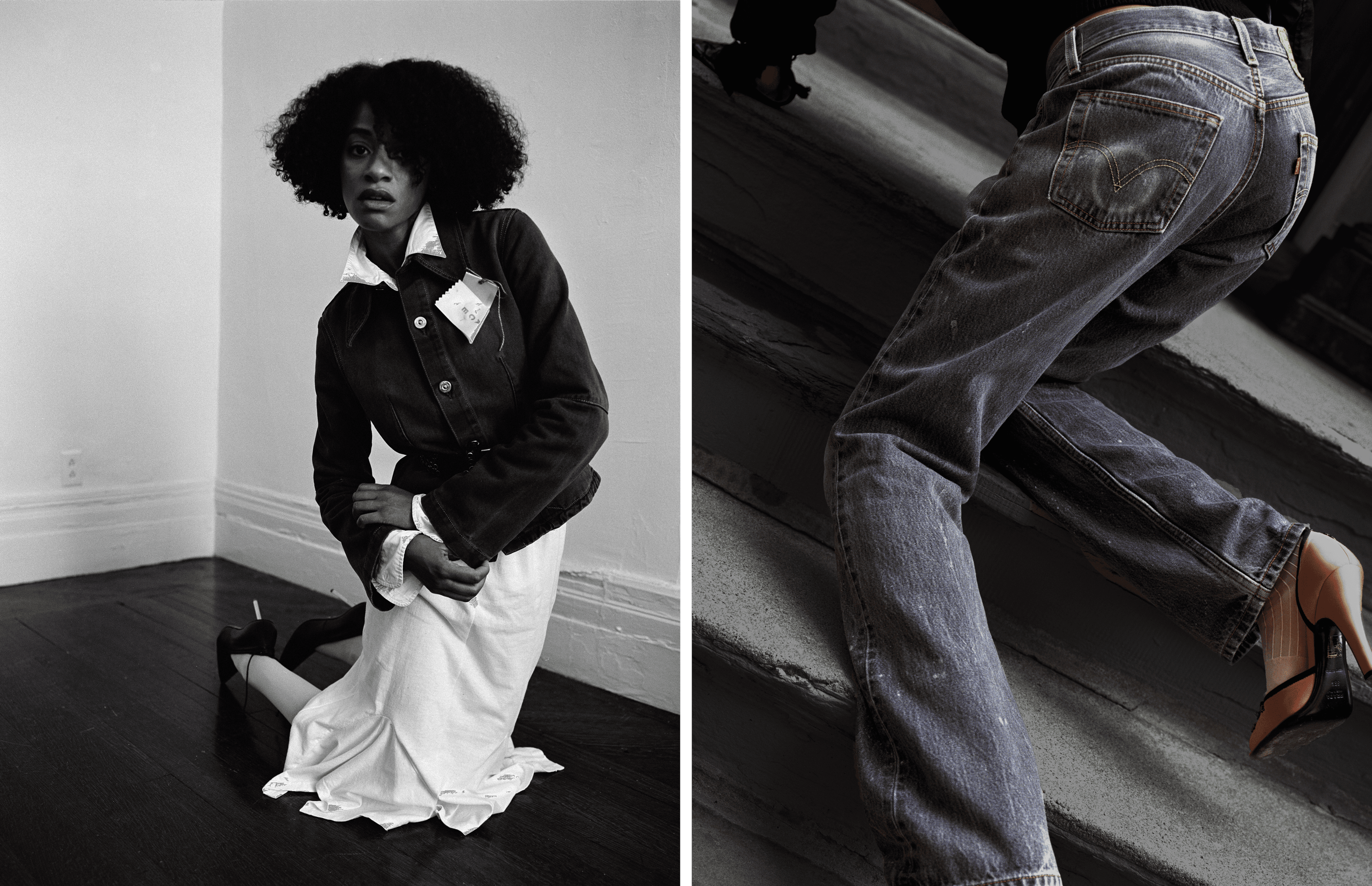
LEFT: JACKET by Our Legacy; SHIRT, TIGHTS, and BROOCH, stylist’s own; SKIRT by Chapman Newnum; vintage BELT; SHOES by Acne Studios. RIGHT: All vintage CLOTHING and ACCESSORIES.
As a nonprofit arts and culture publication dedicated to educating, inspiring, and uplifting creatives, Cero Magazine depends on your donations to create stories like these. Please support our work here.