

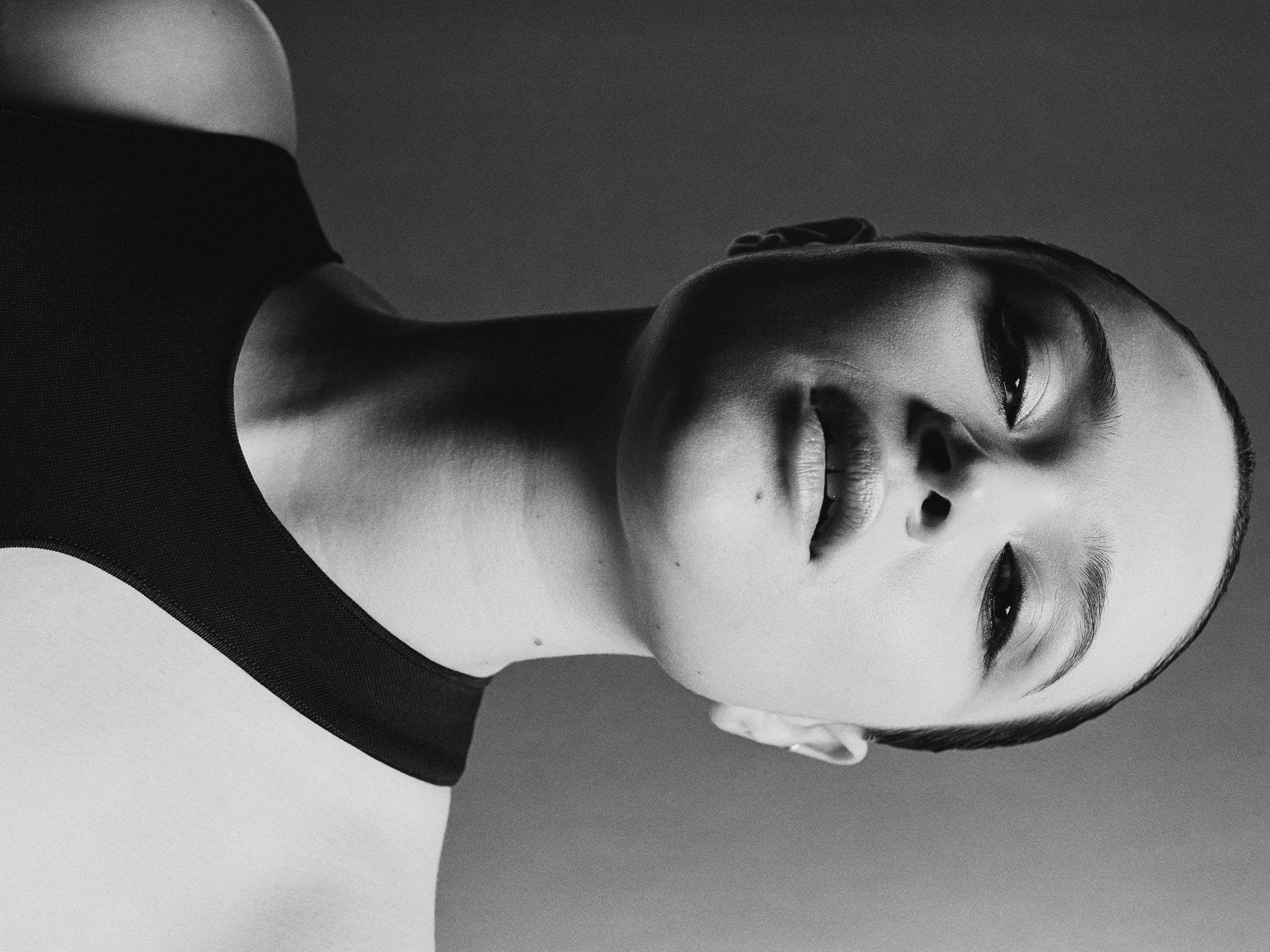
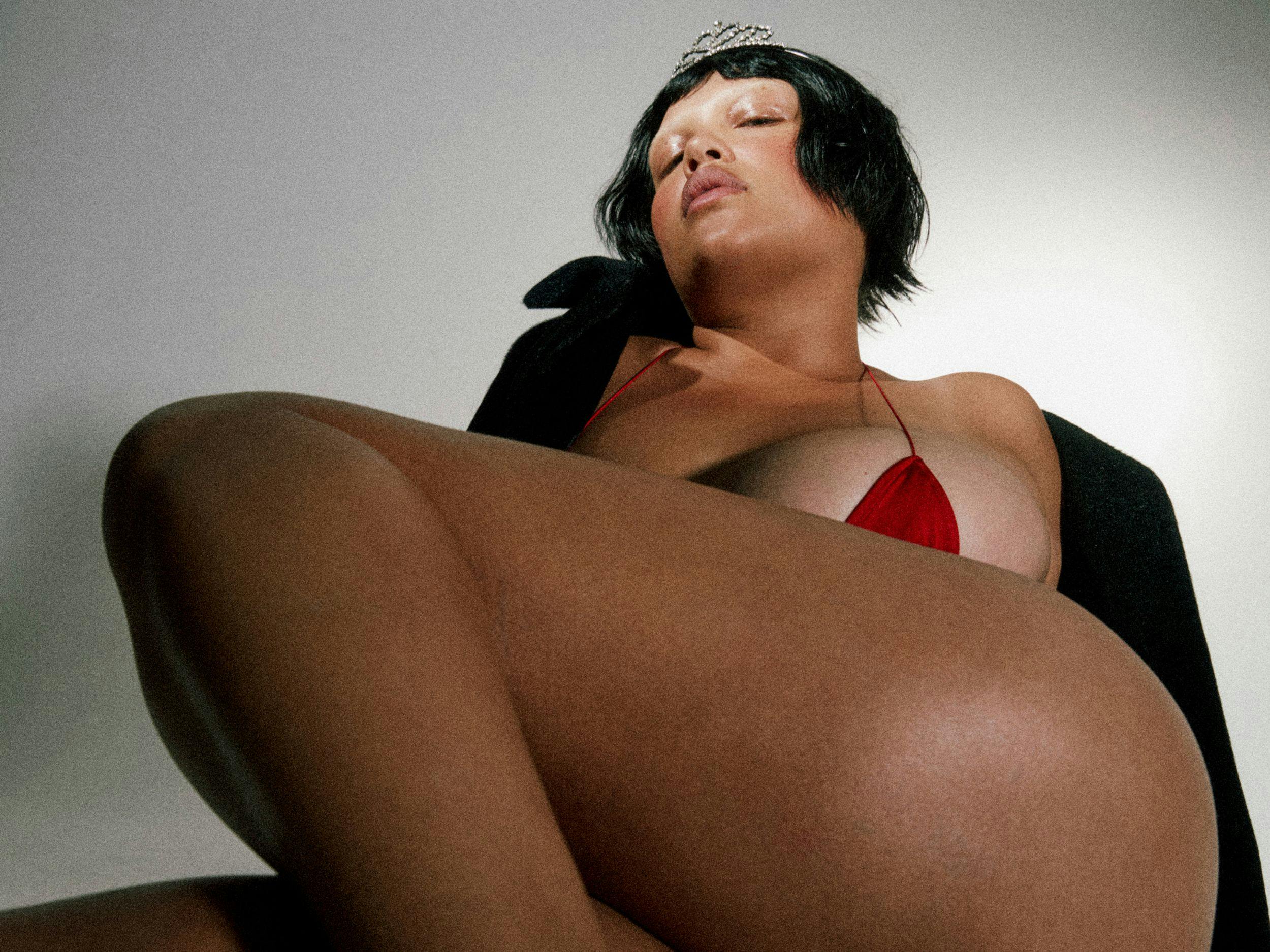

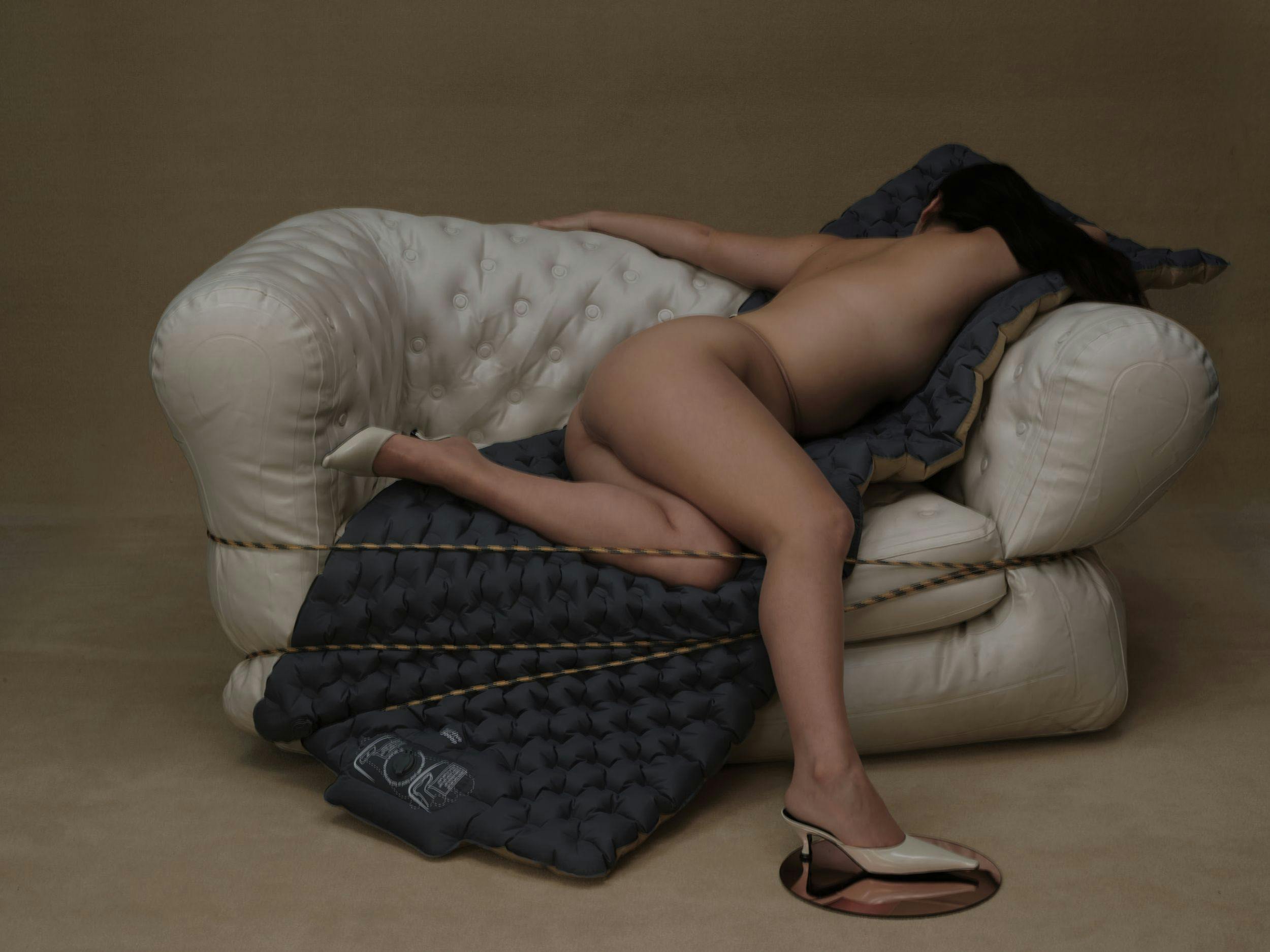
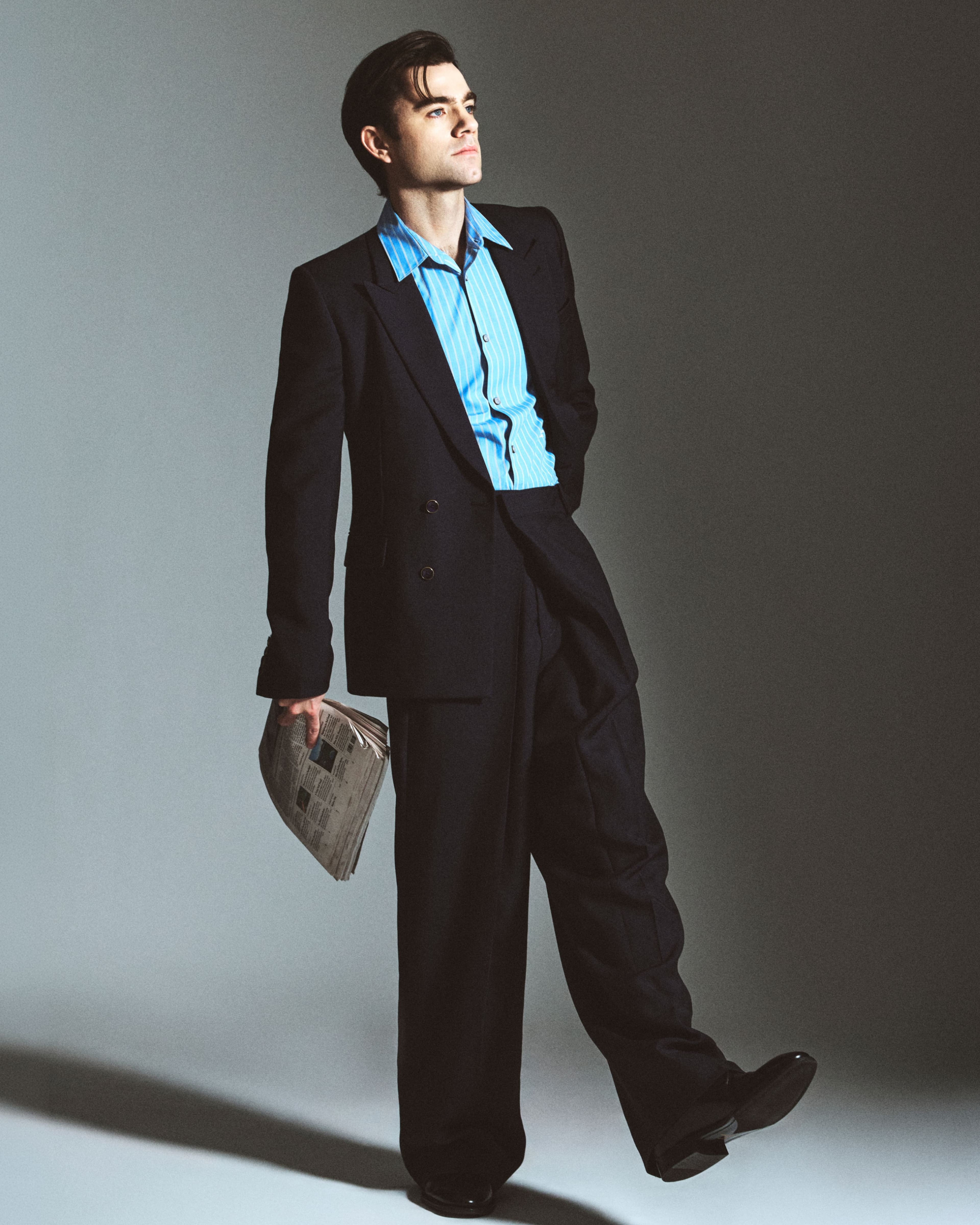
All CLOTHING and SHOES by Louis Vuitton
Patrick Ball Takes Center Stage
Two years ago, Patrick Ball almost quit.
After fifteen years of balancing regional theater with the odd jobs needed to make ends meet (four at the time), he was carrying eighty thousand dollars in student loan debt and felt no closer to a breakthrough. It was, he thought, perhaps time to let the dream die.
Today, his name is on the Broadway marquee of the Hayes Theater and he is a Critics’ Choice Award nominee for his role in The Pitt, the HBO medical drama whose first season swept top honors at the Emmys, the Golden Globes, and the Actor Awards—an about-face Ball, thirty-six, knows better than to take for granted. “I know all this success is a rental,” he says. “It’s not happening because I am a uniquely amazing person. It’s just an incredible gift from the universe that I can borrow for a while. I feel very lucky to have been given this moment.”
This month, the North Carolina native makes his Broadway debut in a production of the 2009 Pulitzer Prize finalist Becky Shaw. In a full-circle twist, he is spending the play’s run in the same Brooklyn apartment he lived in before his fortunes changed. “I had just signed a two-year lease, and then The Pitt happened the following month. I’m now back in the same apartment, closing out the same lease with the same roommate. It’s pretty surreal.”
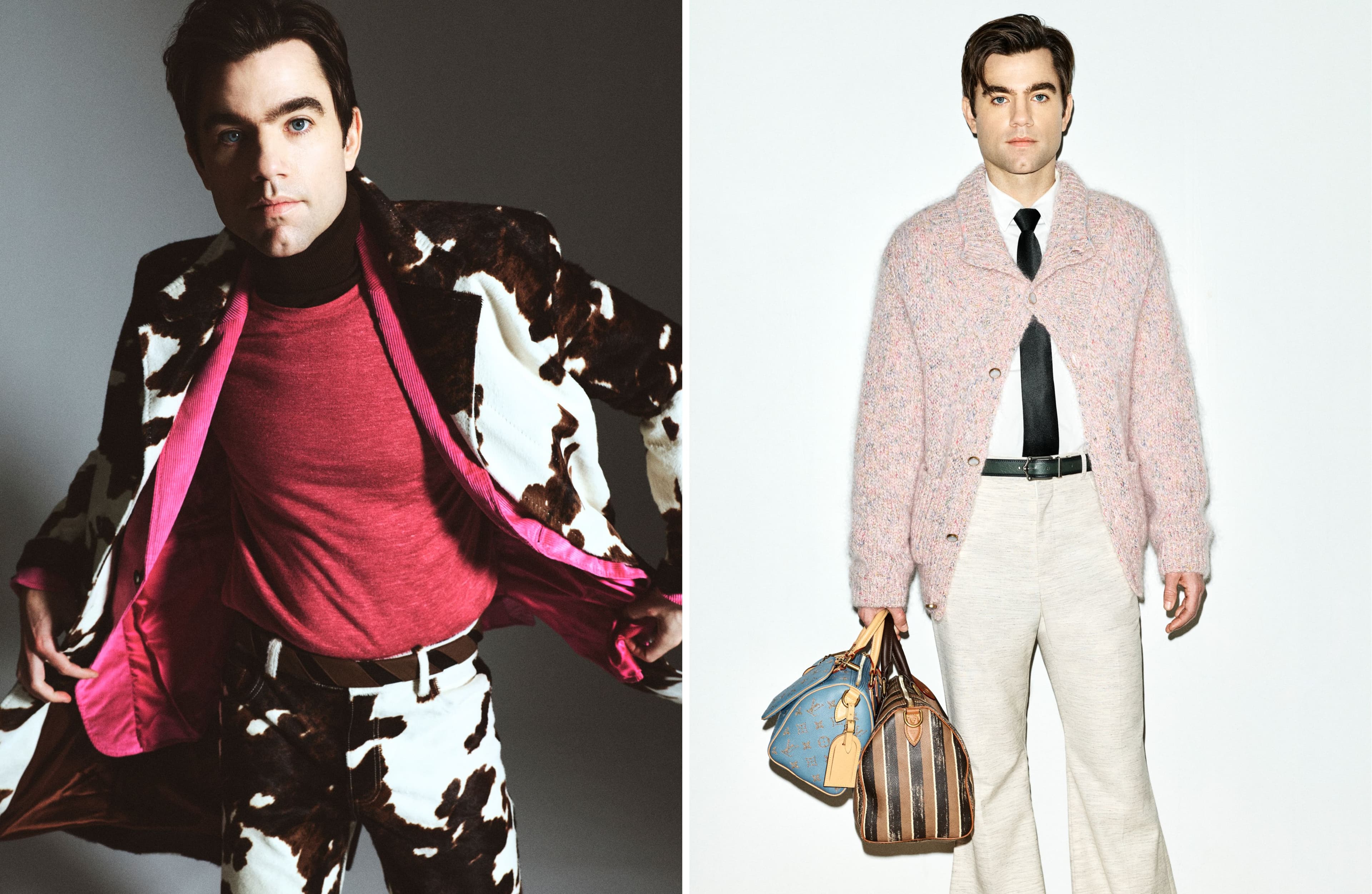
LEFT: All CLOTHING by Gabriela Hearst. RIGHT: All CLOTHING and ACCESSORIES by Louis Vuitton
Becky Shaw, ostensibly a dark comedy about a catastrophic blind date, is a sharp takedown of contemporary dynamics of class, power, and gender. Ball plays Andrew, an aggressively sensitive writer who sets up the titular character on a date with his wife’s oldest friend. More than the play’s acid, irreverent humor, it was the themes simmering just beneath the surface that drew him to the part. “The conversation around dating across socioeconomic difference—what it means to be a broke boy, what it means to have your romantic needs intersect with financial ones—was really interesting to me as somebody who was ‘too broke to marry’ at thirty-five,” he explains. “It admits something that I have not seen previously admitted.”
Playwright Gina Gionfriddo is comfortable in a moral gray zone, her dialogue at once absurdly funny and bitterly cutting. “During rehearsals, I remember thinking, ‘You know what? More than any play I’ve ever been a part of, the audience is going to tell us what this play is,’” he says of its offbeat tone. “I honestly had no idea how funny it was until we got in the room with an audience.”
Over the course of the play, Andrew’s good-guy persona grows more insidious, gradually revealing an unsettling darkness. “Nine people out of ten may look at Andrew from across the room and say, ‘What a sweet guy. I love that guy,’” Ball notes. “Then you look a little closer and think, ‘Wait, is this a nice guy?’”
Being tasked with arcs that force audiences to second-guess their first impressions is something Ball relishes. “That dynamic shift is the most exciting thing in the world,” he expresses. “In the theater, you get to build that reversal every night. How do you plant the breadcrumbs of his true self from the beginning, but do it in such a way that the audience doesn’t get out in front of it? That kind of work is what I absolutely live for.”
He sees a parallel in Dr. Frank Langdon, his character in The Pitt, who undergoes a similarly drastic change. In the series’ first season, Langdon is introduced as the ER’s golden boy whose trajectory derails when he’s caught stealing prescriptions to feed an addiction to benzodiazepines. The second season follows his first day back at work after treatment and a ten-month absence. “I was incredibly honored to be brought back to tell that story,” Ball, who has been open about his own recovery, says. “That first year can be challenging, almost like waking up from a dream. You start taking inventory of your actions, the people you’ve hurt, the ways you’ve been lying to yourself and others. It can be a deflating and scary experience.”
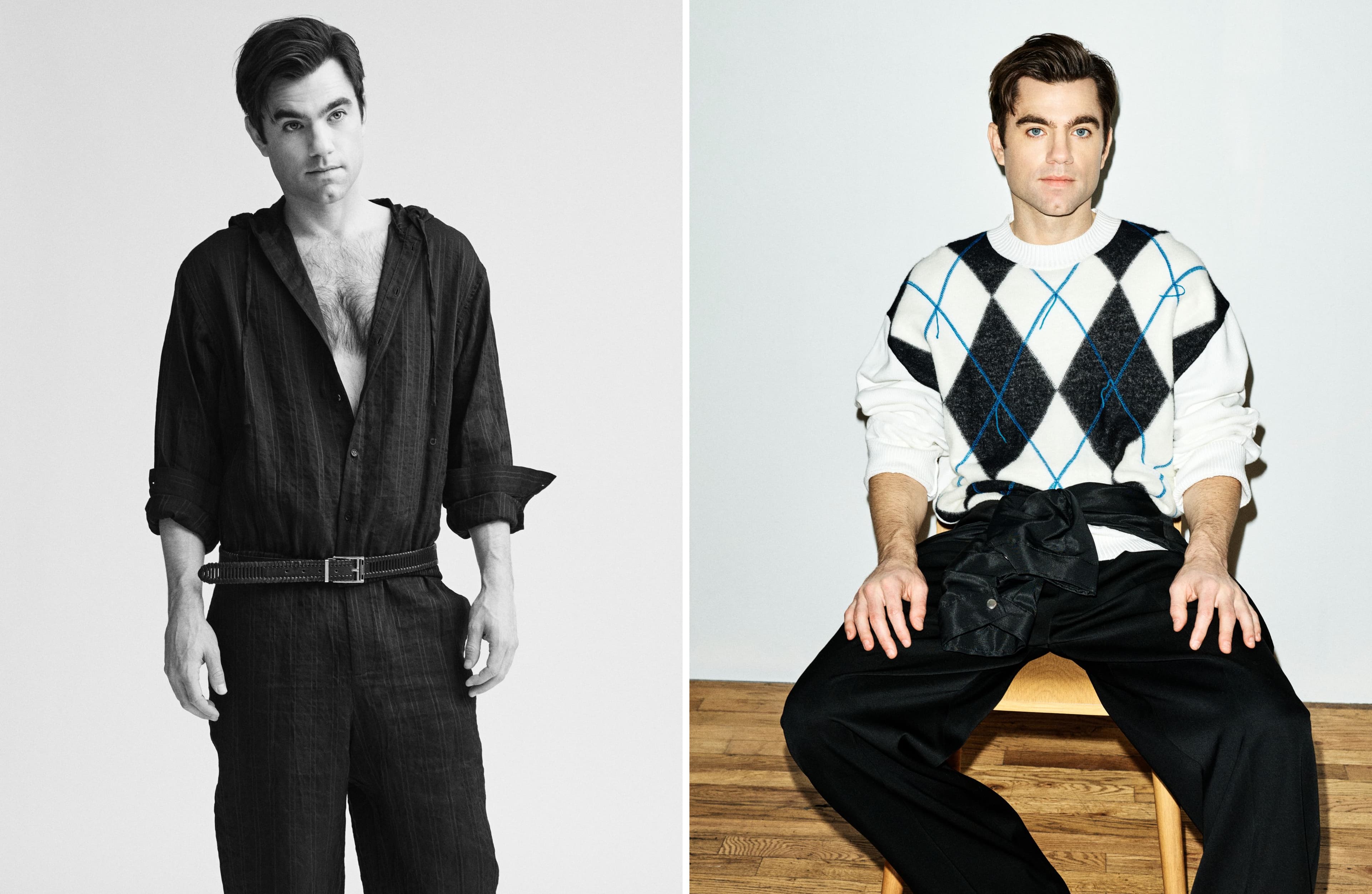
LEFT: All CLOTHING and ACCESSORIES by Ferragamo. RIGHT: All CLOTHING by Givenchy by Sarah Burton.
To convey that shift, Ball crafted a distinct contrast in energy between the two versions of Langdon. In season one, he is all cocksure bravado and wound-up confidence; in season two, more intentional and often tentative as he attempts to piece his life back together. With a third season on the way, Ball hopes to explore a brighter phase of recovery. “I would hate to put into the world the idea that getting sober is to let go of your whimsy or your confidence or your charm,” he says of the more subdued Langdon. “From my experience, there’s an enjoyment of life that comes from getting clean that’s far more profound than anything experienced in addiction,” he continues. “But you have to go through the woods before you get there. I’m excited to tell that next chapter.”
The Pitt is notable in part for its structure: each season unfolds over a single ER shift, hour by hour. The approach demands a particular kind of character work, asking actors to suggest entire unseen lives through seemingly anodyne lines and moments. “We don’t always have those conversations [with the writers], so it’s on us to pick up the breadcrumbs in the script and ask, ‘What does it mean that this guy thinks he has to buy a dog to save his marriage?’ There’s a lot that goes unsaid,” Ball says, visibly energized by the challenge. “In season two, you’re meeting a Langdon, who’s been away for ten months. He doesn’t get to talk about that time much, but you can feel that something has changed. From there, we leave room for the audience to theorize, to wonder. If we told people everything, it would shrink the experience.” He adds: “Whenever you leave room for interpretation, the story gets larger.”
In the long tradition of medical dramas, The Pitt stands apart for its refusal to romanticize the field, instead offering an unflinching look at life in the ER and at the failings of the healthcare system. For Ball, whose parents both worked in emergency medicine, that commitment to realism gives the show its sense of purpose. “There’s a lot of programming that can be glossy and tell a kind of Camelot story. Those are incredible stories,” he says. “But healthcare is one of the largest employment sectors in this country. There are a lot of people out there living this life for real. To tell their story as accurately as possible, and not just use that setting as a backdrop for romantic narratives, was very exciting to me.”
In turn, the medical community was the first audience to embrace the series and, though it has since developed a passionate, opinionated online fandom, that North Star remains. ”As we go on, there are more vested interests, more people who want to see different things,” Ball explains. “But we’re lucky to have John Wells, who is a high-integrity storyteller, to make sure that audience expectations don’t take the show off course. We also have really experienced ER physicians at every level, from the writers’ and the producers’ rooms down to the set, to make sure we stay authentic.”
That quest for integrity runs through the actor’s work: “It’s the same with theater,” he says. “With Becky Shaw, we know the audience wants to laugh, but if I go out there playing to the laughs and clowning it up and being like, ‘We’re going to give the audience what they want,’ then we could lose track of why we were interested in telling this story to begin with.”
He pauses, then adds: “That’s always the balance. You have to stay invested in the integrity of the story while also leaving room for the audience to come in.”
Becky Shaw is now playing through June 14 at the Hayes Theater, New York. The Pitt is now streaming on HBO Max.
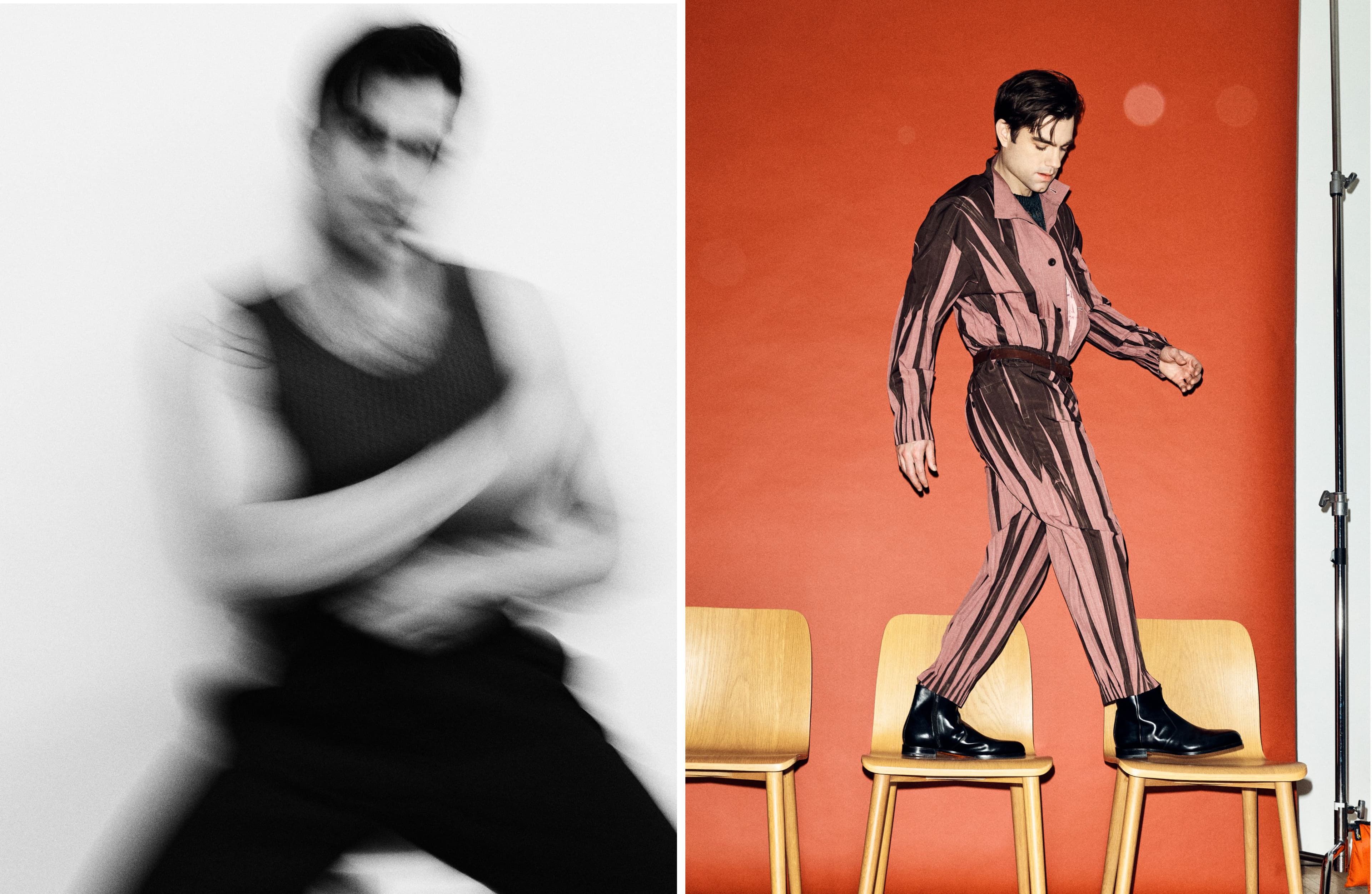
LEFT: All CLOTHING by Hermès. RIGHT: All CLOTHING and ACCESSORIES by Issey Miyake.
As a nonprofit arts and culture publication dedicated to educating, inspiring, and uplifting creatives, Cero Magazine depends on your donations to create stories like these. Please support our work here.