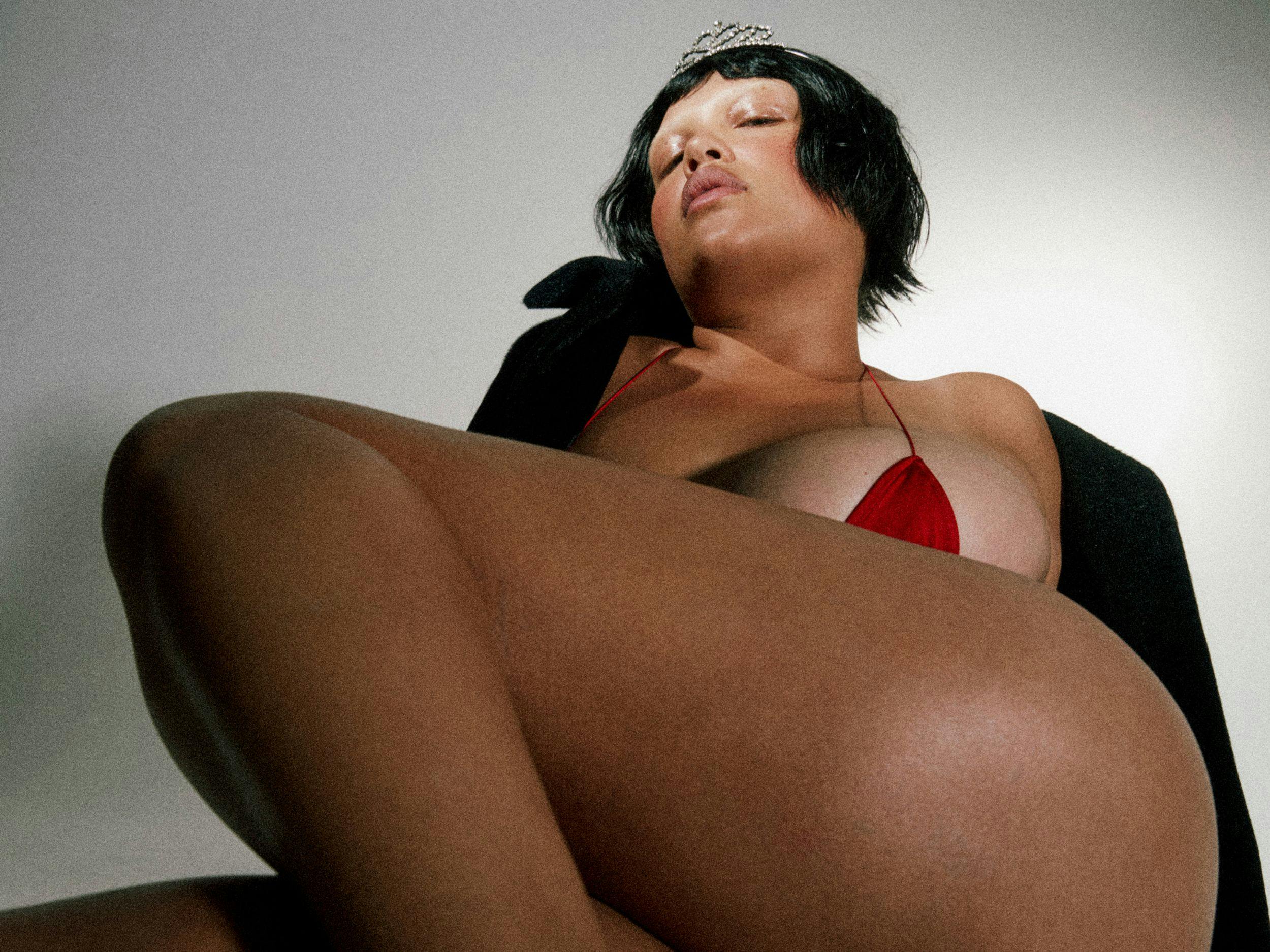
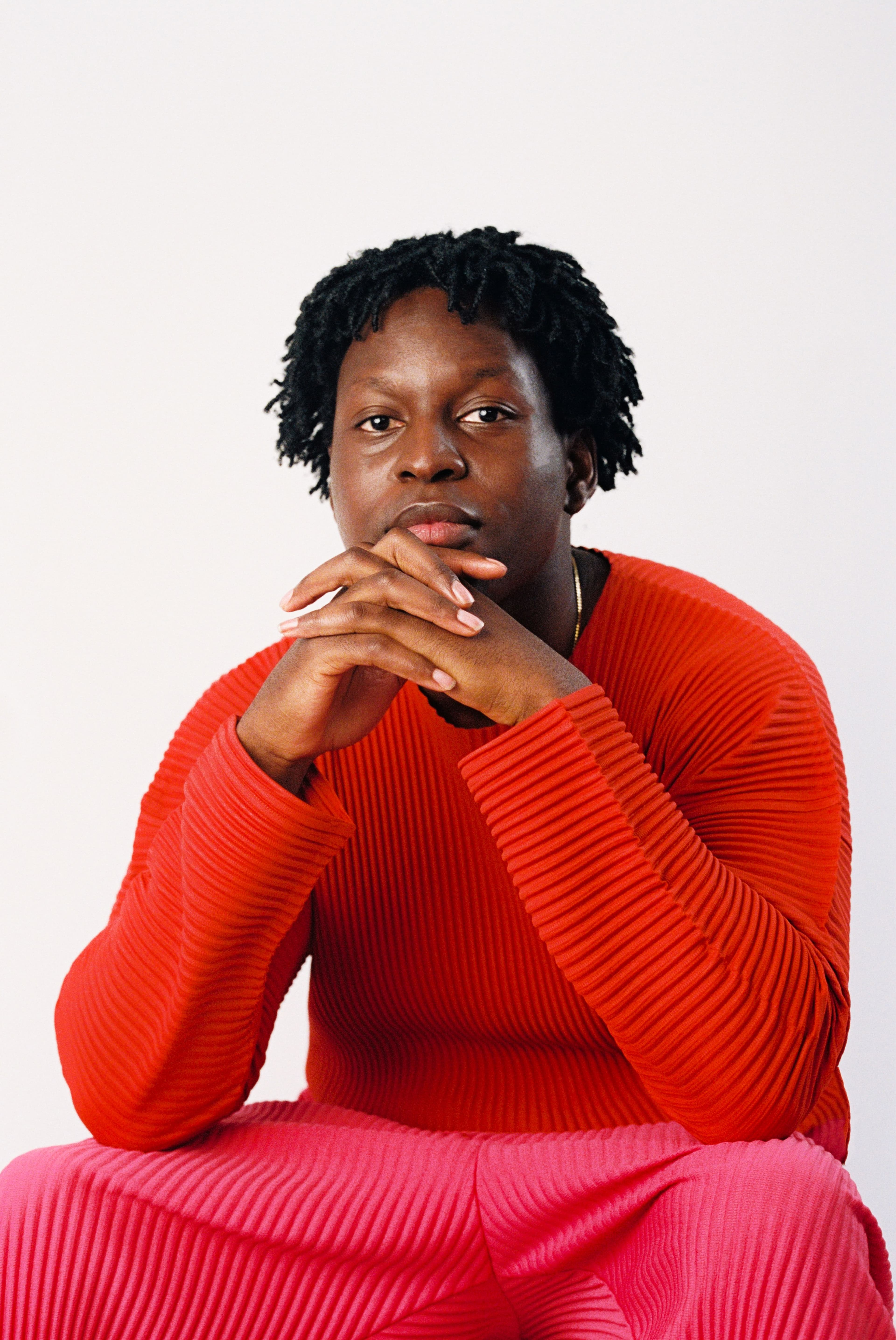
All CLOTHING by Issey Miyake
Toheeb Jimoh and the Power of Community
Toheeb Jimoh is sitting in New York, an ocean away from his South London roots, contemplating the machinery of prestige television and the specific moral weight he has carried within it. For several years, Jimoh occupied a very particular space in the cultural consciousness as Sam Obisanya, the earnest, principled Nigerian footballer of Ted Lasso. In that role, he was a vessel for a rare kind of sincerity—a character whose inherent goodness felt like a radical act in a medium often defined by portrayals of cynicism. But in fourth season of HBO’s Industry, the sunny pitches of Richmond have been replaced by the jagged, cocaine-dusted edges of high finance. The world of Industry—created by Mickey Down and Konrad Kay—is a shark tank where language is a weapon and empathy is a liability, yet Jimoh approaches this new terrain with a striking lack of desperation. Playing Kwabena, a character who functions as a pressurized valve of levity amidst the high-stakes desperation of Pierpoint & Co., Jimoh finds a certain freedom in cutting against the tension.
“I enjoyed the show,” Jimoh says of his time as a spectator before joining the cast. “I knew what I was signing myself up for. It’s a very specific world with very specific language and dialogue and characters who do really atrocious things to one another. But I think all of that is the fun of Industry.” This fun, however, required a rigorous, almost obsessive dismantling of the script’s dense economic terminology; he spent weeks “voice noting Mickey and Conrad every day asking them what all of the finance jargon means,” pestering the creators and their financial advisors to ensure his performance was at least “hearable” for an audience. Yet, true to his grounded nature, he punctures any illusion of lasting mastery, admitting that once the cameras stop, the knowledge evaporates: “Did I become a financial expert overnight because of this role? Absolutely not. Have I retained much of the information that I learned while shooting? Absolutely not!” He chuckles with a grin. “I feel like I’m back to square one and I’m right back to zero.”
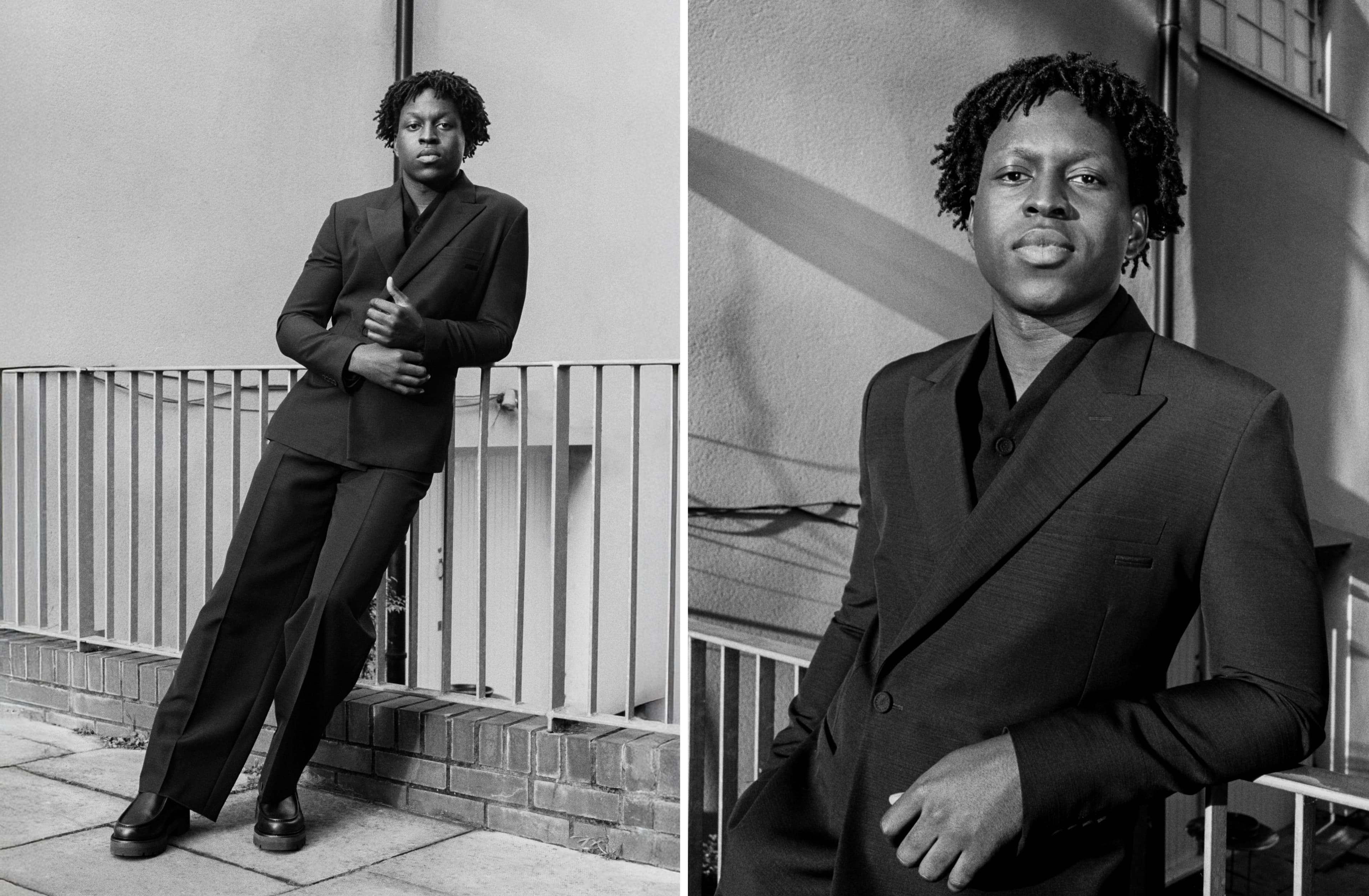
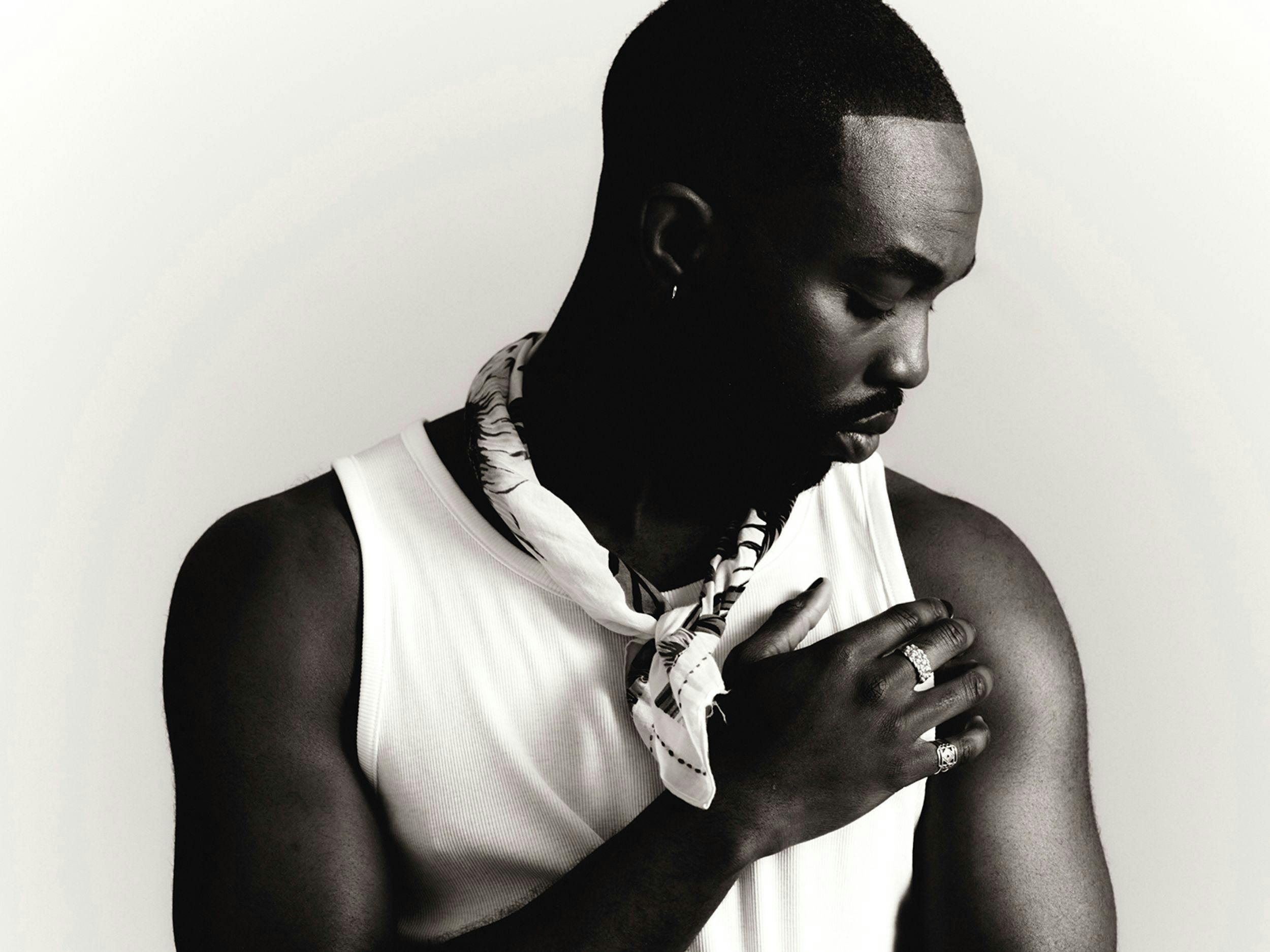
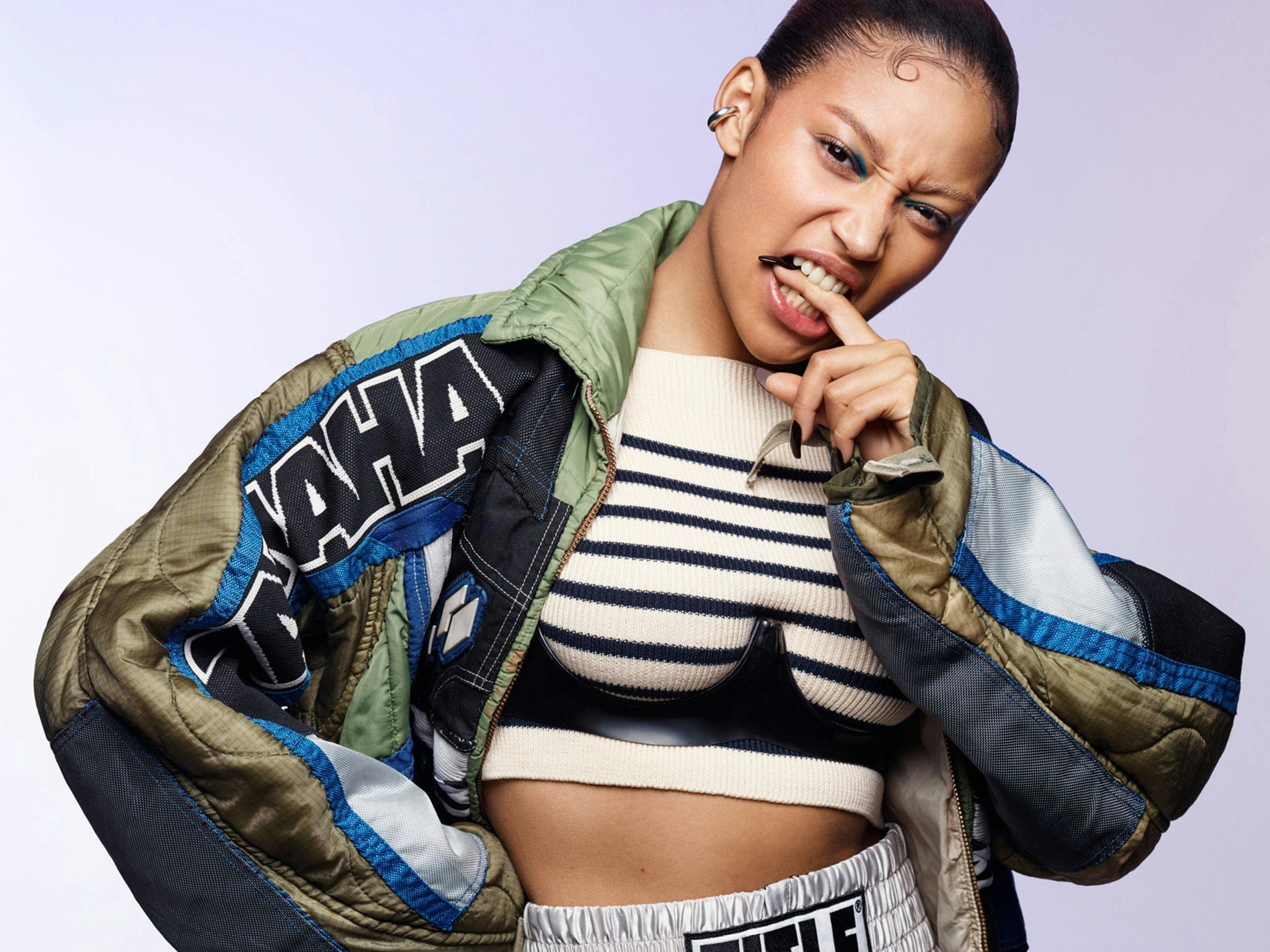
All CLOTHING and SHOES by Dior
The move into these more shadowed areas of character is perhaps better understood as an alignment with his theatrical training than a foray into new territory. Before the global recognition of Ted Lasso, Jimoh was a protege of the rigorous UK theater scene, training at the Guildhall School of Music and Drama. His stage credits—including a turn in Rebecca Frecknall’s Romeo and Juliet and a production of Player Kings alongside Ian McKellen—prepared him for a darkness that his television projects are only now beginning to grapple with. “People are more familiar with my work on screen playing Sam, but I actually feel in the work that I’ve had the opportunity to do on stage, I’ve played in a very similar ballpark quite a few times,” he notes. “I did Romeo and Juliet with Rebecca Frecknall, and anybody who knows her and knows her work knows that intense is just her entire bag. Even though there’s a lot of humor in that world, it’s a dark world playing characters who are struggling with really complex and dark things and making really awful decisions at times.”
This search for the “true face” beneath the performative mask extends to his upcoming turn in the screen adaptation of Prima Facie, the devastating legal drama that explores the harrowing failures of the British legal system regarding sexual assault. Working alongside profound actors including Cynthia Erivo, Simon Russell Beale, and Noma Dumezweni, Jimoh found himself in a room with “powerful artists” who set a high standard for professional conduct and ego-less collaboration. The original playwright for the story, Suzie Miller, has personally adapted the screenplay, while pulling double duty as an executive producer alongside Erivo, Salome Williams, Jeff Skoll. “Seeing the way they conduct themselves at work, I think is just—I can’t really tolerate anything other than that,” he says. The project embodies more than an acting challenge; it is a civic duty, an attempt to reignite national conversations about how survivors are treated. “I can’t wait for us to rehash the conversation that the play started and talk about some of the changes hopefully that we can make. I can’t wait for that conversation to start up—hopefully with a bigger audience, with more momentum.”
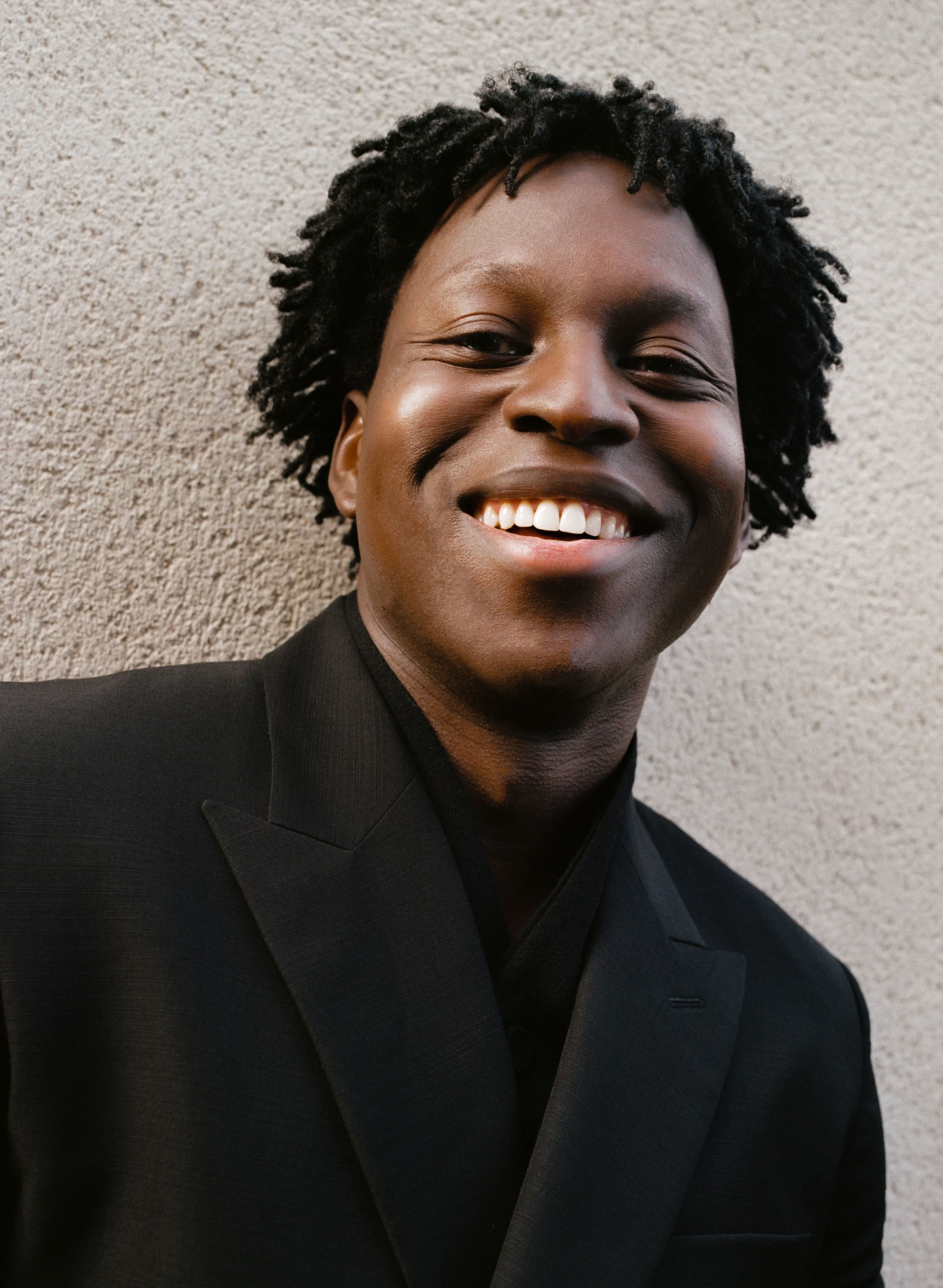
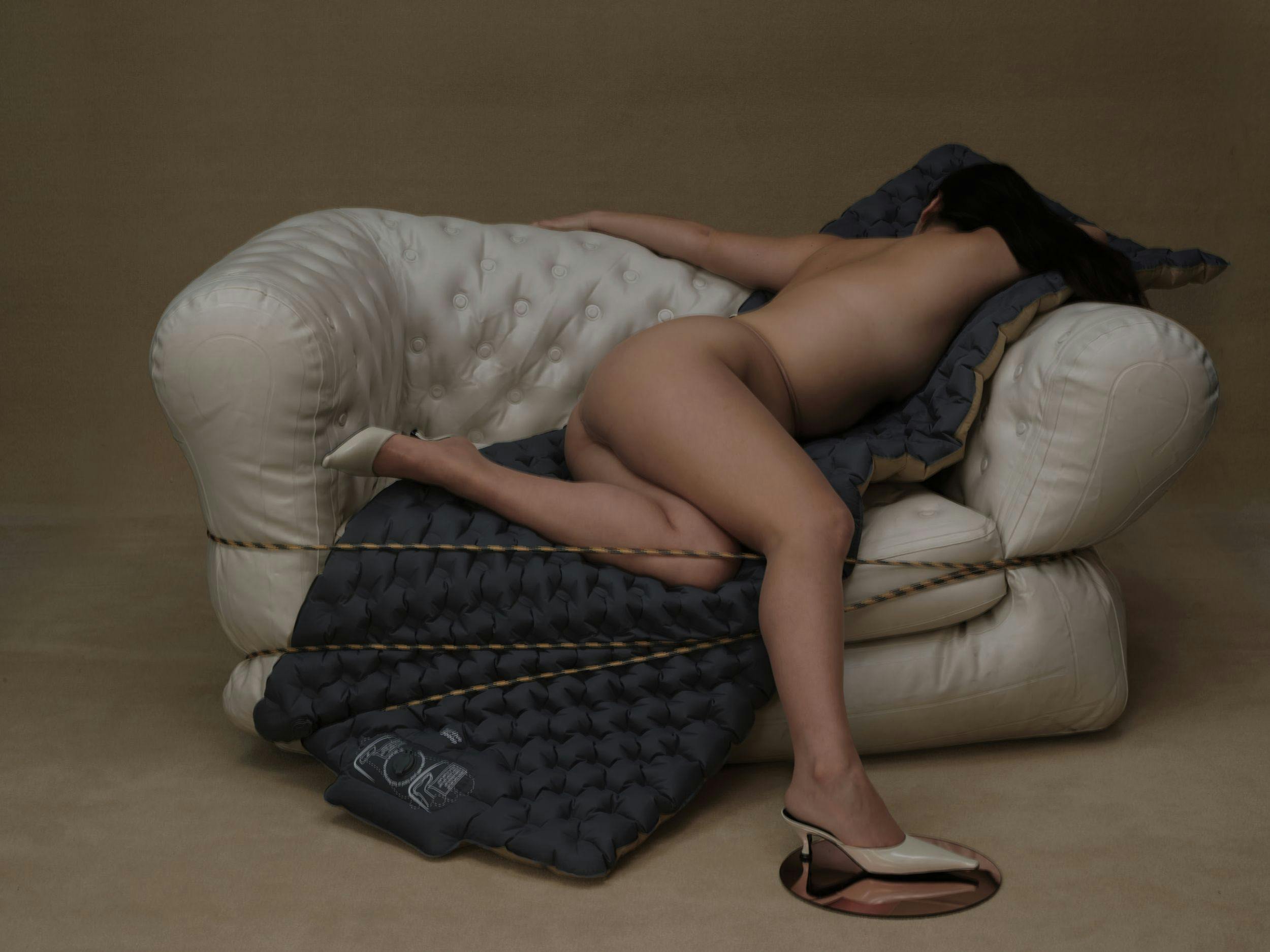
All CLOTHING by Dior
For Jimoh, these professional choices are inextricably linked to a community-first ethos emerging from his own personal history and deeply-set values. He remains entrenched in the structural scaffolding of his upbringing, serving on the board of the Youth Learning Network in Southwark—the very supplementary school he attended as a child. It was this organization, led by the mentor he still calls “Uncle Kwame,” that sponsored his first trip to Ghana when he was seventeen, a foundational journey that now informs the quiet reflection of Kwabena’s own return home to Accra in a pivotal episode in Industry. “On Saturdays, you can go and they tutor kids in math, English, and science and also Black and African history,” he explains, urging families in Southwark to “pull up” and engage with the resource. This commitment extends to Liverpool and the Anthony Walker Foundation, a connection forged while playing the lead in the BBC film Anthony, which imagined the life the young Black man might have lived had he not been murdered in a racially motivated attack in 2005. The foundation’s work is pragmatic, aiming to provide marginalized communities with the tools—from anti-racism education to financial literacy—needed to navigate systemic barriers. “They’re giving people of color in Liverpool the tools that they need to survive,” Jimoh declares, his voice carrying the directness of a neighbor rather than the distance of a prestige actor.
The convergence of these worlds—the high-octane sets of HBO and the weekend morning tutoring sessions in Southwark—suggests an actor navigating his rising profile with a rare, unsentimental clarity. Jimoh is not an artist interested in the preservation of a singular, safe image; rather, he seems to be building a career that favors longevity and breadth over the easy comfort of a type or the seclusion of success. He is as much a product of his community’s investment in him as he is of his own talent, a fact he acknowledges by consistently returning to the environments that shaped him. As he looks toward a future that balances the global reach of celebrity with the immediate, grueling reality of the stage, his goal is simply more of the same—a continued push against his own boundaries. “I want the rest of my career to span television, film, and stage,” he concludes. “That’s the thing—I want to make sure I keep going back to stage work! I’ve been really lucky in the last five years to work with some really brilliant creators and challenge myself as an artist.” In his insistence to center his own community and while tending to his own artistic needs, Jimoh is proving that the most compelling path is the one you pave for others.
Industry is now streaming on HBO Max.
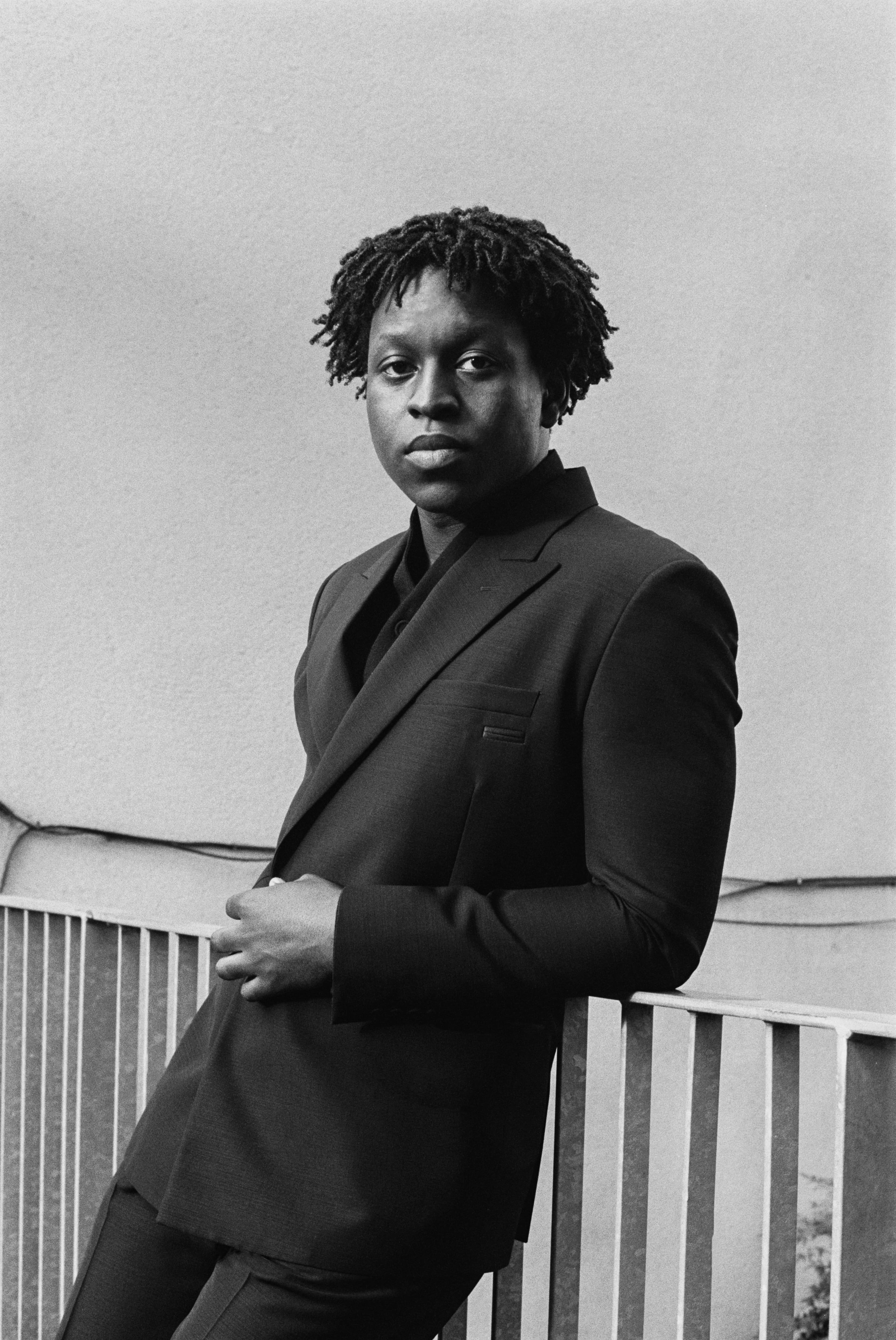
All CLOTHING by Dior
As a nonprofit arts and culture publication dedicated to educating, inspiring, and uplifting creatives, Cero Magazine depends on your donations to create stories like these. Please support our work here.