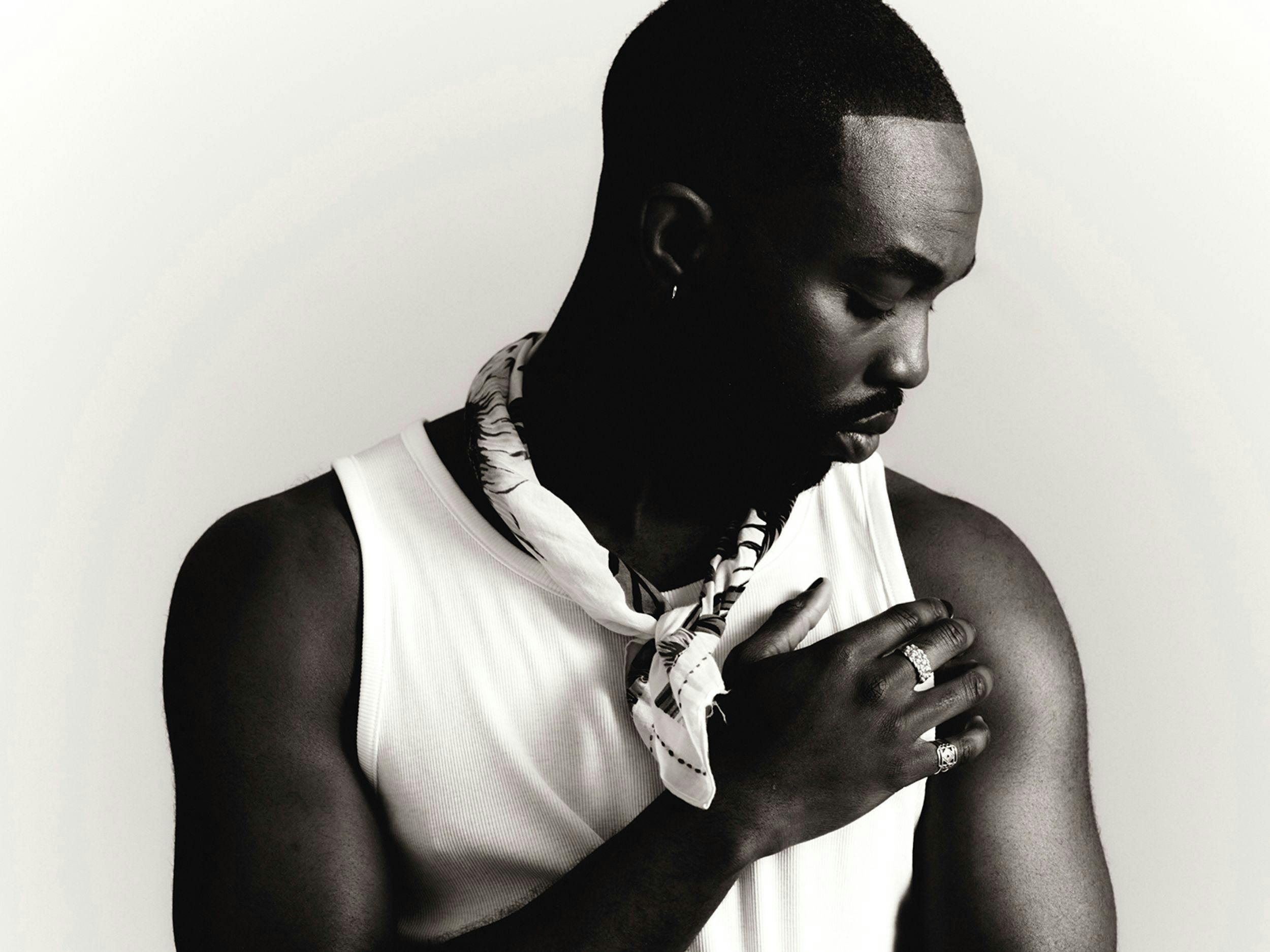
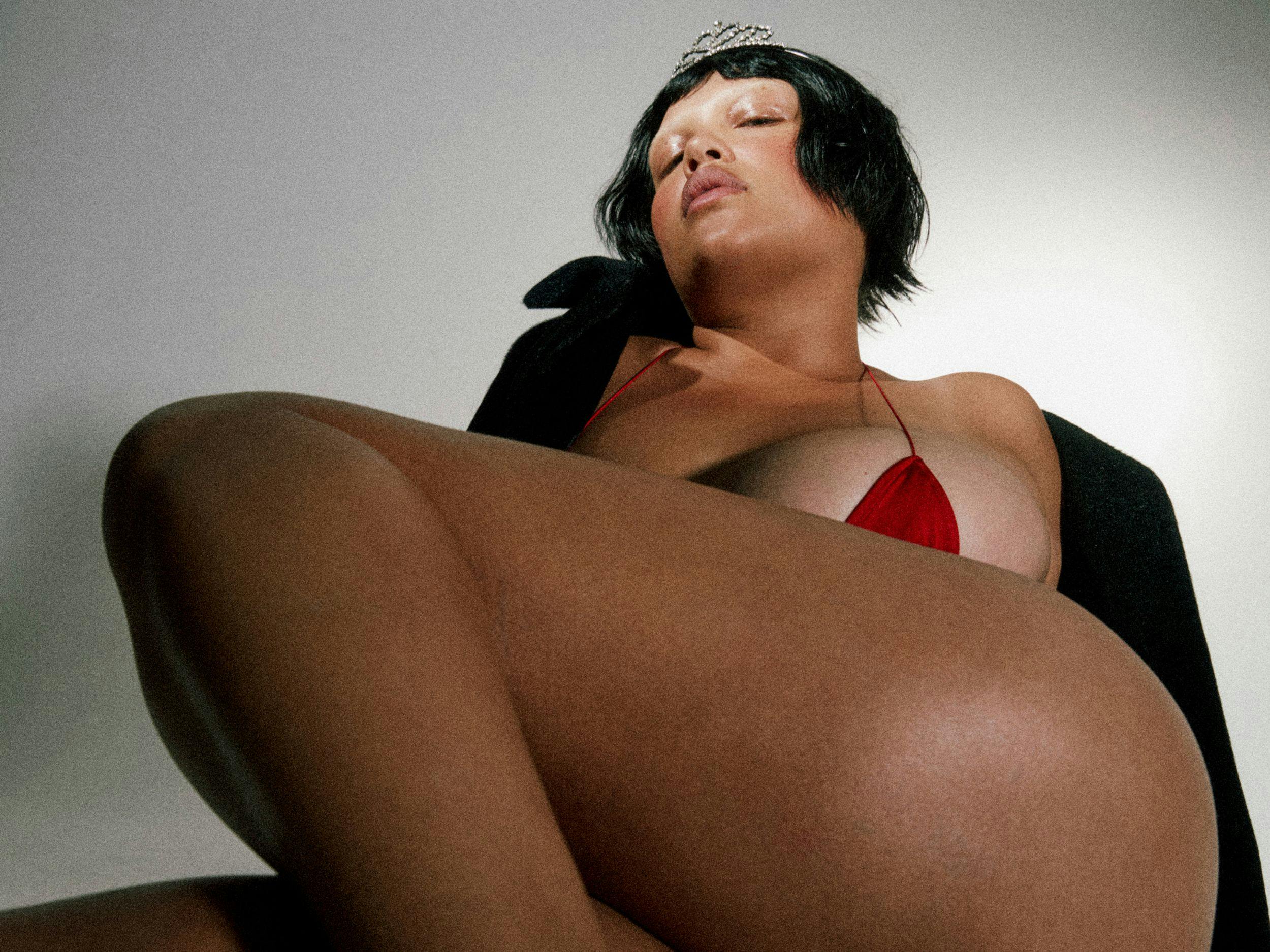
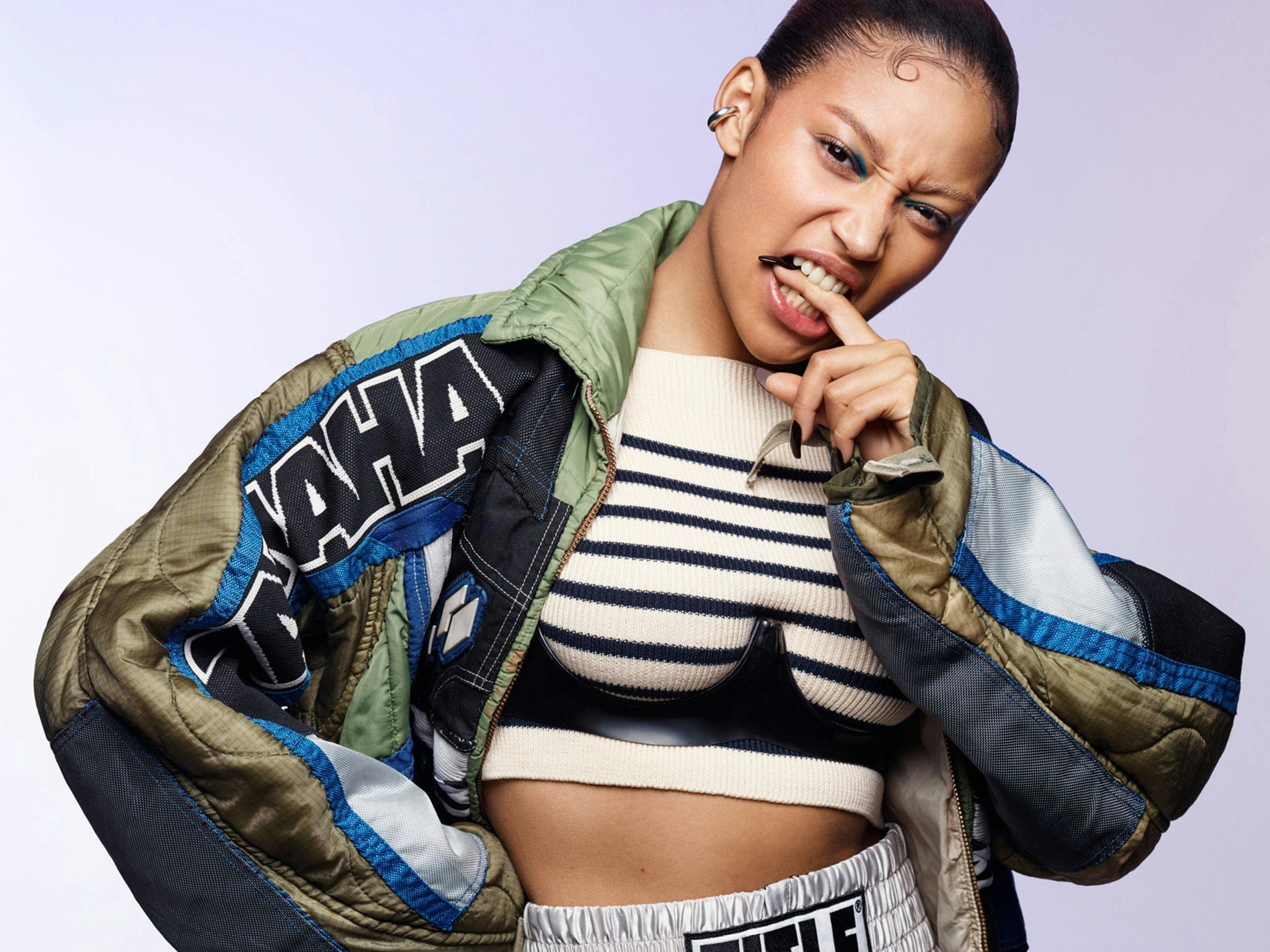
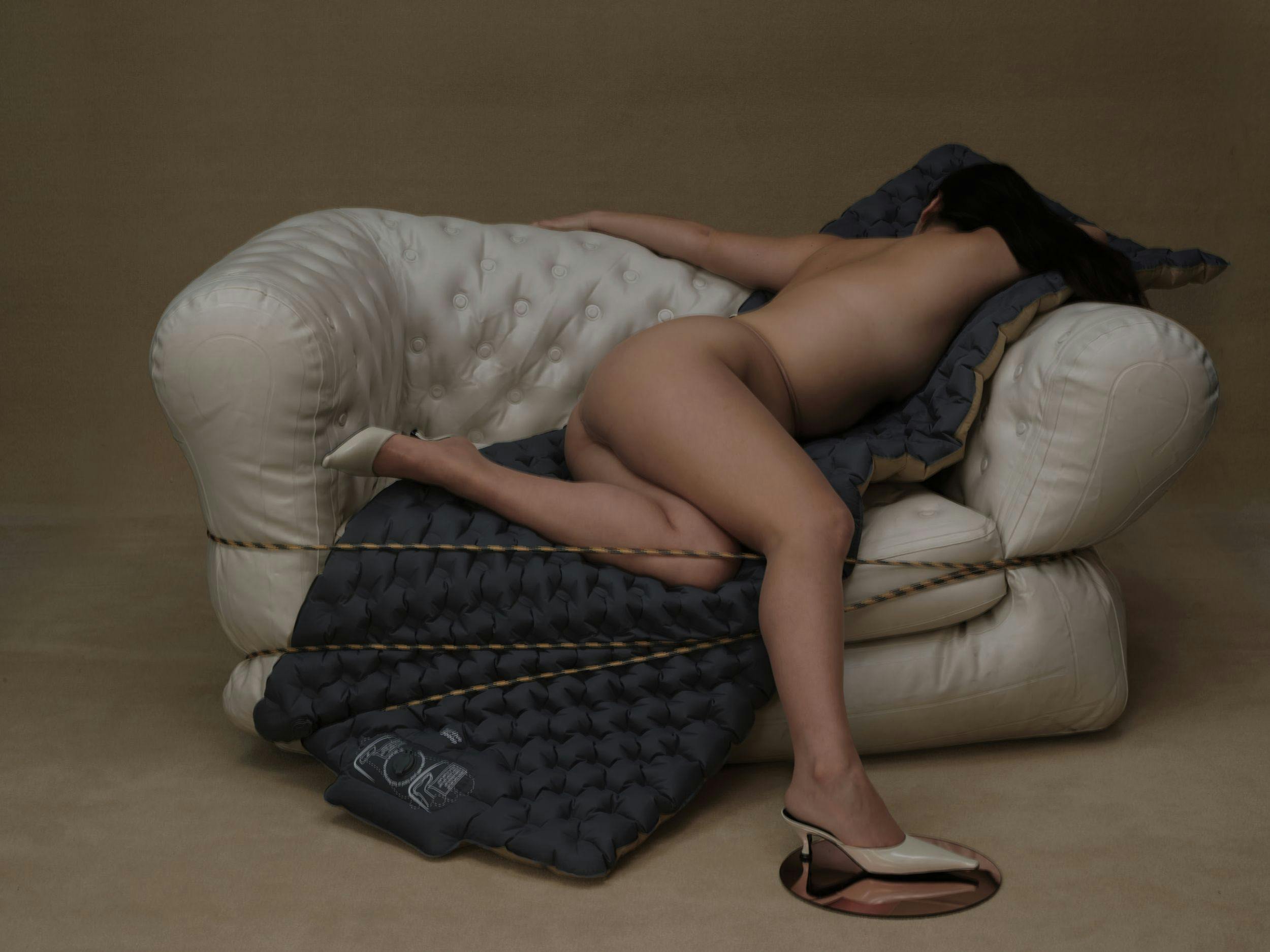
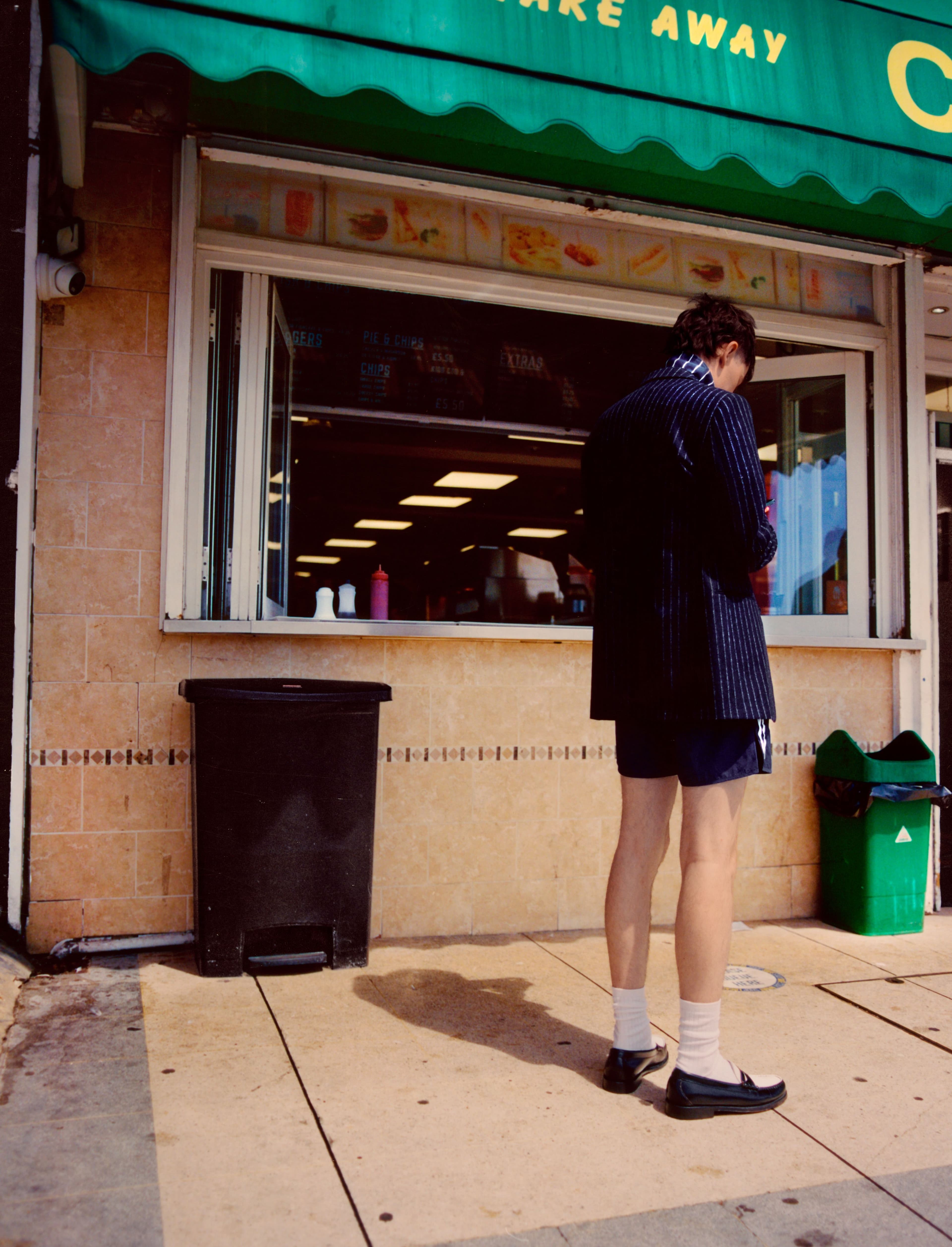
JACKET by Hermès; JACKET, worn underneath, and SHORTS by Adidas Originals; SOCKS, stylist’s own; SHOES by G.H. Bass
Ellis Howard is the Scouser That Could
Exuding an indelible sweetness embellished with cracking wit, Ellis Howard has quickly asserted himself as a filmmaker to watch. Once a member of the National Youth Theatre, he has dipped into horror with a main role in Red Rose, played in To Kill A Mockingbird on the West End, and most notably starred as the lead in BBC Three’s 2025 hit What It Feels Like for a Girl, which was recently released on Prime Video in the United States in time for Pride Month in June.
Based on the coming-of-age memoir by the influential English trans rights activist Paris Lees, the show received adulation from the British press for its bold and empathetic portrayal of queer adolescence in suburban Nottingham. The tale, which follows a young, browbeaten teenager named Byron (in effect, a young Lees) in their chaotic journey through their trans experience, threw itself into explorations of bigotry, prostitution, substance abuse, and organized crime in the same moments it extols the sheer power and intimacy of queer community.
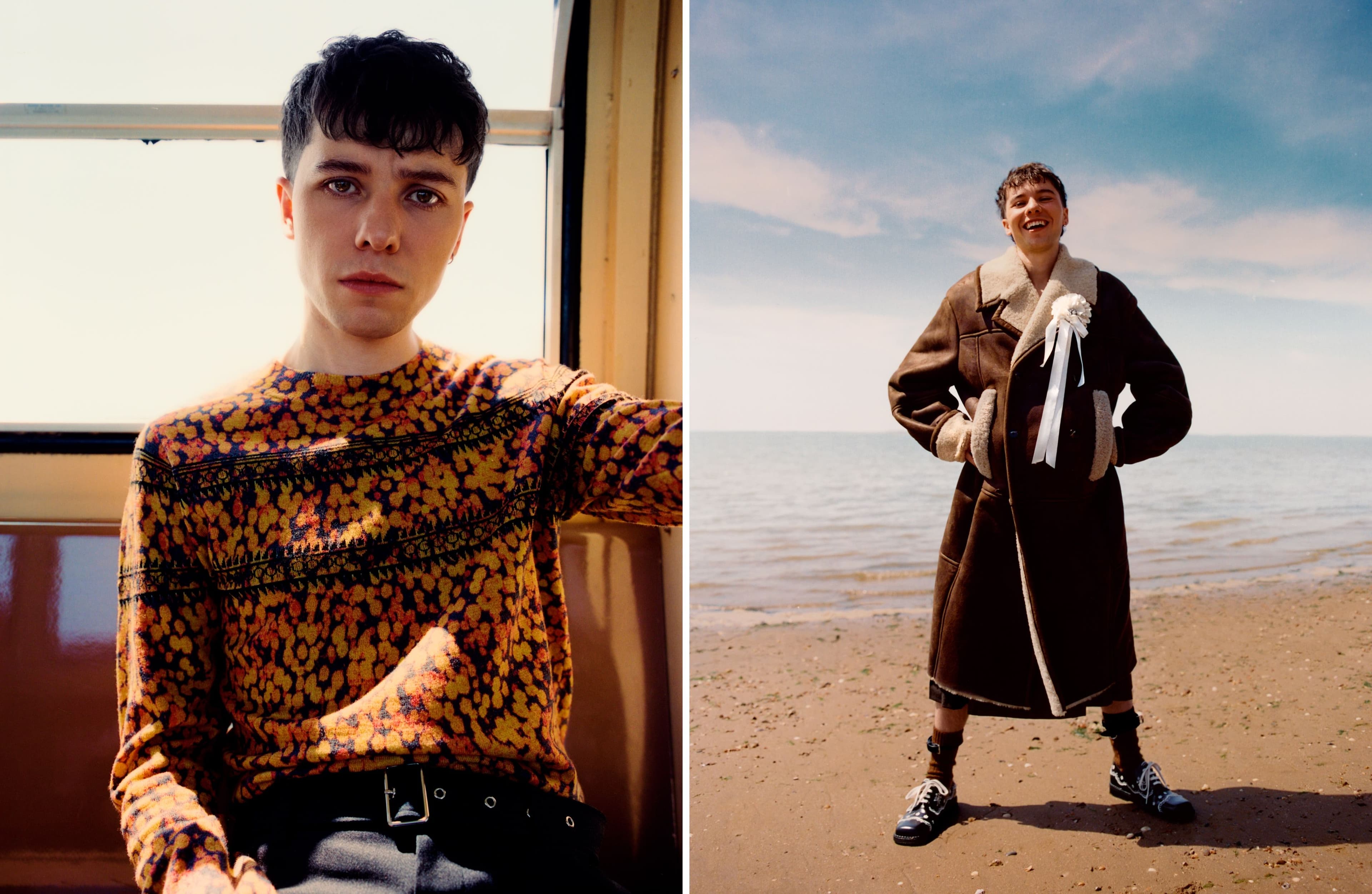
LEFT: SWEATER by Dries Van Noten; SHORTS by Mithridate; all JEWELRY throughout, talent’s own. RIGHT: All CLOTHING and ACCESSORIES by Simone Rocha.
When What It Feels Like for a Girl landed on British screens, the project’s intimate explorations of trans experience and queer, intersectional identity starkly contrasted with an ongoing cultural-political maelstrom. Expectedly, when portraying trans experience in a flagship series for as large a network as the BBC, there is bound to be pressure on set to ensure the resulting narrative is thoughtfully presented. For this series, however, the political moment was direly fraught.
In 2024, through the production and filming process, there was a barrage of media coverage and debate around trans people in the UK as the NHS paused routine prescriptions of puberty blockers and gender-affirming care for youth, triggering an emergency ban, legal challenges, and protests. Trans rights were front and center during the 2024 UK general election—featuring active debate on single-sex spaces, self-identification, and school guidance for gender-questioning children—which led the incoming Labour government to maintain the youth care bans. Going into 2025, the UK Supreme Court determined that “man” and “woman” refer to biological sex assigned at birth regardless of legal gender recognition, paving the way for official guidance allowing businesses, service providers, and workplaces to legally exclude trans people from single-sex facilities.
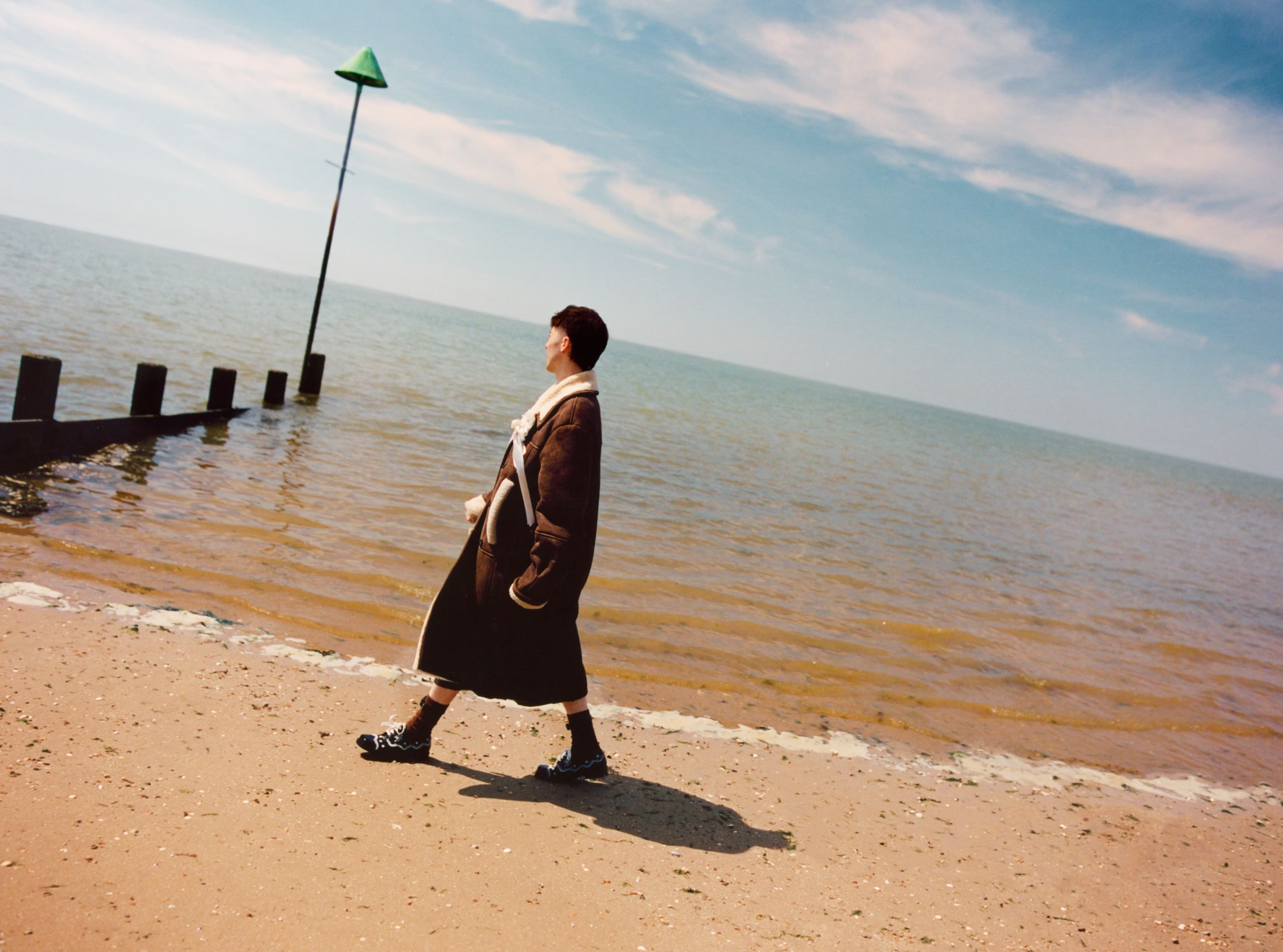
All CLOTHING and ACCESSORIES by Simone Rocha
Surrounded by ongoing national debates and conversations rooted in dated bigotry and cissexism, the cast made the active decision to focus on portraying the story at hand rather than playing into political messaging. Even then, Howard acknowledges there was a sense of weight and responsibility they consciously had to respect, cultivate, and proceed with. “This is singular, and this is the first time something like this is happening in our country. We all try to create art that encourages conversation and hopefully humanizes someone or impacts policy one day. What It Feels Like for a Girl was actually that, something really alive and political [that] had teeth to it,” he muses. “You can never chaperone someone into a point of view, but what the show does at its best is humanize a specific trans experience. Hopefully it makes people who watch go, ‘Oh, we should treat these people with dignity,’ which is not what is happening politically [in the United Kingdom] or the United States.”
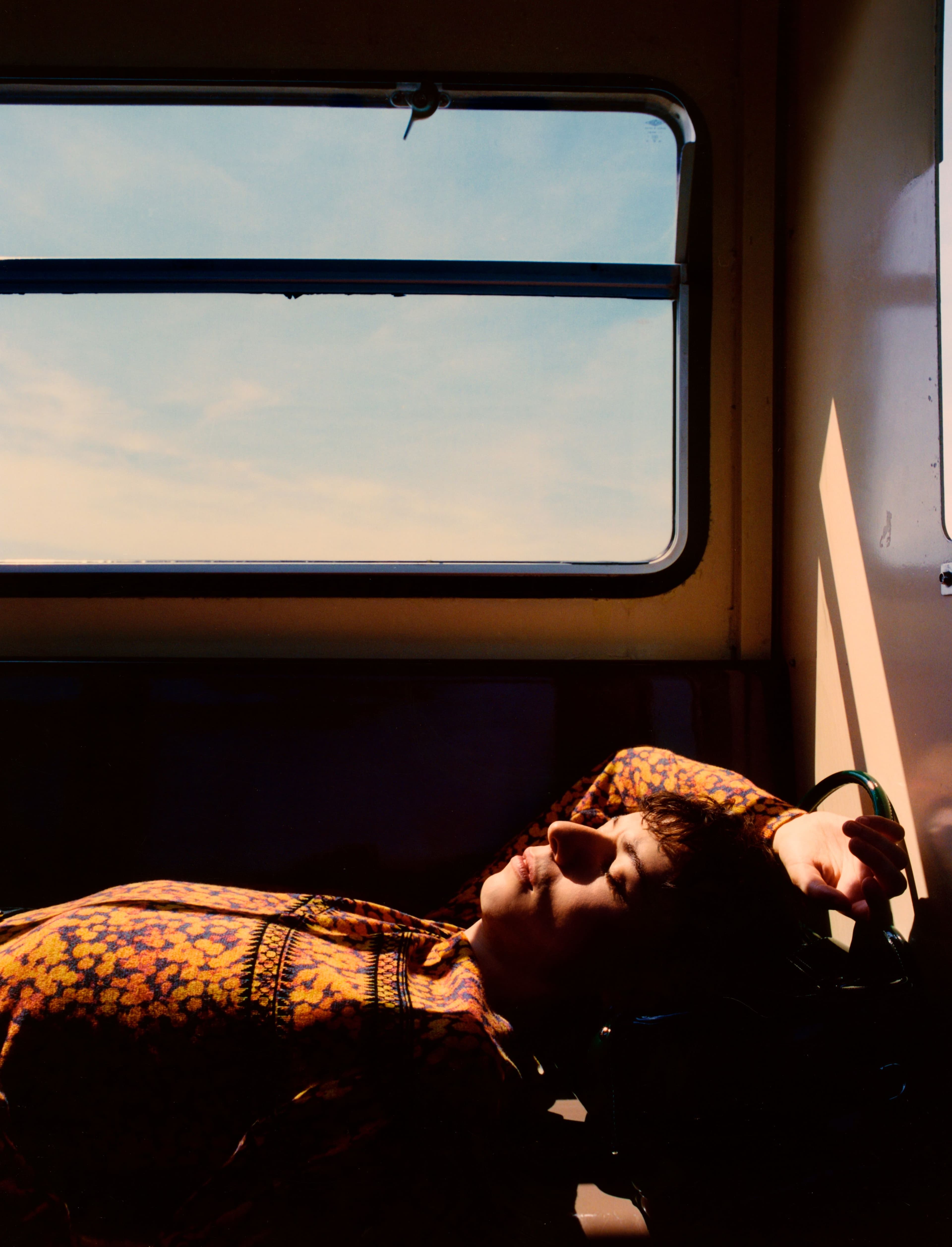
SWEATER by Dries Van Noten; BAG by Mithridate
He points to Lees’s presence on set as a beacon not only of creative clarity but also guidance on the humanity of the story. The most apt metaphor? Utilizing cheat codes in Grand Theft Auto. “Having Paris Lees next to me felt like having a jetpack,” Howard quips lovingly, highlighting how extraordinary it is to have the autobiographical subject present for a shoot. “The fabric of the show is Paris, and I am very grateful! What better than to have the source accessible at all times?” The two briskly established a creative interplay, with Howard given liberty to make Byron his own—Lees extended the opportunity for him to sit in on the editing and mixing process with notes of his own. “I’ve been very lucky to have incredibly gorgeous and open creative relationships. Paris is always interested in getting to the most interesting, complicated, hated, messy, ugly truth. And that as an actor is just fucking bliss!”
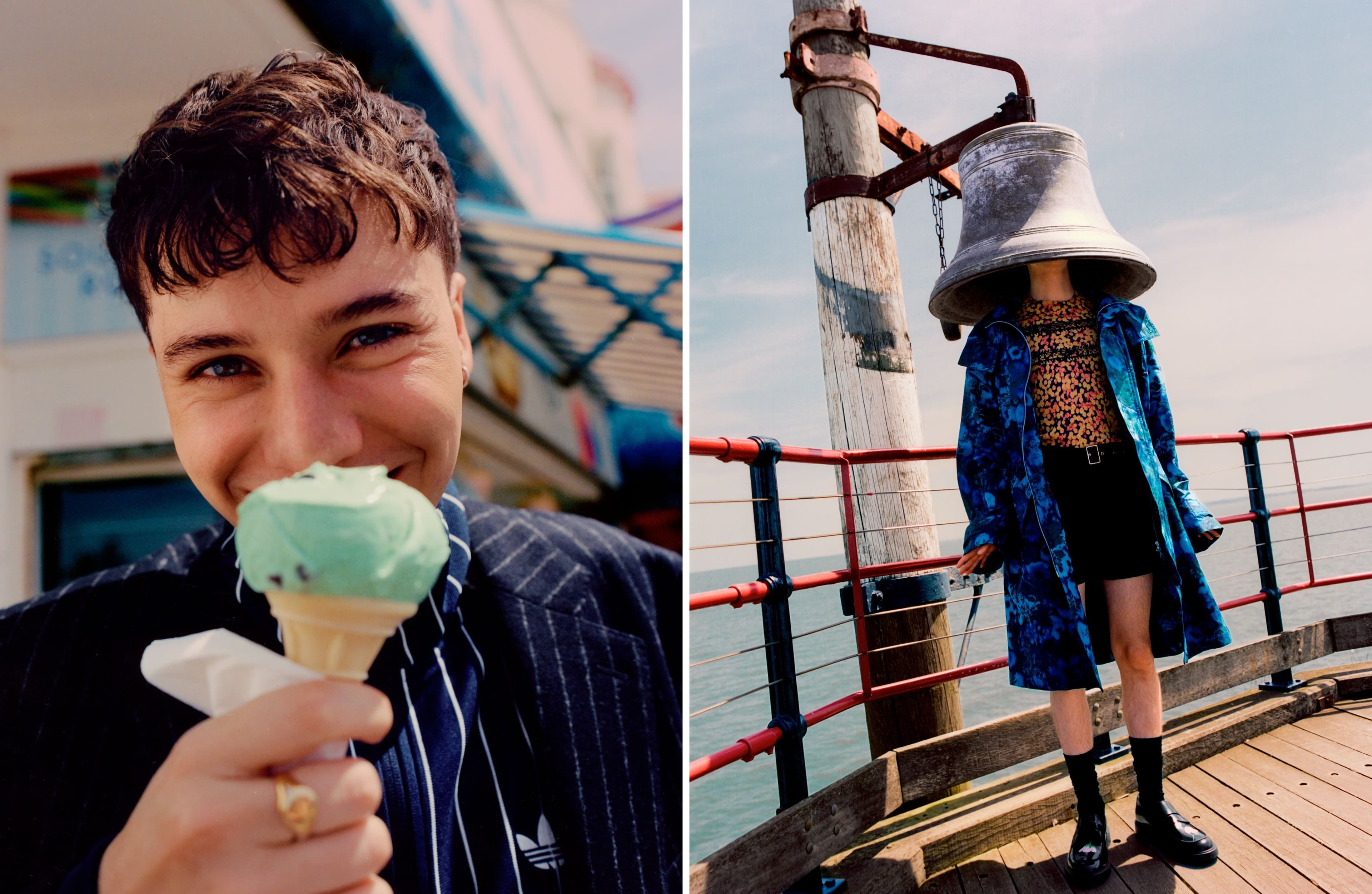
LEFT: JACKET by Hermès; JACKET, worn underneath, by Adidas Originals. RIGHT: COAT and SWEATER by Dries Van Noten; SHORTS by Mithridate; SOCKS, stylist’s own; SHOES by Camper.
Following the release of What It Feels Like for a Girl, Howard moved swiftly to take on new projects—of which there has been no shortage. First up is a lead role in Channel 4’s upcoming The Rachel Incident, an adaptation of Caroline O’Donoghue’s namesake novel, executive produced by Elliot Page and prolific comedy writer Jen Statsky. Reaching further, past his performances in front of the camera, he is working with dear friend Toheeb Jimoh on an autobiographical series inspired by their shared experience at the Guildhall School of Music & Drama. There’s also another project Howard is developing with a critical-darling production house which, as of this moment, is still in a very early stage and as a result even more hush hush.
Howard credits his ongoing success to the exceptional opportunity in his early teenage years to study drama free of charge at Rare Studio in Liverpool, which opened doors for his later training at Guildhall. “Thank god for the generosity of one woman, Lindsay Englesby, who decided to give me free arts training,” he gushes. “I would never have gone to Guildhall. I’d never have met Toheeb. I’d never have done What It Feels Like for a Girl, I’d never have been nominated for a BAFTA. I owe it to her.”
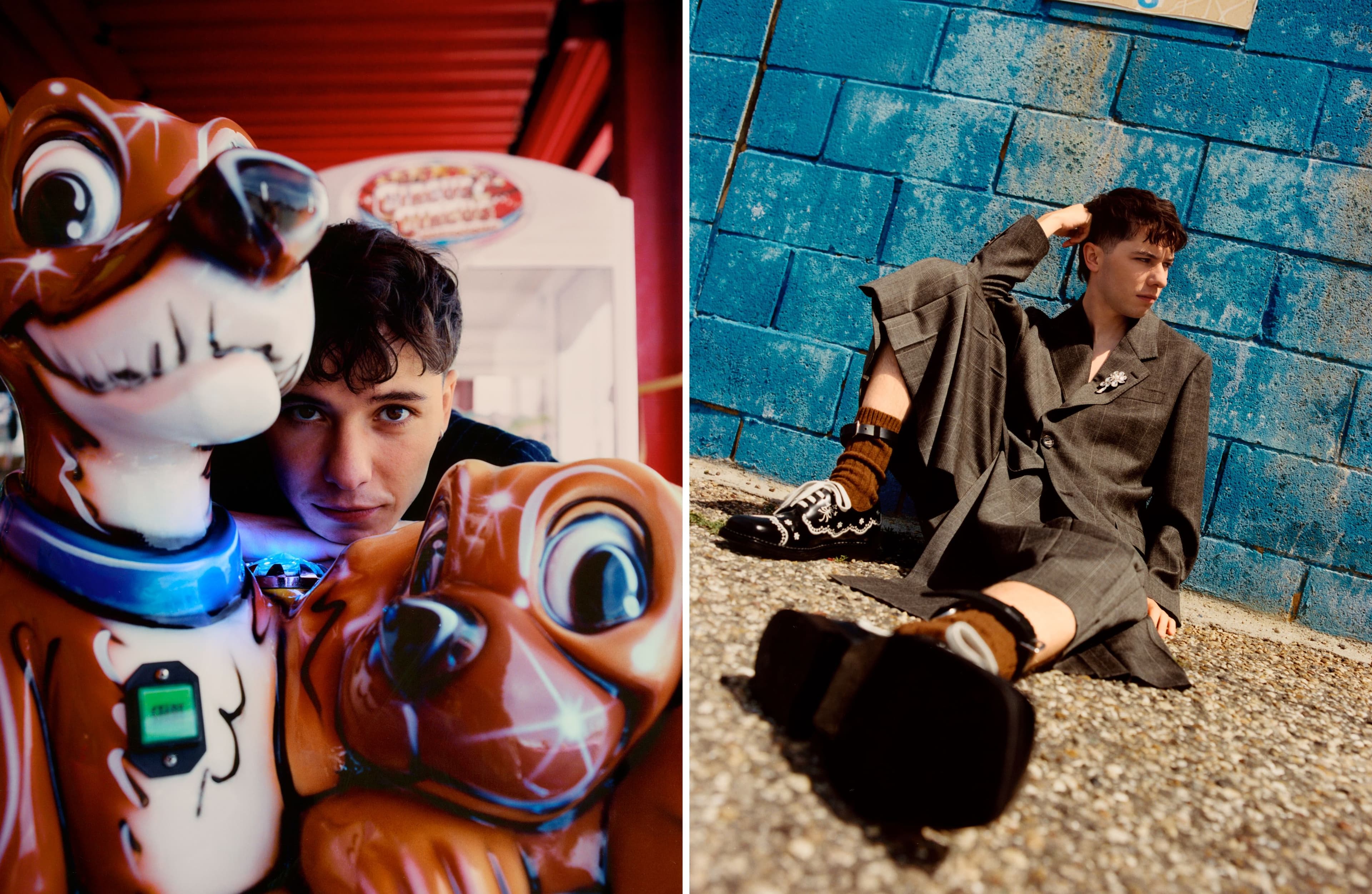
LEFT: JACKET by Hermès. RIGHT: All CLOTHING and ACCESSORIES by Simone Rocha.
Howard is intent that the cycle of selfless care does not terminate with him. About five years ago, his then-partner had a stockpile of toys set for the bin, and Howard felt the compulsion to intervene and divert the perfectly usable goods. As a result, he kickstarted his own philanthropic venture: Step Up For Scousers. Operating primarily in and around Liverpool during holiday seasons, the organization—“It’s a very Golden Girls affair: me, my mom, my nan, my auntie”—redistributes a variety of goods to working-class youth, particularly those who are on free meal programs. “We will supply them with everything from baby formula to tampons to toys to long-lasting milk to shampoo. Whatever you want, we’ll get it for you!” Howard announces emphatically. “I just love it. It is probably the thing that I am most proud of in my life.” In the end, it all extends past his fulfillment and ties back to that cycle of care. “I don’t know what these kids’ dreams are, but I do know that it is important that if I have some sort of power, that I at least allow them the opportunity to breathe a little bit easier by some sort of help.”
When tasked with peering forward to where he would like to be a decade from now, Howard stays firmly rooted in craft and fellowship. “I want to do what the people who I totally love and admire do. I want to be a multi-hyphenate making work that feels radical and alive and new!” Howard professes, rattling off a list of creative touchstones: Hannah Walters and Stephen Graham, Will Sharpe, Donald Glover, Michaela Coel. “Don’t we all want to do that?” On a more personal front: “I want to be able to do all of that and be able to buy a house and have health insurance if I move to the States.”
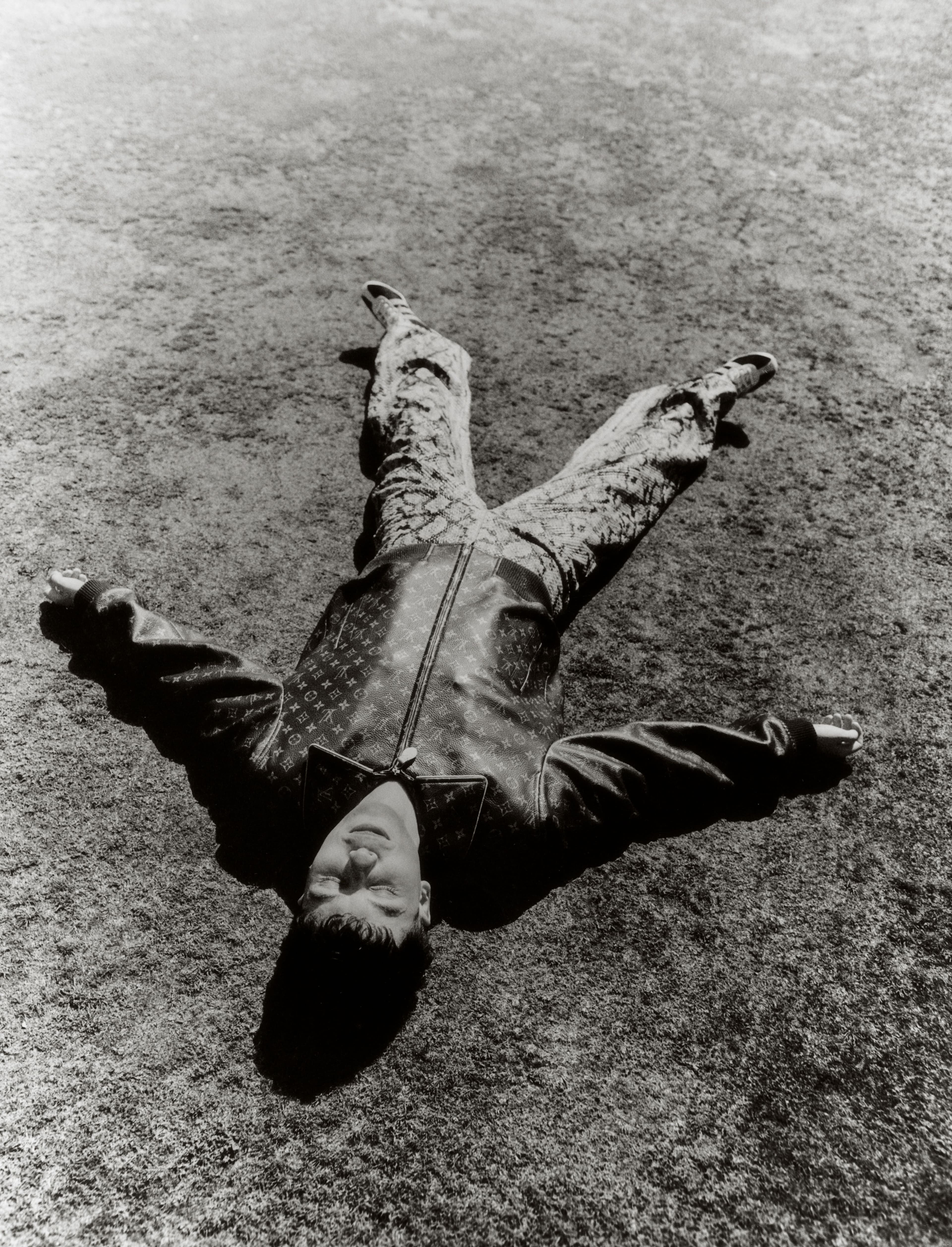
JACKET by Louis Vuitton; PANTS by Feng Chen Wang; SHOES by Adidas Originals
The prospect of a continued creative career suddenly becomes more topical, as our conversation drifts into recent issues: AI, ever a touchy subject with creative writers. “I kind of just don’t want AI to kill us,” he states plainly, before a spark goes off. “Actually, you know what? The baseline of my dream should just be that every studio doesn’t get AI to fucking write the scripts! And act in them too. I want my job to be here in ten years.” While we chatter about the terrifying state of creative work, yet another rapid-fire jape darts forth. “I don’t know whether the socialist utopia ever was employment, but that’s what I feel like right now. Keep the job market alive, girl! I want to be inside of it.”
What It Feels Like for a Girl is now streaming on BBC iPlayer.
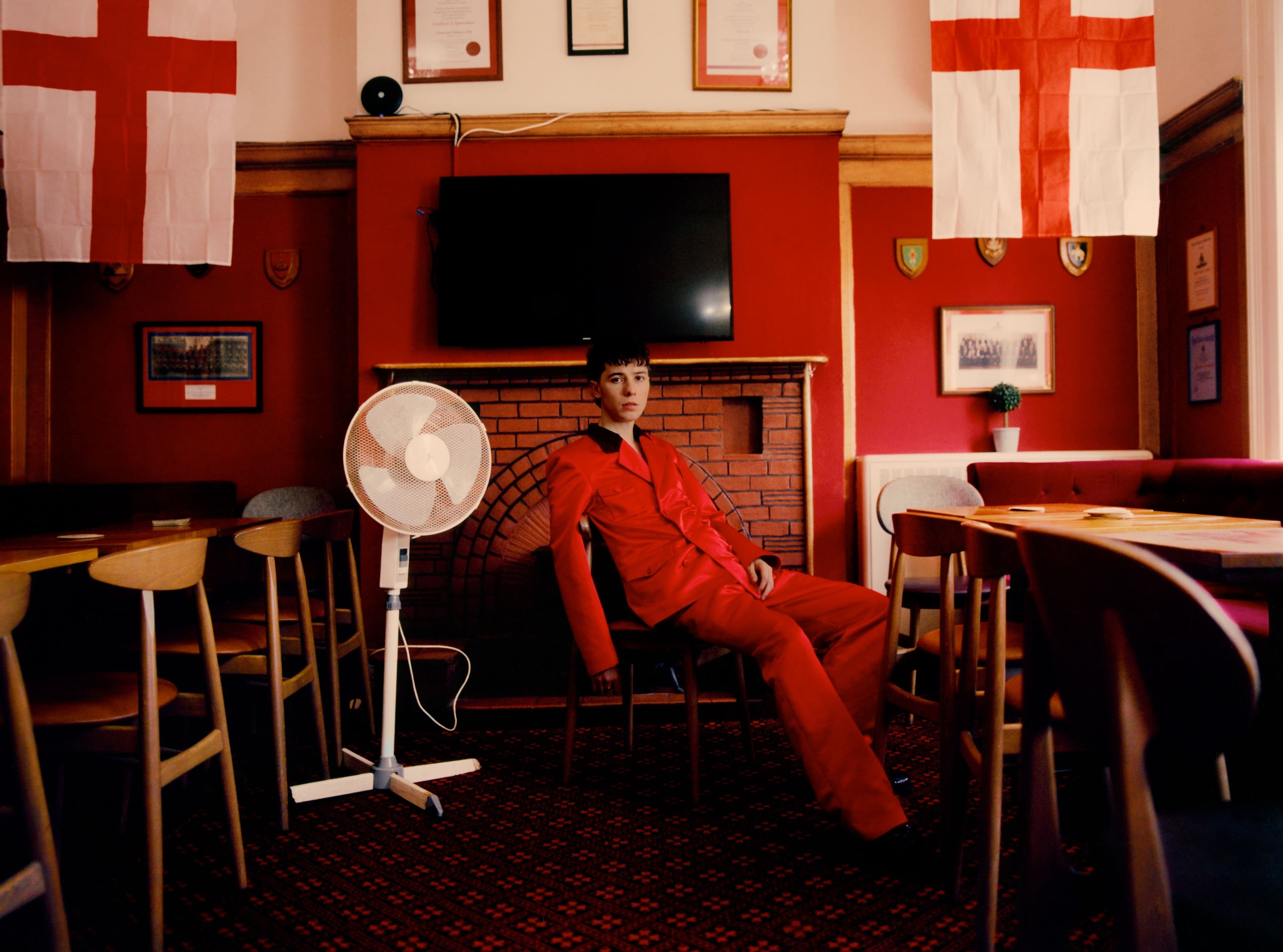
All CLOTHING by Denzil Patrick; SHOES by Louis Vuitton
As a nonprofit arts and culture publication dedicated to educating, inspiring, and uplifting creatives, Cero Magazine depends on your donations to create stories like these. Please support our work here.